
Joggers are usually a tapered subtype of sweatpants, not a separate category, defined by narrower legs and snug ankle cuffs. Traditional sweatpants are generally roomier through the leg and more likely to finish with a straight or open hem.
You've probably experienced the confusion while shopping online. A product looks like the soft, relaxed pair you'd wear on the sofa, but the label calls it a jogger. Then another pair has almost the same waistband and fabric, yet it's listed as sweatpants. The difference isn't always a strict category boundary. It's usually a matter of shape, fabric, and intended use.
Table of Contents
- The Jogger vs Sweatpants Confusion
- Cut and Silhouette Differences
- Fabric and Comfort Variations
- Styling Beyond Loungewear
- A Brief History of Athleisure Bottoms
- How to Choose for Your Lifestyle
- The Complete Answer to Your Keyword
The Jogger vs Sweatpants Confusion
You are choosing between two grey pairs before leaving home. One looks neat around the ankle, while the other drapes over your trainers. Both may feel equally soft, yet their labels can point to different versions of the same comfort-first family.
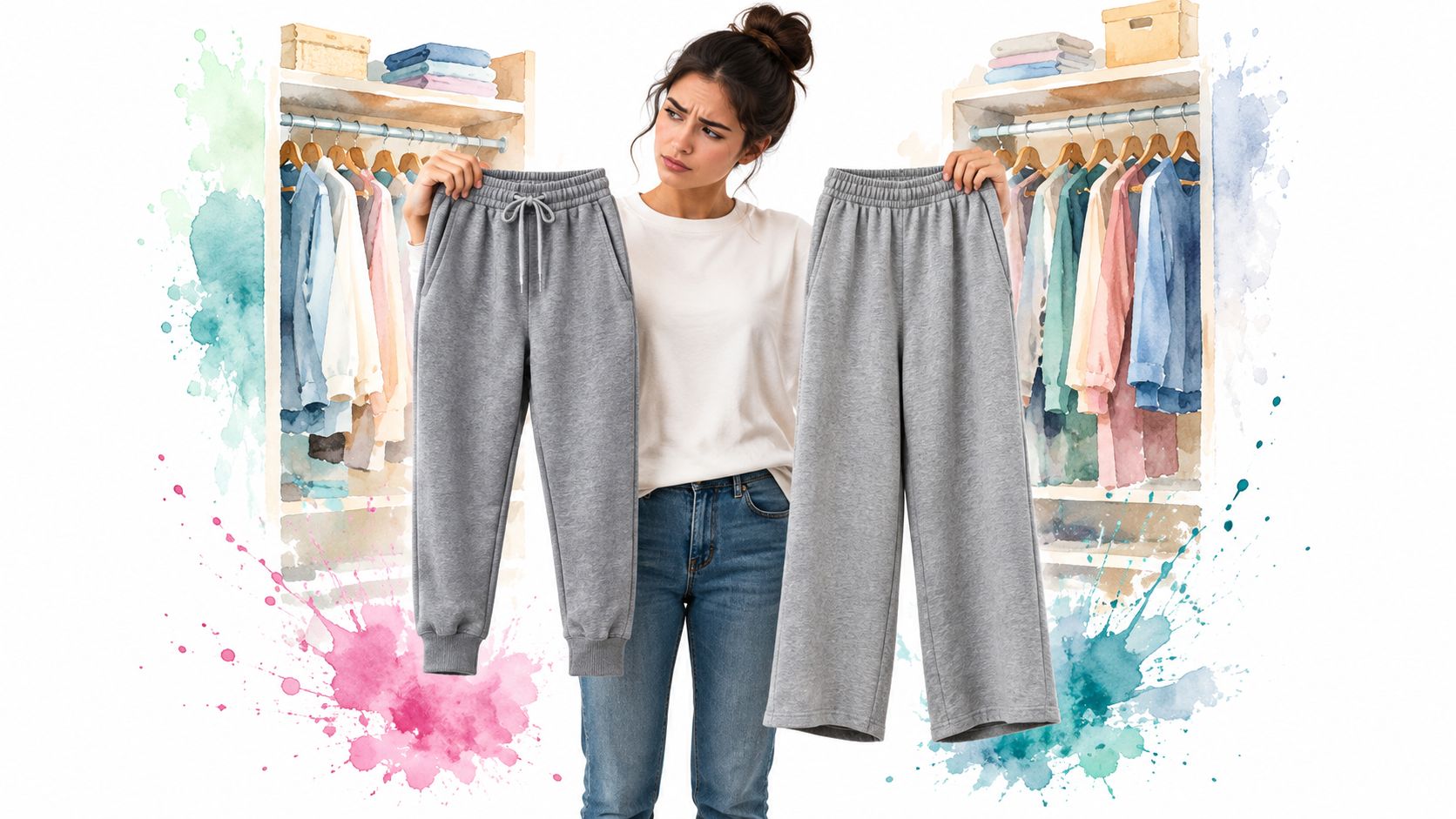
The clearest answer is that joggers are typically a tapered subtype of sweatpants. Merriam-Webster describes joggers as pants with a drawstring or elastic waist, usually tapered legs, and snug cuffs. Clothing glossaries commonly use a similar description, linking joggers with soft knit fabric and a narrower lower leg. Merriam-Webster's definition of jogger supports the practical shopping distinction: the leg narrows and the ankle stays contained.
Why the labels overlap
Clothing names work more like a shop's filing system than a strict scientific classification. One retailer may call a slim, cuffed pair joggers, while another may list a nearly identical garment as tapered sweatpants. Shoppers in Britain may also see “joggers” or “trackies” for items that American shoppers would search for as sweatpants.
The name alone therefore gives you limited guidance. Check the product photo, fabric description, hem, and leg shape. Those details reveal how the garment will sit on your body and whether it suits your plans.
Practical rule: If the leg narrows toward the ankle and ends in a snug cuff, treat the garment as a jogger. If it stays loose and falls over the shoe, treat it as a traditional sweatpant, whatever the product page says.
That rule helps match the bottom to the day. A contained jogger silhouette often works well for commuting, casual errands, travel, or light workouts because less fabric gathers around the shoe. A roomier sweatpant offers a softer drape for lounging and can feel warmer when you want maximum ease. The better choice depends on the job you need the garment to do, not on which label sounds more polished.
Cut and Silhouette Differences
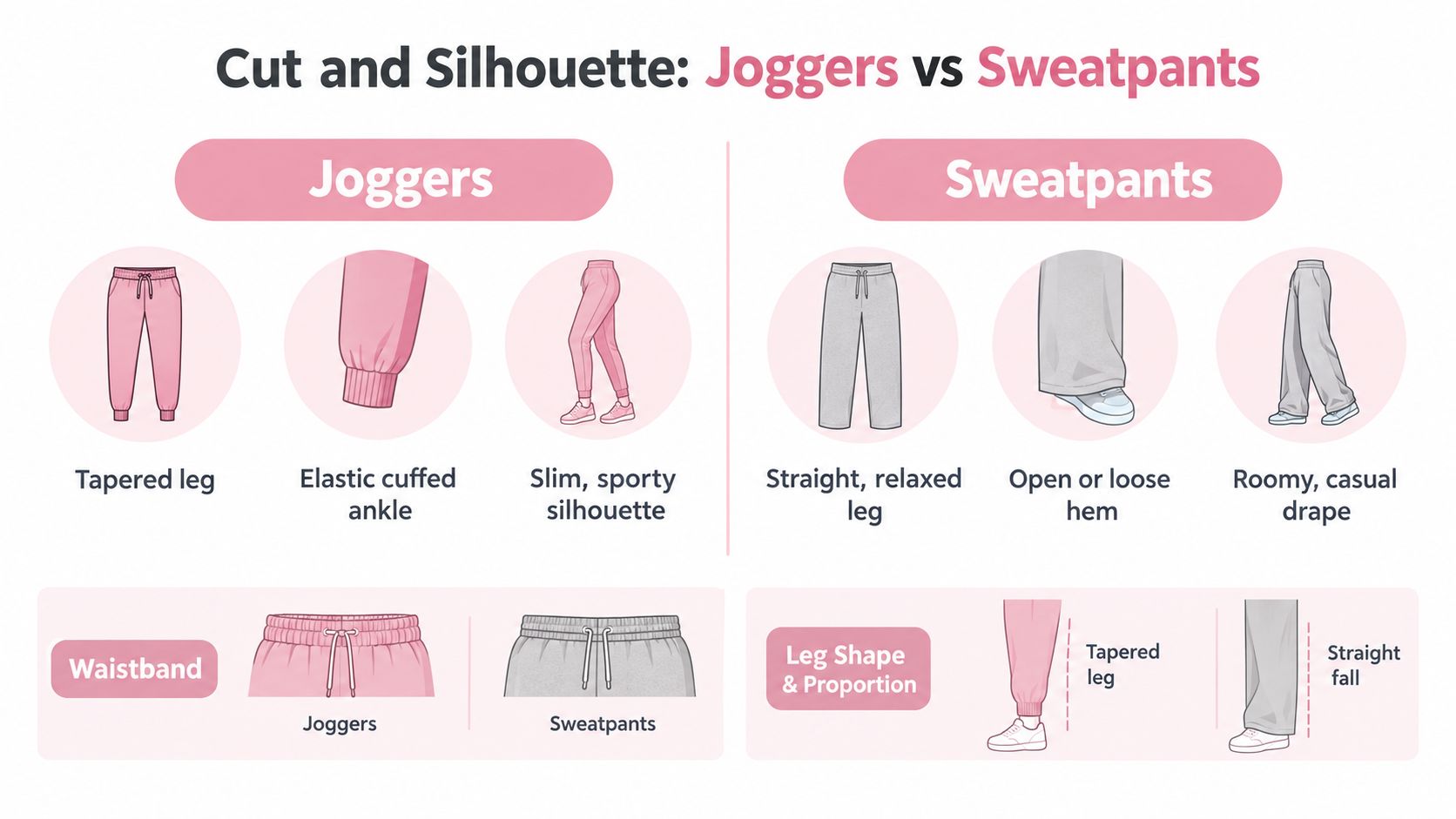
The easiest way to identify joggers is to follow the outer leg with your eyes. It should begin with some room through the hip and thigh, narrow gradually through the calf, and finish with an elastic or ribbed cuff at the ankle. Traditional sweatpants usually keep a more even width from thigh to hem, creating a relaxed vertical line.
Think of sweatpants as a soft, casual foundation. Joggers are that foundation refined, much like rolling up a loose sleeve to make it more practical without changing the basic garment. The tapered shape reduces excess fabric around the lower leg, while the cuff keeps the hem from spreading over the shoe.
What to look for in a product photo
Check three areas before you buy:
- Leg line: Joggers narrow from the upper leg toward the ankle. Sweatpants usually maintain a looser, straighter fall.
- Hem finish: Joggers usually have a ribbed or elastic cuff. Sweatpants often use an open hem, though some modern sweatpants also have cuffs.
- Overall volume: Joggers create a closer, sportier outline. Sweatpants allow more fabric to sit away from the body.
The waistband doesn't decide the category by itself. Both styles may use an elastic waist and drawstring. The important clues sit below the waist, especially around the calf and ankle.
| Feature | Sweatpants | Joggers |
|---|---|---|
| Silhouette | Relaxed, roomy drape | Streamlined, tapered profile |
| Leg shape | Straight or loosely shaped | Narrows toward the ankle |
| Hem | Often open or loose | Usually elastic or ribbed cuff |
| Visual effect | Soft, casual volume | Sporty, contained outline |
| Useful for | Lounging and warmth | Movement and polished casual outfits |
Fit still depends on your body and your preferred look. A jogger with a generous thigh can feel relaxed even when the ankle is narrow. A wide-leg sweatpant can look fashion-forward rather than sloppy if the length and proportions are deliberate. The category gives you a starting point, not a complete fit prescription.
If you dislike fabric gathering around your calves, look for a straight or relaxed sweatpant. If you want your shoes to remain visible and prefer less material moving around your ankles, a cuffed jogger will probably feel more natural.
Fabric and Comfort Variations
Cut tells you what a garment looks like. Fabric tells you how it behaves after you've worn it for several hours.
Traditional sweatpants are often made from heavier cotton fleece, French terry, or thick jersey. These fabrics tend to hold more warmth and create a substantial, cosy feel. Joggers are often made from lighter knits, breathable materials, or stretch blends that support airflow and easier movement. The categories still overlap, but the material can make one pair feel completely different from another.
Match fabric weight to the day
Choose a heavier sweatpant when you want insulation, softness, and a more relaxed drape. They make sense for cool evenings, slow mornings, lounging, and indoor spaces where you want your clothing to feel protective rather than airy.
A lighter jogger can suit commuting, travel, errands, and mild exercise because the fabric usually feels less bulky as you move. Stretch also helps the garment follow the body without pulling across the knees or restricting a longer stride. That doesn't mean every jogger is cool or every sweatpant is warm. Fabric composition and construction matter more than the name on the label.
- For warmth: Look for fleece, heavier jersey, or substantial French terry.
- For mobility: Look for stretch blends and a tapered cut that limits excess fabric.
- For airflow: Look for lighter knits and breathable constructions.
- For lounging: Prioritize softness, room through the seat and thigh, and a waistband that doesn't dig.
The best choice isn't “joggers for everything” or “sweatpants for everything.” It's the garment whose fabric matches the temperature and whose cut matches the movement you'll make.
For a softer wardrobe foundation, you can also compare the construction of women's cotton lounge pants. The same principle applies here: comfort comes from the interaction between fiber, weight, stretch, and fit, not from a single label.
A commuter who sits at a desk, walks between appointments, and spends time outdoors may prefer a lighter jogger. Someone watching films in a cool room or stepping outside on a cold evening may prefer the warmth and looser drape of sweatpants. If you're buying online, zoom in on the fabric description and inspect the hem before relying on the product title.
Styling Beyond Loungewear
Joggers and sweatpants look casual by nature, but casual doesn't have to mean unfinished. The styling trick is to give the soft bottom half some structure elsewhere in the outfit.
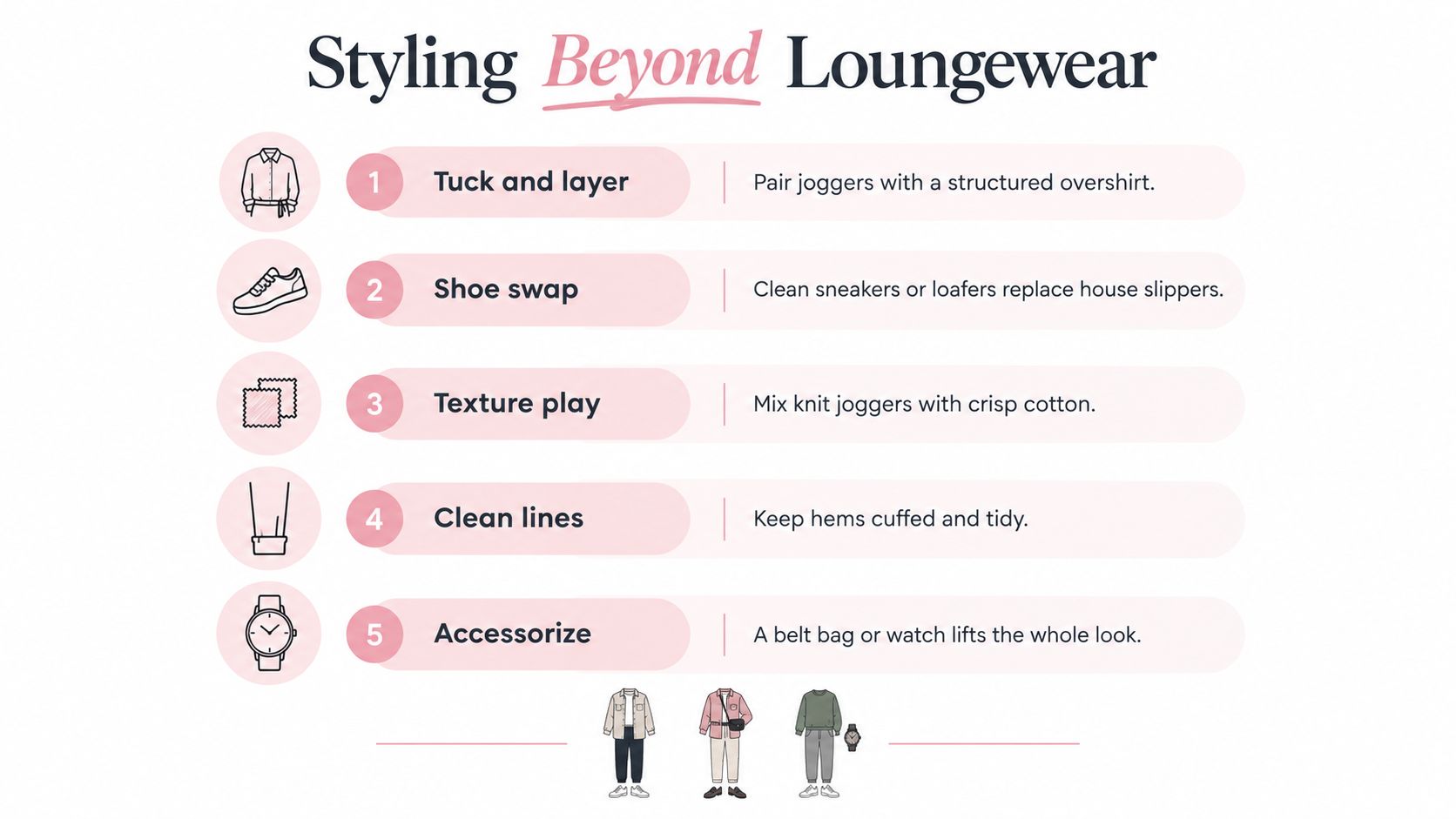
Start with the shoes. Clean trainers create a deliberate athleisure look, while loafers or simple flats can make a jogger feel more everyday and less gym-focused. House shoes and heavily worn footwear send the outfit in the opposite direction, even if the clothes themselves are well chosen.
Build a more polished proportion
A tapered jogger works especially well with a structured overshirt, cropped jacket, fitted knit, or clean crew-neck top. The narrow ankle gives you room to add volume above without making the entire outfit look shapeless.
Try these formulas:
- Coffee run: Tapered joggers, a fitted tee, an open overshirt, and clean low-profile trainers.
- Travel day: Soft sweatpants, a neat sweatshirt, a long coat or lightweight jacket, and supportive trainers.
- Casual office setting: Minimal joggers, a crisp shirt or fine knit, an unstructured blazer, and loafers, if the dress code allows.
- Weekend layering: Roomier sweatpants, a tucked tank, a cropped cardigan, and a structured tote.
Keep the hem tidy. A cuffed jogger already gives you a defined ankle, so avoid piling excessive fabric above it. With open-hem sweatpants, check that the length doesn't drag beneath your shoes or create accidental folds across the foot.
A few small details also shift the mood. A watch, belt bag, clean crossbody, or compact shoulder bag can make a comfort outfit feel intentional. Texture helps too. Pair a soft knit bottom with crisp cotton, smooth leather, or a structured woven layer instead of matching every piece to the same fuzzy finish.
The practical guidance in sweatpants with pockets is also relevant to styling decisions because storage affects how useful a pair feels outside the home. Pockets can support a travel or errand outfit, but their placement and bulk still matter if you want a clean line.
| Occasion | Jogger Formula | Sweatpant Formula |
|---|---|---|
| Commuting | Tapered joggers, overshirt, clean trainers | Relaxed pair, knit layer, lightweight jacket |
| Work from home | Stretch joggers, soft tee, cardigan | Roomy sweatpants, sweatshirt, cosy socks |
| Travel | Lightweight joggers, long layer, supportive shoes | Warm sweatpants, simple top, structured outer layer |
| Light exercise | Breathable joggers, fitted tee, trainers | Roomier sweatpants for warm-up or easy movement |
| Weekend lounging | Soft joggers and an oversized top | Heavy, relaxed sweatpants and a loose sweatshirt |
A Brief History of Athleisure Bottoms
The question “are joggers sweatpants?” makes more sense once you follow how both garments changed. Sweatpants began as athletic clothing, designed to keep athletes warm and unrestricted rather than to create a polished outfit. Historical references place their early use in the 1920s, with sweatpants becoming familiar at the Olympic Games by the late 1930s.
Their role expanded over time. Sweatpants became popular in the United States during the 1930s, then took on wider cultural meaning through hip-hop in the 1980s and 1990s. In 2020, comfort dressing moved even more visibly into everyday public life, bringing athletic bottoms into commutes, errands, travel, and casual social settings. Fortune Business Insights' athleisure market coverage places sweatpants and joggers within a product segment projected to grow quickly, reflecting continued demand for clothing that serves both performance and leisure.
Why joggers feel newer
The modern jogger became a fashion staple in the 2010s, as athleisure developed from gym clothing into a complete gym-to-street wardrobe. Its narrower leg and ankle cuff made it easier to combine with trainers, jackets, and everyday layers than a loose, open-hem sweatpant.
That history explains the naming confusion. Joggers are not an entirely separate idea from sweatpants. They refine the familiar sweatpant into a more contained silhouette, much like tailoring a roomy blanket into a travel-friendly wrap. The result feels easier to wear beyond the sofa while keeping much of the original comfort.
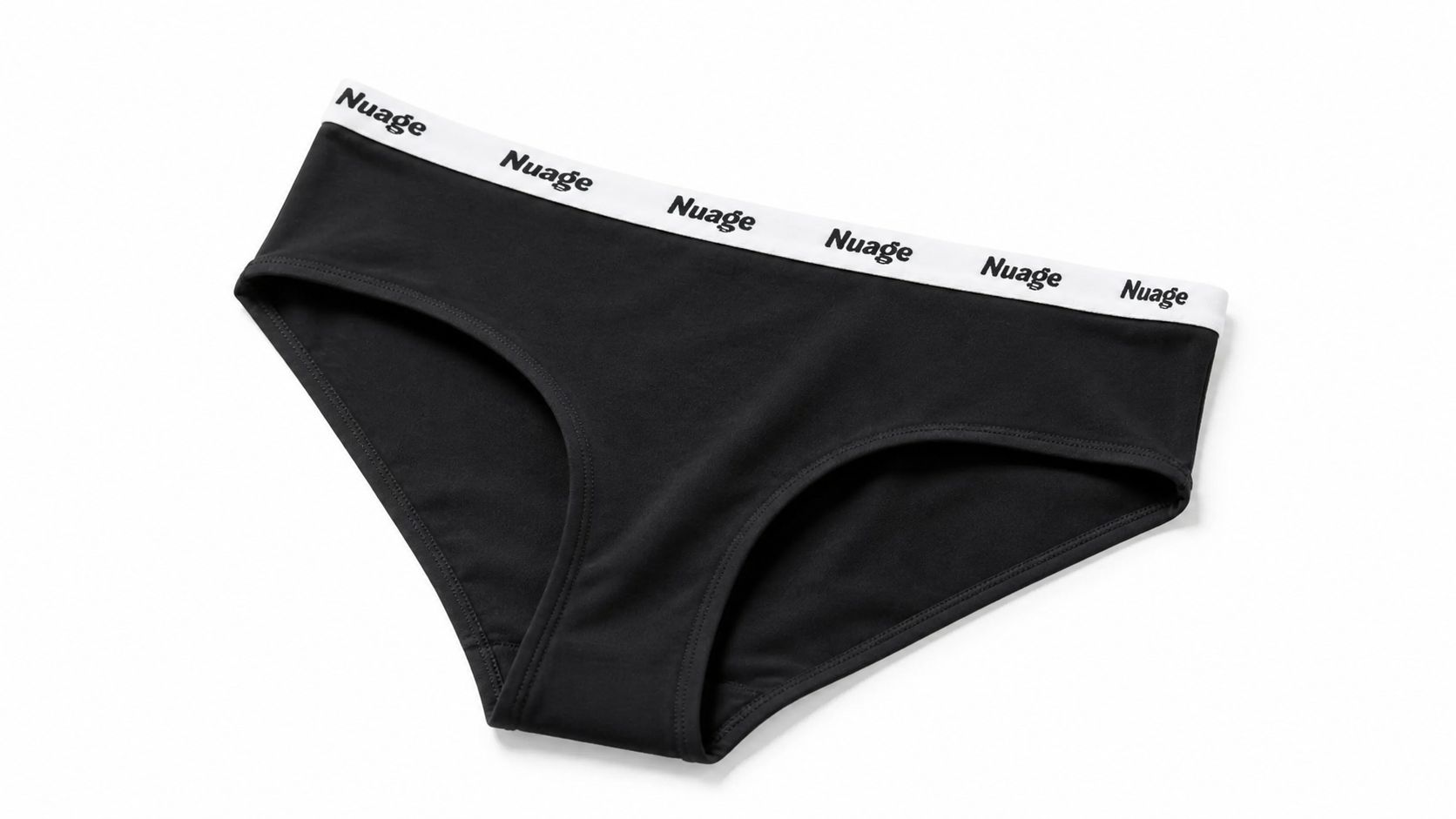
The same comfort-first shift reached other everyday basics. For example, the NuSoft Classic Cotton Brief combines a mid-rise cut, full back coverage, a logo-trim elastic waistband, and a 95% cotton, 5% elastane blend. Its construction shows how soft essentials can borrow details associated with sportswear without becoming gym uniforms.
The boundary remains flexible. Fashion changes proportions, retailers rename familiar shapes, and shoppers use regional terms differently. For choosing between the two, construction is more dependable than the label: a tapered cuff points toward jogger styling, while a roomier cut and open hem usually indicate sweatpants.
How to Choose for Your Lifestyle
Start with your day, not the category name. Ask what you'll do, how warm you need to feel, and whether you want your outfit to look contained or relaxed.
For commuting
Choose joggers when you'll walk, sit, stand, and move through public spaces. The tapered leg and cuff reduce fabric flutter and create a cleaner profile beneath a jacket or overshirt. A lightweight stretch blend can make the trip more comfortable without giving the outfit a pajama-like appearance.
Choose sweatpants if warmth and room are more important than a sharp outline. A straight or relaxed pair can still look intentional with a neat top layer and clean footwear.
For work from home
Sweatpants usually win if your priority is unrestricted comfort. Look for a waistband that stays secure without pressing into your middle and enough room through the hips and thighs to let you change position easily.
Joggers suit work-from-home days that include a quick shop, school run, or video call where you want a more shaped silhouette. The ankle cuff gives the outfit definition, especially with a simple knit or cardigan.
For travel
Travel rewards versatility. Joggers are useful if you move between warm and cool spaces, because their narrower profile layers neatly under outerwear. Sweatpants make sense when you expect cold cabins, long seated periods, or a day devoted mainly to resting.
Check the pockets, waistband, and fabric before buying either style for a journey. A drawstring can improve adjustability, while a fabric that resists feeling heavy or restrictive will matter more than whether the product page says jogger or sweatpant.
For mild exercise
Joggers are usually the more practical choice for walking, warm-ups, and light training because the tapered leg keeps fabric closer to the body. Sweatpants can work for gentle movement too, particularly if you prefer a looser fit, but avoid a hem that catches underfoot.
For weekend relaxation, reverse the priorities. Pick the pair with the softest hand feel, most comfortable waistband, and roomiest fit, even if that means choosing sweatpants over joggers.
Choose the shape that supports your routine. Choose the fabric that supports your environment.
Body proportions and personal taste still matter. If you have fuller calves or prefer a loose lower leg, a straight sweatpant may feel better than a strongly tapered jogger. If you're shorter or dislike fabric pooling around your shoes, a cuffed jogger may give you a cleaner finish.
The Complete Answer to Your Keyword
So, are joggers sweatpants? Usually, yes. Joggers are generally a tapered, cuffed subtype or modern variant of sweatpants, while the broader sweatpants category can include straight, relaxed, wide, and open-hem shapes. The relationship is similar to a specific cut within a larger clothing family.
The confusion is legitimate because major references don't always draw the category boundary in exactly the same place. Some treat joggers as sweatpants with defining details, while others present them as a closely related style. Regional language adds another layer, with British shoppers more likely to use “joggers” or “trackies” and American shoppers more likely to search for “sweatpants.”
The useful answer isn't a strict yes or no. It's a buying rule:
- Choose joggers for a tapered leg, contained ankle, easier movement, and a cleaner casual silhouette.
- Choose sweatpants for a roomier drape, open hem, warmth, or relaxed lounging.
- Inspect the fabric before deciding, because a lightweight sweatpant can feel easier in motion than a heavy jogger.
- Judge the whole outfit rather than the label, especially if you plan to wear the garment for commuting, travel, or casual work settings.
Once you read the cut this way, the product description becomes much easier to decode. You're no longer asking whether a retailer used the perfect word. You're checking whether the leg shape, cuff, material, and comfort level match the life you want the garment to support.
For comfort-first essentials that complement everyday outfits from lounging to movement, explore Nuage Wears. Browse its women's underwear, bras, and apparel designed around practical needs such as breathable comfort, stay-put fits, and smooth layering, then choose the pieces that make your jogger or sweatpant outfits feel comfortable from the first layer outward.