
Textile dyes accounted for 79.8% of positive patch-test results in a cohort of people with textile contact dermatitis, according to a dermatology review of textile allergens. That isn't a risk estimate for everyone who wears a bra. It's a useful reminder that the softest fabric in your drawer can still come with an irritating dye, finish, elastic, or closure.
My advice for choosing bras for sensitive skin is simple: inspect the whole garment, not just the fiber name. You want a gentle lining, smooth contact points, manageable moisture, and support that doesn't require you to tolerate digging. Comfort shouldn't be something you negotiate with all day.
Table of Contents
- Fabrics to Prioritize and Avoid for Sensitive Skin
- Why Sensitive Skin Reacts to Bra Materials
- Edge Construction and Irritating Features to Avoid
- How to Fit a Bra Without Digging or Chafing
- Caring for Sensitive-Skin Bras So They Stay Gentle
- Choose Your Sensitive-Skin Bra and Test It Safely
Fabrics to Prioritize and Avoid for Sensitive Skin
Start with modal or cotton for cups and linings. I'd choose silk for delicate, light-support wear and consider bamboo viscose when the maker explains the blend and finishing. These are shopping priorities, not promises that a particular fiber will prevent a rash.
Bra fabrics ranked for sensitive skin
Use this comparison as a practical starting point. Your own reaction to the finished garment matters more than its position in the table.
| Fabric | Skin Feel | Breathability | Priority for Sensitive Skin |
|---|---|---|---|
| Modal | Silky, smooth, low-lint | High, moisture-absorbing | Prioritize; check blend and dye disclosure |
| Cotton | Soft and familiar | Very high, but holds sweat | Prioritize for cups and linings; can feel damp in heat |
| Bamboo viscose | Very soft | Moderate to high | Use with care; processing chemicals vary by maker |
| Silk | Smooth and cool | High | Good for light, delicate wear; limited firm support |
| Nylon | Slick and smooth | Moderate, can trap heat | Use cautiously; often disperse-dyed |
| Polyester | Firm, less stretchy | Low to moderate | Avoid as the main skin-contact layer |
| Elastane (spandex) | Stretchy, used in bands | Low on its own | Favor limited use where stretch is needed; check band contact |
| Wrinkle-resistant or treated microfiber | Slick, sometimes stiff | Varies with finish | Avoid unnecessary resin or antimicrobial finishes |
The fiber name alone is a weak predictor of tolerability. Processing chemicals, including dyes, finishing resins, adhesives, and rubber additives, are more common triggers of textile contact dermatitis than the fibers themselves, as DermNet's textile contact dermatitis guidance explains. Nylon and polyester deserve particular attention because disperse dyes are used with synthetic textiles.
That doesn't mean every synthetic bra is unsuitable, or every cotton bra is gentle. A smooth synthetic lining might feel better than coarse cotton, while a natural-fiber bra can still include irritating elastic or finishes. For fuller-bust shopping, use this guide to cotton bras for large breasts to keep support in the decision rather than choosing cotton alone.
What to check on every label
- Blend ratio: Read the full composition, including the lining, rather than stopping at the headline fabric.
- Dye and finish disclosure: Favor clear information over an unexplained sensitive-skin claim.
- Cup lining: Start with smooth modal or cotton rather than a rough synthetic surface, then judge the actual feel.
Why Sensitive Skin Reacts to Bra Materials
Textile-related allergic contact dermatitis is uncommon in the general population. A German Federal Institute for Risk Assessment evaluation estimated that it affects approximately 0.008% to 0.07% of people, below an earlier European estimate of 0.9% annually. These figures describe allergy, not ordinary bra discomfort. An itchy afternoon alone doesn't mean you have an allergy.
A bra band can feel comfortable while you're seated, then start digging after an hour of walking as heat, sweat, movement, and pressure build. The fabric itself may be unchanged, but the conditions at the skin have shifted.
Bras bring these factors together around the underbust, shoulders, and sides. Check where discomfort starts and when it appears before replacing every bra with a different fiber. Irritation can come from a combination of materials and construction, not just the fabric name.
Follow the contact points
- Dyes and finishing chemicals: These may matter when fabric against the skin causes a repeatable reaction. Softness alone won't tell you which chemicals were used.
- Elastic and rubber components: A comfortable cup doesn't make up for a band your skin can't tolerate.
- Seams and pressure: Raised stitching, a restrictive band, or a poorly positioned closure can cause mechanical discomfort without an allergy.
- Trapped sweat: Damp fabric and repeated movement can make a tolerable contact point unpleasant during extended wear.
The BfR evaluation also identifies dyes as the principal contemporary textile allergens, while formaldehyde-based finishing resins have become less significant. Check the full bra build, including dyes, elastic, seams, hardware, and areas where sweat can collect. Wrinkle resistance isn't the only chemical detail worth checking.
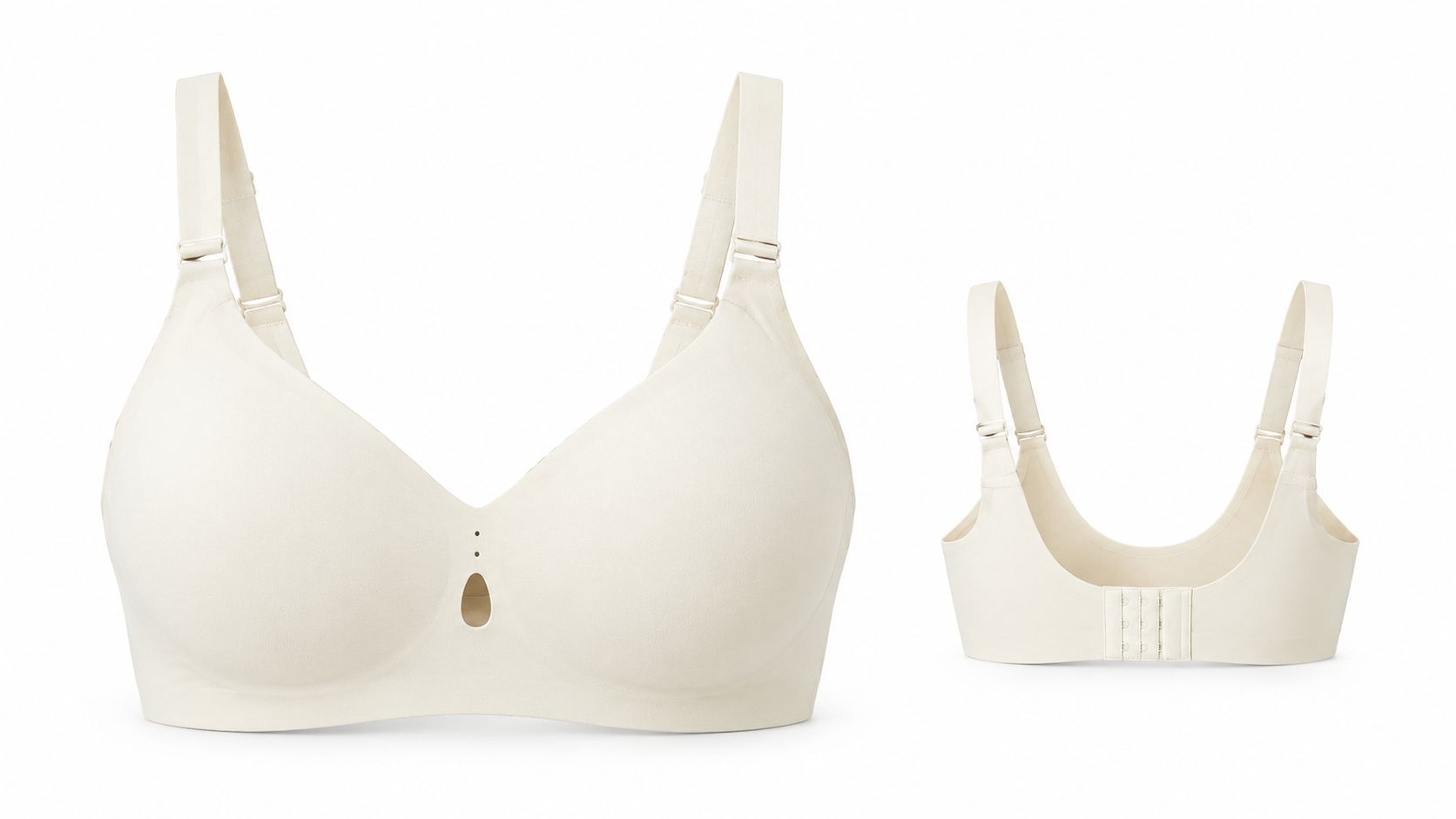
Look beyond the cup fabric when inspecting a back-hook design.
Separate pressure from a recurring rash
Redness where a band presses that settles after removal points toward a fit or construction check. A delayed, localized itchy or scaly eruption along a strap or band calls for a different response. These patterns offer clues, not a diagnosis, and ordinary irritation and allergy can overlap.
Practical rule: Adjust the fit when pressure is the clear problem. Stop wearing a bra that repeatedly causes a rash in the same place and get a dermatology opinion.
Don't tighten the straps to solve every uncomfortable sensation. First check whether the irritation sits under a seam, beneath elastic, around hardware, or across a larger patch of fabric.
Edge Construction and Irritating Features to Avoid
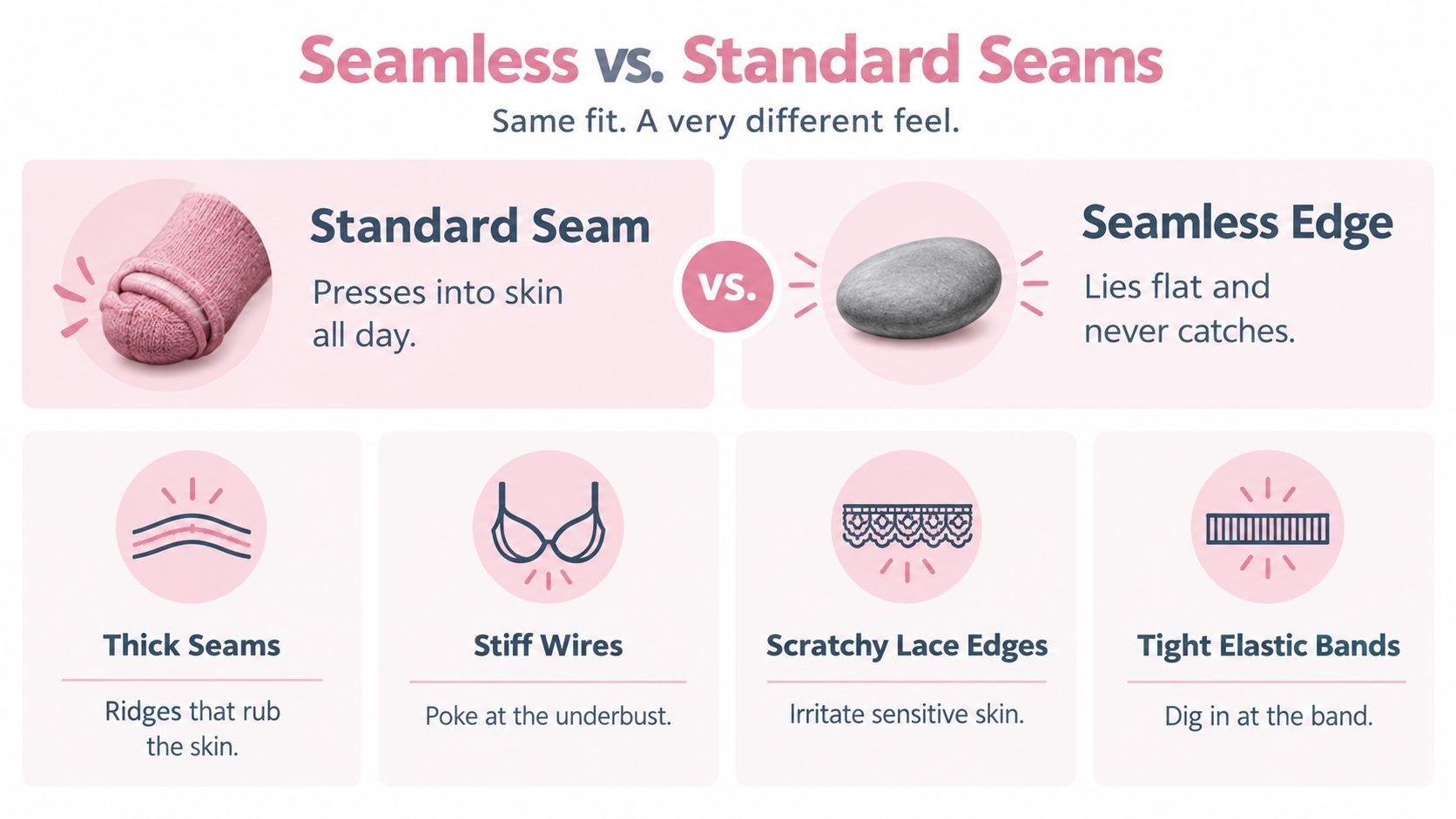
Inspect the whole bra, not just the fabric label. Dyes, elastic, seams, hardware, and sweat can all contribute to discomfort, so a soft fiber alone doesn't guarantee a comfortable fit. Run your fingertips over the garment before buying. A smooth edge with no bulky ridge can feel like a river stone as you move.
Low-friction construction can help when rubbing is your main complaint, but it doesn't determine the garment's chemical makeup. Start by checking the spots that touch your skin most.
The comparison below highlights the contact points worth inspecting.
Feel the cup edge before judging the cup
Run a fingertip along the inside neckline, underarm opening, and lower cup. Check for a raised ridge, exposed thread ends, or a stiff transition between materials. An edge that looks invisible under a shirt can still feel abrasive against your skin.
I favor laser-cut or carefully bonded edges when the alternative is bulky stitching against reactive skin. Still, examine the finish itself. A hard adhesive strip or inflexible edge can create its own pressure point, even when the garment has no visible lines.
The trade-off is structure. Some wearers prefer the shaping of seamed cups, and a flat, well-covered seam may feel fine. Focus on the ridge that bothers you rather than rejecting every bra with stitching.
Check labels, bands, and straps separately
Look for printed size information at the upper back or wherever the garment places its care details. Run a finger over the print to make sure it feels smooth. Also check for a small sewn label tucked inside a side panel.
For the band, press the material between your fingers and bend it gently. A soft fused band should lie flat instead of forming a rigid cord along its edge. Inspect the join near the closure, where several layers can create a lump.
Choose straps with a broad, soft contact surface rather than a narrow strip you have to overtighten. Inspect the underside and adjustment point, not only the padded section shown in a photograph. A comfortable shoulder area can still have a hard slider in a spot that presses against a chair.
Bra features to avoid and what to choose instead
These features can contribute to irritation, though individual reactions vary.
| Feature | Why It Irritates | What to Choose Instead |
|---|---|---|
| Raised cup seam | A ridge can rub during movement | Laser-cut or bonded edges |
| Metal underwire | Can poke or pinch; the surrounding channel can feel hot | Wire-free structured cups |
| Metal hook-and-eye or slider | Exposed contact and rough edges can scratch or press | Fabric-covered or flat closures |
| Woven care label | Can scratch at the upper back or underarms | Printed, tagless size information |
| Thick, rigid band elastic | Creates concentrated pressure and tight lines | Wide, soft, bonded bands |
| Narrow straps | Concentrate pressure on the shoulder | Wide, soft straps |
| Rough lace or stiff trim | Can abrade sensitive areas | Smooth, lined edges |
Don't let gentle fabric distract you from hardware
Check the closure first when soft cups still feel uncomfortable. A hook panel can fold, a slider can turn sideways, or an exposed edge can press against your back when you sit. A pleasant cup lining won't prevent those pressure points.
Inspect the bra from the inside, fastened as you'd wear it. Make sure the backing covers the hooks and no corner projects beyond the fabric. Then lean against a chair during your fitting test. Standing in front of a mirror won't reveal every spot that presses.
Wire-free construction removes the wire, while support panels, elastic, and metal adjusters may still be present. The guide to choosing a wireless bra can help you weigh the support trade-off. Choose the structure you need without accepting a hard component where your skin dislikes contact.
Buy the inside of the bra, not just the silhouette it creates under a top.
Apply the same inspection to matching underwear
The same edge check is useful below the waist. The NuCloud Original High Rise(5-Pack) lists raw-cut waistband and leg openings, a full-coverage shape, PFAS-free fabric, and a cotton-lined gusset. Those are construction details to assess, not proof that the garment will suit every allergy.
Check each piece on its own. A comfortable bra doesn't establish that a brief's waistband will suit you, just as a favorite brief can't predict how a bra closure will feel.
Finish with a simple inside-out inspection:
- Trace every contact edge: Include the underarm, neckline, band join, and strap attachment.
- Flex reinforced areas: Reject anything that folds into a hard ridge against you.
- Check coverage over components: Hardware and elastic should have the protection your skin needs.
Laser-cut and bonded finishes can reduce raised friction points, but the dyes, elastic, and other materials still matter. Choose a gentle surface and a considerate build.
How to Fit a Bra Without Digging or Chafing
Fit shows up in movement. A bra can look smooth in the mirror and still rub, shift, or pinch once you bend and sit. Check the full fit, including how straps, seams, elastic, and hardware meet your skin, rather than judging by fabric or appearance alone.
Start with the band and fastening.
Work through the fitting checks
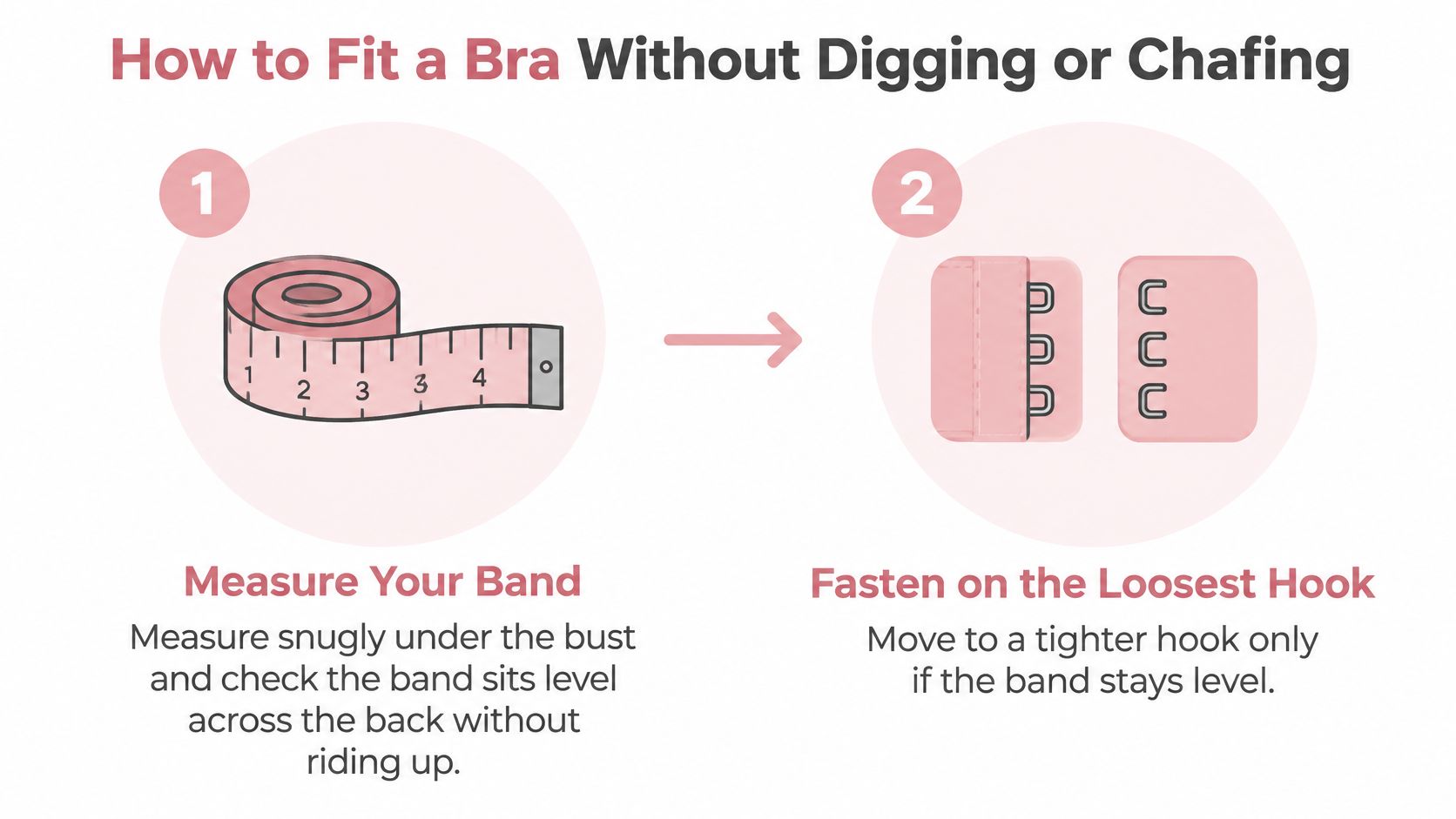
- Measure beneath the bust. Wrap the tape snugly without pressing it into your skin. Use the style's size guide, then check that the band sits level across your back.
- Begin on the loosest hook. Fasten tighter only if the band stays level and comfortable. Starting on the tightest setting leaves less room to adjust as the band relaxes with wear.
- Settle into the cups. Check for gaps, spilling, or wrinkled fabric at the top and sides. Tightening the straps won't fix every cup mismatch.
- Adjust the straps without hauling them tight. The Perfect Coverage Push Up Back-Hook Bra has adjustable straps and recommends sizing up between sizes. After adjusting, bend forward and move your arm: check by hand whether a strap stays comfortably in place under your arm without digging or rubbing.
- Raise your arms, bend forward, and sit down. Notice whether the band shifts, the cups lift, or anything presses near the underarm. The straps shouldn't have to be pulled tight to hold the bra in place.
- Try a short indoor wear test before extending it. Check how the bra feels after 20 minutes, then again after two hours if you remain comfortable. These are practical trial checkpoints, not medical thresholds.
Judge comfort, not just visible marks
Pay attention to repeated little adjustments. If you keep touching the same spot or feel relieved when you lift a strap away, treat that as fitting feedback, even if your skin shows no obvious line. Stop the test if the bra hurts, burns, or causes itching. Don't wait for a planned checkpoint.
Some movement is normal. Constant readjustment means the size or cut may not suit you, so try another rather than forcing the same bra tighter.
Use a movement check alongside the mirror assessment.
If you're between sizes, favor comfort over a smaller, more compressed shape. Size up when the style's guidance recommends it, then check that the bra still supports you. If the larger size gaps while the smaller one pinches, choose another cut instead of accepting either problem.
Caring for Sensitive-Skin Bras So They Stay Gentle
Gentle care preserves the fabric, finish, and shape you chose. Keep the routine simple and consistent. More products won't make a bra comfortable if its elastic, seams, hardware, or fit are irritating your skin.
Wear and washing can distort a bra, creating rough edges or new pressure points. Check the band near the closure and the places where straps meet the cups as you wash.
Keep washing simple
- Prewash before the first wear: Washing can remove loose residues, but it cannot guarantee allergy prevention. Follow the care label and avoid an aggressive wash.
- Use gentle detergent: Choose one you already tolerate, rinse thoroughly, and skip harsh finishing products that can leave a coating.
- Follow temperature guidance: Use the temperature symbol on the garment's care label.
- Skip chlorine bleach: Avoid harsh treatments unless the care instructions specifically allow them.
- Protect machine-washed pieces: If machine washing is permitted, use a laundry bag to contain hooks and straps and help protect the bra's shape.
Check each garment's label before drying, too. Care instructions vary, so follow the directions for that bra rather than applying one routine to every piece.
Dry without pulling the shape out
Lay the bra flat, or place it on a hanger that supports its body. Don't hang a wet bra by its straps, since the garment's weight can pull on them. Keep molded cups uncrushed while they dry.
Replacement cue: Retire a bra when its changed shape or surface makes comfortable support impossible.
Inspect for stretched bands, pilled cups, rough exposed edges, and lost lift. Fading alone doesn't mean the fabric will irritate you, but it's a good reason to check the bra's condition.
Pay attention to the full build, not just the fabric name. A bra that has developed rough edges or distorted elastic can rub against skin, while trapped detergent or sweat may add to the irritation. If wear has you overtightening the straps or fastening a misshapen band, replace the bra instead of washing it more forcefully.
Choose Your Sensitive-Skin Bra and Test It Safely
A comfortable bra depends on more than its fiber name. Dyes, elastic, seams, hardware, and sweat can combine to trigger irritation, so choose for your support needs and inspect the garment's full construction. Light lounge support and fuller-bust workday support involve different trade-offs. Don't choose a delicate bralette for a demanding day solely because its fabric sounds gentle.
For fuller-bust wear, the featured back-hook style offers a wire-free W-shaped support structure, a U-back designed for smoothing and weight distribution, molded cups with no visible joins, non-removable pads, and a flat hook-and-eye closure. Its PFAS-free claim describes a material attribute, not an allergy certification. The bra also lists wrinkle resistance. If you're avoiding finishing treatments, ask what that means for the fabric rather than assuming smooth construction means untreated material.
Choose the build that solves your problem
For fitted clothing, Nuage's Smooth Edge / No Visible Lines collection includes laser-cut edges. Its underwear range also includes modal fabrics and bonded-band designs. Check each product listing, since those features don't apply automatically to every piece. Smooth edges may reduce rubbing, but they don't rule out reactions to dyes, elastic, or other garment components.
Use the fitting trial above during an ordinary day, while following the return policy's condition requirements. Notice where pressure, friction, or redness appears, and check whether marks persist after removing the bra. Stop wearing a painful garment instead of pushing through a trial. If the fit fails, review the Best Pair Guarantee and return policy for eligibility and next steps. Don't assume every worn item qualifies.
Know when shopping isn't the next step
A review of textile contact dermatitis studies found that 2.1% to 6.9% of consecutively tested dermatitis patients reacted to a textile dye mix containing eight disperse dyes. These were patients being evaluated for dermatitis, not a representative sample of bra wearers.
If a rash returns in the same place after each wear, stop wearing that bra and book a dermatology visit. Patch testing can investigate dye allergens and other contact triggers, and a clinician may assess the garment itself. Bring the bra, the dates you wore it, and notes about where the rash appeared.
Nuage Wears offers comfort-first bras and underwear with options focused on smooth edges, wire-free support, and less digging. Visit Nuage Wears to compare construction details, check sizing guidance, and choose a style to assess against your skin's needs.