

Introduction
Buying Women’s seamless underwear online should feel simple, but sizing mistakes are common. A waistband that rolls, edges that dig, or a cut that rides up can turn a “barely there” pair into an all-day distraction.
A fast sizing process helps you avoid returns and get the fit you wanted on the first try. It also helps Seamless underwear buyers pick the right rise, coverage, and stretch level for real life: Gym and runners, Office commuters, Frequent travelers, and Everyday comfort seekers.
This guide walks you through six practical steps you can do at home in under 10 minutes. You will measure, match the cut to your wardrobe, and then validate fit with movement and invisibility checks for Everyday invisible layering.
Official Site: Nuage
How to Size Women’s Seamless Underwear Step by Step
Step 1: Take three body measurements

Start with measurements, because seamless knits stretch and can feel forgiving until they start rolling or shifting. Use a soft tape measure and record numbers in inches (or centimeters), then compare them to the size chart.
- Waist (natural waist): Measure at or just above your belly button. Keep the tape level and snug, not tight.
- Hip: Measure around the fullest part of hips and butt. Stand relaxed with feet together.
- Low hip (optional but helpful): Measure 2 to 4 inches below hip fullness to predict leg opening pressure.
If your waist and hip fall into different sizes, prioritize the hip for most underwear cuts. Hip fit usually decides whether you get digging at the leg opening or a back rise that creeps.
Step 2: Match cut to wardrobe needs
This step prevents the most common online mistake: choosing a size correctly, but choosing the wrong cut for your outfits. Your wardrobe and activities decide how much coverage and edge security you need.
Use this quick cut-to-use mapping:
- Thong: Best for No-VPL Design under leggings, dresses, and body-hugging Apparel tops and bottoms. It can also help with Everyday invisible layering.
- Brief or bikini: A safer choice if you are prone to ride-up or want more seat coverage for commuting.
- Shapewear underwear: Choose this when you want smoothing and a more controlled feel (but do not size down aggressively).
- Sleep and loungewear: Look for soft stretch, gentle waist pressure, and fewer tight edges for Sleepwear comfort nights.
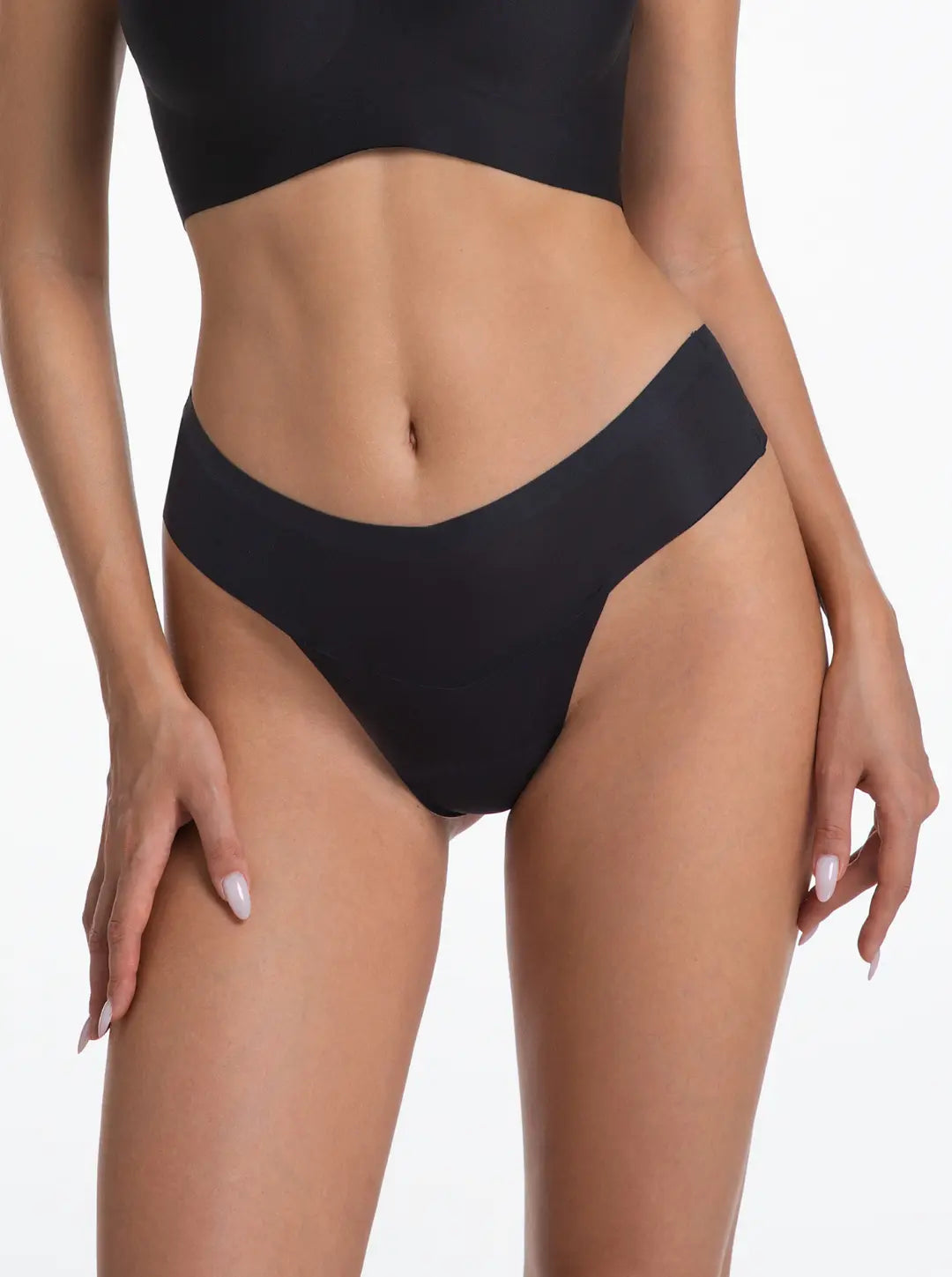
Nuage example to anchor your choice: NuShield Thong Light is designed as a seamless thong with raw-cut edges for an invisible finish, and it includes a built-in antibacterial latex gusset marketed for anti-camel-toe coverage. That feature can matter if you live in leggings during Gym workouts and training or Running and cardio sessions.
Shop: NuShield Thong Light
Step 3: Check fabric stretch and recovery
Even within Women’s seamless underwear, fabric can behave very differently. Two pairs can look identical online but fit differently in motion.
Here is what to look for in product descriptions:
- Stretch blend: Polyamide + spandex blends often signal a smooth, elastic handfeel.
- Recovery: The fabric should return to shape after stretching. Poor recovery causes bagging in the seat and sliding at the waist.
- Breathability and sweat handling: For Performance Underwear use, look for descriptions like breathable, lightweight, or moisture-wicking.
On NuShield Thong Light, Nuage lists its Breeze-in Fabric as 76% polyamide and 24% spandex, positioned as lightweight, breathable, and quick-drying for active days. That blend can be helpful for Active women who alternate between workouts and errands, because the fabric stretch can adapt without feeling bulky.
A practical check before you commit to multiples: if a product calls out “raw cut edges” and “no digging,” it usually means the edge is designed to lie flat instead of pinching. That is a big part of a true No-VPL Design.
Step 4: Decide on in-between sizing
If you are between sizes, decide based on your comfort priority and your typical problem:
- Size up if you hate waistband pressure, you sit a lot (commuting), or you notice numbness or red marks.
- Size down only when a brand explicitly says it runs large and you already know you slip out of seamless waistbands.
For most people, sizing up is the safer bet with seamless underwear, because seamless knits already stretch. A slightly larger size often reduces edge stress, which reduces rolling and the classic “seamless but still visible” line created by tension.
Nuage states a clear fit tip on NuShield Thong Light: if you are between sizes, size up. Use that advice especially when you want all-day wear for travel or extended sitting.
Step 5: Validate fit using movement tests
A mirror check while standing is not enough. Seamless underwear can look perfect and then fail when you move.
Do a 60-second movement test while wearing the pair under lightweight shorts or leggings:
- Squat (3 reps): Watch the waistband. It should stay flat without folding.
- Lunge (each side): Check inner thigh feel. You want no friction and no cutting at the leg opening.
- Sit (30 seconds): The waist should not compress into your belly, and the back should not pull down.
- Walk (10 steps): Notice if you instinctively adjust. If you do, the size or cut is off.
If you are a high-output mover (for example, Gym and runners), this step is where you confirm “stay-put” performance. A good pair should keep its position without relying on tight compression.
Optional pairing note: if you wear Bras and bralettes as part of an all-day comfort system, apply the same movement logic. A supportive, seamless bra should not shift up at the band when you raise arms or twist.
Step 6: Confirm invisibility under outfits
This final check is where Women’s seamless underwear either proves itself or gets returned. Test with the outfits that matter to you.
Use this mini checklist:
- Leggings test: Bend forward and check for edge print at the hip and along the seat.
- Work slacks test: Walk and sit. Confirm no back edge line and no waistband ridge.
- Light colors test: Nude shades can disappear under thin fabrics, but shade match matters.
NuShield Thong Light is designed around “seamless raw cut edges” for minimal panty lines, which aligns with Minimalist Aesthetics and the “invisible under tight clothing” goal. If you get a line anyway, it usually means the size is too small (too much tension) or the fabric is being pulled by tight outerwear.
Shop: NuShield Thong Light
Seamless Underwear Sizing in Different Scenarios
- Gym workouts and training: Prioritize recovery and grip without harsh Compression Fit. Choose a cut that does not shift during squats and deadlifts, and consider thong styles when leggings are your uniform.
- Travel and long flights: Avoid tight waistbands and choose a size that stays flat when seated for hours. Breathable, quick-drying fabrics help when you are moving between climates.
- Office commuters: Optimize for No-VPL Design under slacks and pencil skirts. Choose a size that stays comfortable when sitting, because waistband roll often starts at the desk.
Prerequisites and Safety
Required Tools and Materials
- Soft measuring tape (flexible tailor tape works best)
- Full-length mirror or a phone camera on a timer
- Notepad or notes app to save measurements
- Your current best-fitting underwear for comparison
- Lightweight leggings for visibility testing
Safety Considerations
Comfort is a safety and skin-health issue, not just a preference.
- Avoid overly tight Compression Fit that causes numbness, tingling, or deep marks.
- Stop wearing a pair if you notice chafing, itching, or persistent irritation after a normal day.
- Wash new underwear before first wear, especially if you have sensitive skin.
- If you train hard and sweat often, rotate pairs so fabric can fully dry between wears.
For general context on protective standards in other wearables, OSHA references ANSI criteria for eye and face protection in hazard environments, which is a reminder that fit and performance standards matter when equipment is worn for long periods.
Troubleshooting
| Problem | Likely cause | Solution |
|---|---|---|
| Rolling waistband | Size too small, waistband under too much tension | Size up, or choose a higher-rise cut so the band sits on a flatter part of the torso |
| Riding up (wedgie feeling) | Cut mismatch for your body, not enough seat coverage | Switch from thong to brief/bikini, or choose a size that reduces leg-opening tension |
| Visible lines under leggings | Edges are stretched tight, outerwear is very compressive | Size up, test under a different legging fabric, and prioritize raw-cut seamless edges |
| Fabric feels hot or stays damp | Low airflow outfit or high-sweat day | Choose more breathable, sweat-wicking materials and change soon after training |
| Waist feels fine standing but digs sitting | Band sits too low or size is borderline | Re-measure waist, size up, or choose a rise that stays above your bending point |
Conclusion
Getting Women’s seamless underwear sizing right online is mostly about process. Measure first, then choose the cut for your wardrobe, and finally validate with movement and invisibility checks.
When you find a winner, re-check your measurements before ordering bundles, especially if your training schedule or travel calendar changes. The goal is a fit that disappears in motion, not a size you tolerate.
Official Site: Nuage
FAQ
Sizing Tips for Seamless Underwear
Start with fresh waist and hip measurements taken while standing relaxed, then compare them to the brand's size chart—don’t guess based on your usual jeans size. As noted by Wikipedia's guide on Clothing Sizes, garment sizing varies significantly across brands, making personal measurements the only consistent standard. If your waist and hips fall into different sizes, use your hip measurement to avoid leg-opening digging and ride-up. If you're between sizes, go for the larger size, as seamless knits stretch, and smaller sizes can roll. After trying on, do a quick squat and sit test to ensure the waistband stays flat.
Tips for Underwear That Feels Like Second Skin and Doesn’t Ride Up
Look for lightweight, high-stretch seamless fabrics that recover after being stretched. During the try-on, walk 10 steps and do 3 squats, as ride-up often happens with movement. If it rides up in the back, try a style with more seat coverage or size up. If it rides up in front, check the gusset width and consider a different rise.
Comfortable Waistband That Doesn’t Dig In
Avoid sizing down for a tighter feel, as this often increases waistband pressure when sitting. Choose a size that lies flat at the waist while standing and remains comfortable after 30 seconds seated. If you notice a ridge or the band folds, a slightly higher rise can help. If you experience deep marks or numbness, size up.
Comfortable Underwear for All-Day Wear Without Rolling or Shifting
Look for a stable waistband and fabric recovery that holds its shape throughout the day. Measure yourself, then choose a cut that suits your outfit—an invisible thong under leggings needs different edge behavior than a brief under jeans. Do a real-world test: sit, walk, climb stairs, and check if you need to adjust. If you're constantly adjusting, try a different size or cut.
Underwear That Stays in Place Without Shifting
Shifting often occurs when the waistband is too large or the leg opening is too loose. If you're moving a lot, choose a cut that anchors at the hips and test it with lunges and brisk walking. Check fabric recovery—if it bags out, it will likely shift later.
Clear Size Recommendations and Fit Guidance
Start by accurately measuring your waist and hips and saving them for future orders. Check the brand’s size tips to understand if it runs small or true to size. Before removing tags, do a quick test: sit for 30 seconds, squat 3 times, and check for visible lines under leggings. If any test fails, adjust size or cut before buying bundles.
Table of Contents
- Introduction
- How to Size Women’s Seamless Underwear Step by Step
- Seamless Underwear Sizing in Different Scenarios
- Prerequisites and Safety
- Troubleshooting
- Conclusion
-
FAQ
- Sizing Tips for Seamless Underwear
- Tips for Underwear That Feels Like Second Skin and Doesn’t Ride Up
- Comfortable Waistband That Doesn’t Dig In
- Comfortable Underwear for All-Day Wear Without Rolling or Shifting
- Underwear That Stays in Place Without Shifting
- Clear Size Recommendations and Fit Guidance


