
High-waisted cheeky panties sit in the perfect middle ground between modest coverage and modern style, offering waist smoothing without the restriction of traditional shapewear. A comfortable waistband should stay below the 15 gf/cm² no-discomfort range, while the cheeky back gives you a little more exposure than a brief without becoming a thong. Technical waistband research supports the idea that pressure, rather than height, determines whether a garment feels supportive or restrictive.
You know the moment. You leave home feeling comfortable, then your waistband starts creeping downward, the leg openings pinch when you sit, and the back shifts every time you walk. By afternoon, you're adjusting your underwear instead of concentrating on work, errands, or the outfit you chose that morning.
High-waisted cheeky panties can solve those problems, but only when the rise, fabric, edges, and stretch work together. The secret isn't “more fabric” by itself. It's controlled pressure, stable recovery, and a back panel shaped for movement.
Table of Contents
- The Comfort Revolution in Everyday Underwear
- Defining the High Waisted Cheeky Cut
- Material Science for All-Day Comfort
- Styling Secrets for Invisible Lines
- Choosing the Perfect Rise and Coverage
- Debunking Myths About High-Waisted Styles
- Troubleshooting Common Fit Issues
- Conclusion - Elevating Your Intimate Wardrobe
The Comfort Revolution in Everyday Underwear
You dress in soft clothes and check the mirror, expecting an easy day. By breakfast, the waistband has rolled. Later, a leg opening leaves a mark under your trousers, and climbing stairs brings another discreet adjustment. The fit looked fine while you stood still, yet your body keeps changing position.
That gap between a static fitting-room pose and real movement explains the appeal of comfort-first underwear. A well-made pair behaves like a flexible support layer. It must accommodate sitting, bending, walking, commuting, and stretching while spreading pressure instead of concentrating it along one narrow edge.
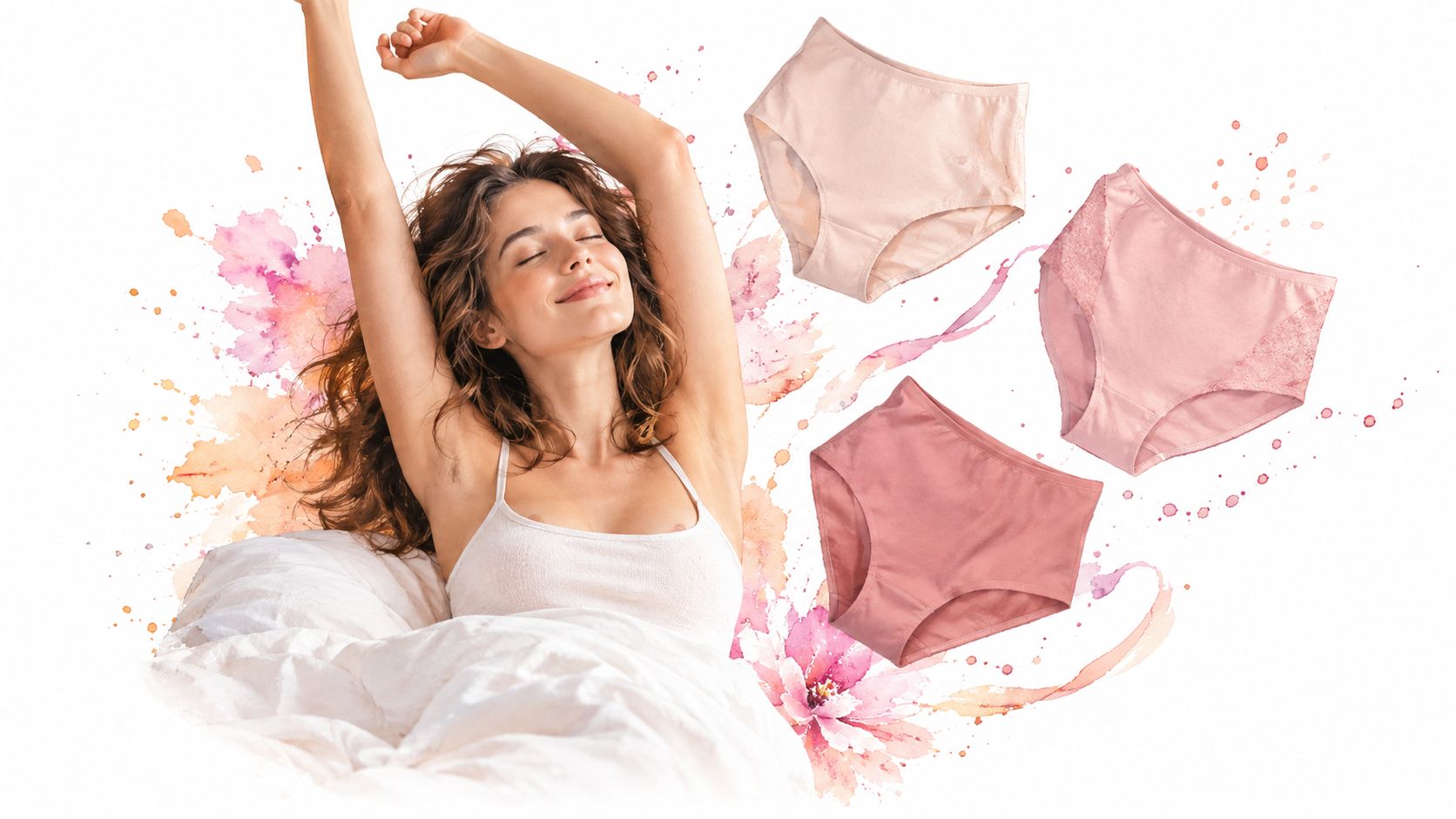
From hidden utility to personal comfort
Underwear has always balanced function with appearance. The Rijksmuseum's history of European underwear follows garments from practical linen layers around 1640 to more fashion-conscious pieces up to 1940, including corsets, petticoats, chemises, and directoire knickers. Corsets shaped the waist and torso, while panniers and hoops altered the silhouette around them.
Modern high rises can provide structure without that rigid construction. A soft, well-calibrated waistband covers more of the torso and creates a smoother clothing transition. Its stretch should return to shape after movement, while the cheeky back can follow the body without pulling the waistband downward. The result supports the outfit through motion rather than forcing the body into a fixed shape.
Practical rule: Comfort comes from how a garment manages movement and pressure, not from how high the waistband looks on a product page.
A broader body-comfort routine can also include guidance on supportive daily essentials. The shop The Happy Bump Co self care guide offers that perspective. Small clothing choices can reduce repeated friction throughout the day, especially when fabric, stretch, and edge placement work together.
Defining the High Waisted Cheeky Cut
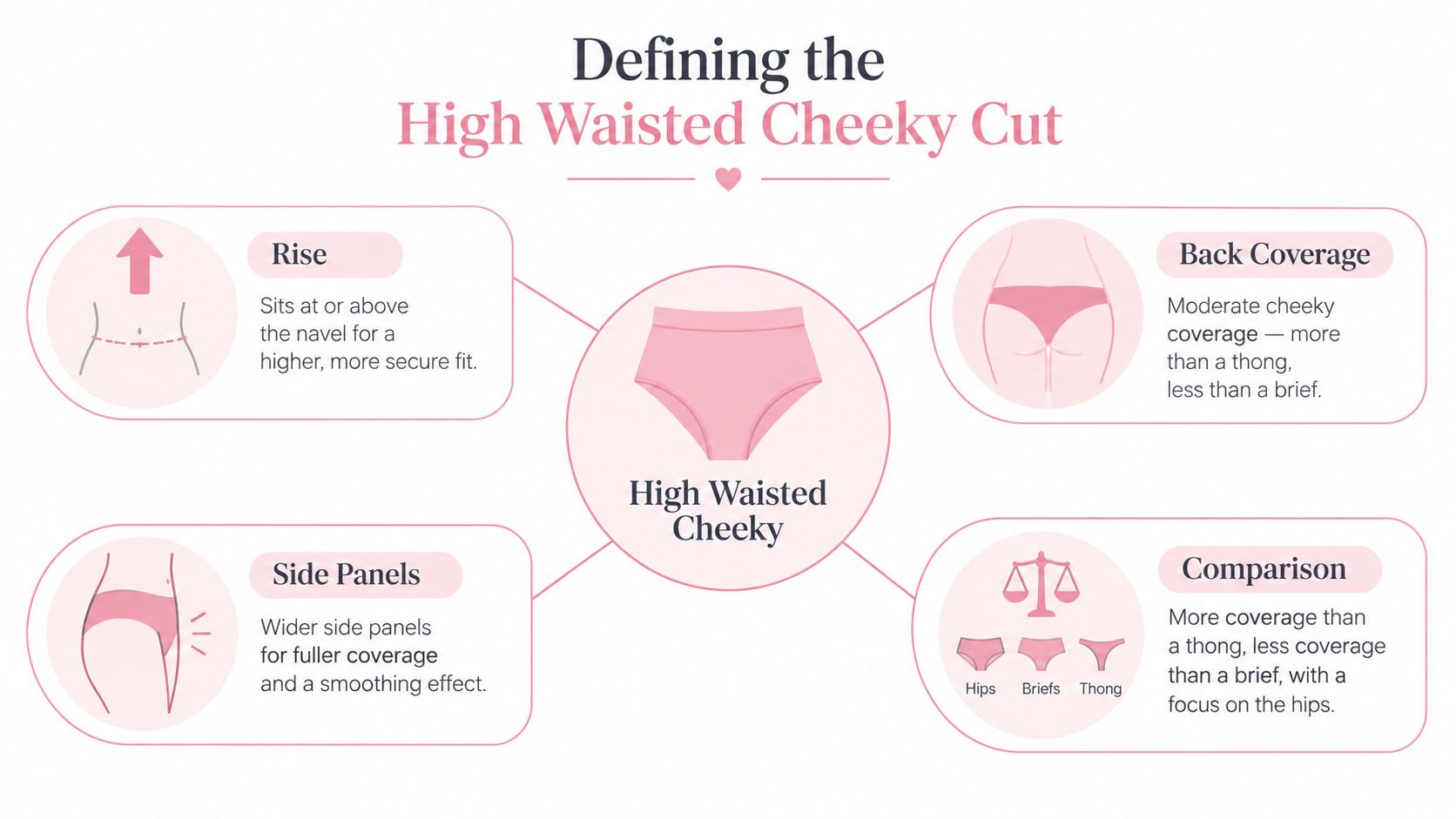
The rise determines where the waistband sits, while the back panel controls how much of the lower buttocks it reveals. Separating these two features makes the style easier to understand and reduces confusion when comparing sizes or product descriptions.
A high rise usually reaches the navel or higher, adding fabric above the natural hip line. The back offers moderate coverage, showing more of the lower buttocks than a traditional brief or bikini while covering more than a thong or G-string. Broader front and side sections give the garment a steadier base, so the waistband has less tendency to roll as the body bends or sits.
How each zone affects comfort
The cut works through several connected areas:
- Rise: The vertical distance from the gusset to the top edge. More height covers the abdomen and can help the waistband stay positioned beneath high-rise clothing.
- Back panel: A scooped or narrower shape creates the cheeky effect. Because “cheeky” has no standardized measurement, the curve differs between garments.
- Side panels: Fuller sides spread tension across the hip instead of placing pressure along one narrow edge.
- Leg openings: Their angle and stretch influence whether the rear stays in place or shifts upward during movement.
A bikini or hip style sits closer to the hip bones and creates a lower profile. A brief covers more of the rear, while a thong uses minimal back fabric. High-waisted cheeky panties sit between these choices, combining torso coverage with selective exposure.
Construction determines whether that balance feels comfortable. A waistband that stretches and recovers can move with the body instead of digging in. Side panels help distribute pressure, while a properly shaped leg opening limits upward migration. The best fit acts more like a flexible frame than a tight band.
Brand variation still matters. One style may use a high back rise and broad sides, while another has a narrower rear curve and firmer leg elastic. Check garment measurements, rise details, gusset placement, and edge construction rather than relying on “cheeky” alone.
Material Science for All-Day Comfort
Fabric labels offer a useful starting point, yet comfort depends on how the material is built. Two garments can use similar fibers and feel completely different when one has a dense knit and the other has a more open structure. Yarn fineness, porosity, thickness, stitch geometry, and stretch recovery influence airflow, moisture movement, and how steadily the fabric holds the body during motion.
A 2024 underwear-fabric study found that finer filament yarns, porous constructions, shorter fabric thickness, and suitable stitch geometry improved air permeability, water-vapor permeability, moisture transport, and overall moisture-management performance. Stitch length creates a balancing act. Longer stitches can add stretch, while too much extensibility may leave the seat or leg opening unstable. In practice, a fabric should give when you sit or bend, then recover before it starts to roll or shift.
Read fabric descriptions like a fit consultant
Modal often feels smooth and flexible, cotton offers a familiar soft hand, and mesh can direct airflow. These labels describe the ingredients, not the finished experience. Construction must suit the body area and activity. A waistband that stretches evenly spreads pressure like a broad strap, while stable recovery prevents that strap from staying stretched after movement.
- For everyday softness: Choose a smooth, flexible knit with enough recovery to return to shape after sitting and walking.
- For heat-prone areas: Look for mesh or porous zones where moisture tends to collect.
- For stable coverage: Prefer a denser knit through the high-rise waistband and cheeky rear panel.
- For durability: Check whether fabric and edges retain their shape after washing instead of becoming loose or wavy.
Comfort comes from controlled pressure, stable recovery, and a back panel shaped for movement. A breathable garment isn't automatically healthier, and a more covered cut isn't automatically hotter. Research on close-fitting underwear found only minimal differences in skin temperature and skin bacteria across two systems. A breathable panty-liner backing kept temperature and humidity closer to bare-skin conditions than a non-breathable backing. This evidence-based overview supports a careful conclusion: structure, moisture release, tightness, and gusset design work together.
Care affects that performance. Follow this BacteriaFAQ.com laundry guide to help protect stretch fabrics and delicate edges. Persistent irritation, odor, or unusual discharge deserves medical advice rather than a change in underwear alone.
Styling Secrets for Invisible Lines
The best pair disappears twice. You shouldn't feel it during movement, and you shouldn't see it under the clothing you want to wear. High-waisted cheeky panties can create that effect when their edges end smoothly, their back panel stays flat, and the rise matches the garment layered over it.
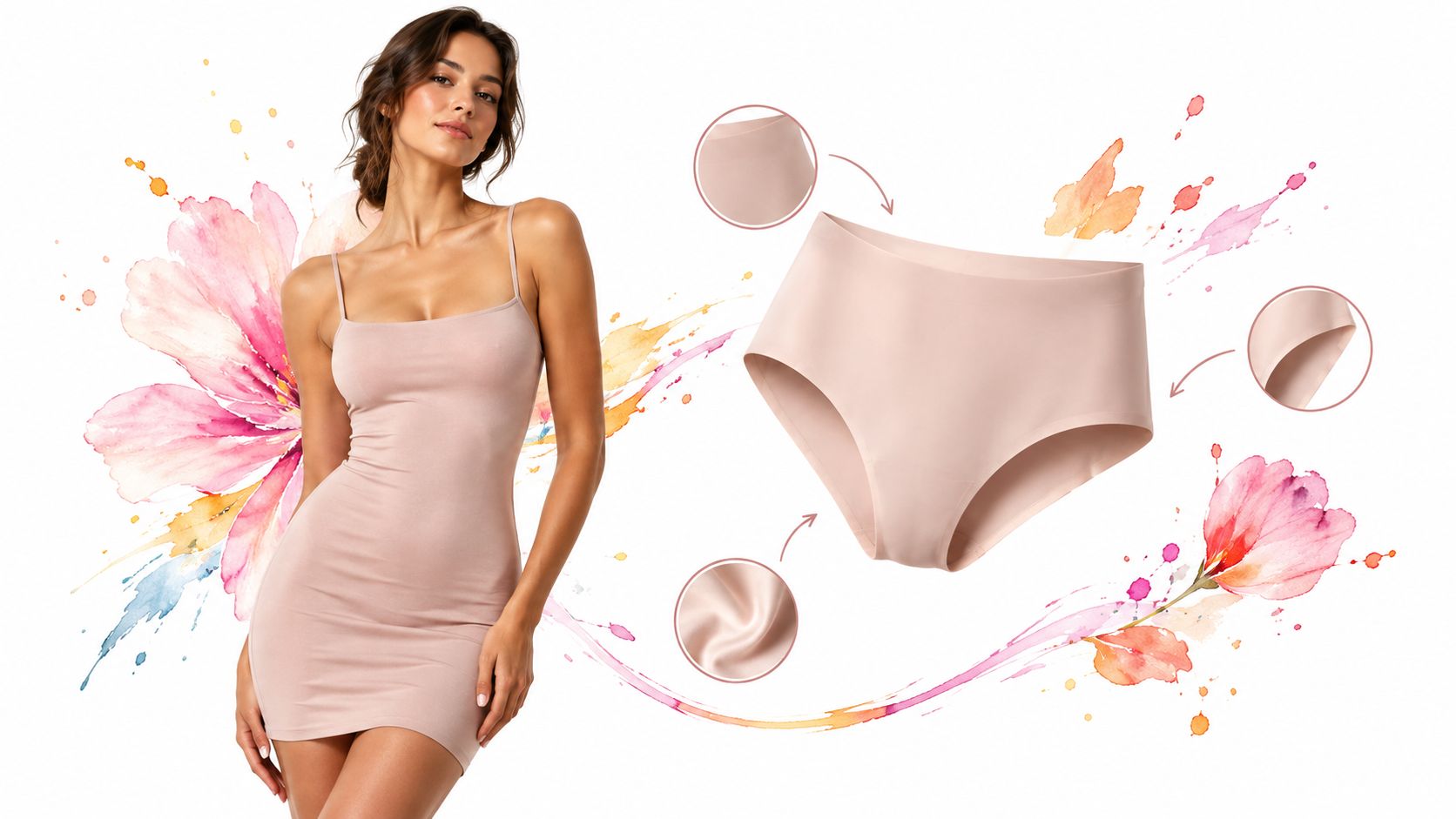
Match the edge to the outfit
Under fitted trousers, a laser-cut leg opening usually creates a cleaner transition than a thick stitched elastic. Under a lightweight dress, a smooth back panel matters because a raised seam can show even when the front looks smooth. Under high-rise denim, the taller waistband can align with the jeans instead of stopping at an awkward midpoint.
Use this quick pairing guide:
- Tailored trousers: Choose a smooth edge and a stable side panel so fabric doesn't catch at the hip.
- Fitted dresses: Look for a flat rear finish and a gusset that stays centered while walking.
- Lightweight skirts: Avoid bulky lace or thick seam transitions that may cast a visible outline.
- High-rise jeans: A taller rise can feel more coherent and reduce exposed gaps between layers.
The goal isn't to squeeze the body into a perfectly rigid outline. It's to prevent abrupt changes in thickness and pressure. This guide to avoiding panty lines offers further practical styling ideas for creating a smooth finish.
The cover image should also be prepared for its publishing space. A 280:210 canvas has a 4:3 aspect ratio, because both dimensions divide by 70, giving 4 and 3. Google's image guidance advises avoiding extreme proportions, so keep the subject inside a central safe area. A larger 4:3 version can preserve the same composition, but changing only one dimension will distort the image or force a crop.
Choosing the Perfect Rise and Coverage
Rise selection starts with your proportions, not a trend. A long torso may accommodate a taller waistband without bunching, while a short torso may need a carefully shaped high rise to avoid excess fabric folding beneath the bust. Your hip-to-waist ratio, glute shape, and preferred level of coverage also change how the same labeled size feels.
Compare the main options
| Cut | Best suited to | Watch for |
|---|---|---|
| High rise | Waist definition, high-rise clothing, fuller torso coverage | Bunching on a shorter torso if the waistband has too much length |
| Mid rise | A familiar everyday position and balanced coverage | Less abdominal coverage and possible shifting at the waist |
| Hip style | Lower-rise clothing and a lighter-feeling profile | Less stability when paired with high-rise garments |
A high rise can feel secure during desk work, walking, and travel because more fabric contacts the torso. That benefit disappears if the waistband is too tight or the rise is too long for your body. Mid-rise cheeky panties may suit shoppers who want a lower pressure point, while hip styles can work well under clothing that sits below the natural waist.
Coverage deserves the same careful comparison. A narrower cheeky back may look sleek but can require stronger leg-opening stability. A slightly fuller back can reduce wedging during squats or stairs. The right choice depends on whether your priority is a minimal outline, more security, or a balance between both.
Use this high-waist underwear fit resource as a practical reference when comparing rise and coverage. Always check the brand's measurements, then test the garment in motion rather than judging it only while standing.
Debunking Myths About High-Waisted Styles
A high waistband does not automatically feel restrictive. Comfort depends on how tension spreads across the torso. A wide, soft band distributes force over more skin, while a narrow or firm edge concentrates it in one spot, much like a thin strap pressing into your shoulder.
Pressure also changes with the covered area, breathing, and movement. The published evaluation measured below 15 gf/cm² as producing no perceived discomfort, 15 to 25 gf/cm² as negligible to slight discomfort, and above 25 gf/cm² as extreme discomfort. These figures help explain why the same labeled size can feel comfortable while standing yet dig in after sitting or bending.
Engineering determines comfort
High-waisted underwear is not limited to a conservative wardrobe. A cheeky back gives the higher rise a current silhouette. The result can look polished under fitted clothing, playful beneath a dress, or practical with activewear.
Height alone does not stop rolling. Extra fabric can steady the waist, but it may bunch when the torso length, leg openings, and stretch recovery disagree. Construction should keep the waistband moving with the body, like a flexible belt that shares pressure instead of folding at one point.
Test the garment while sitting, bending, and walking. A stable edge, soft finish, dependable recovery, and enough side coverage help the fabric stay in place without turning everyday underwear into rigid shapewear.
A high rise should follow your body, not fight it.
Troubleshooting Common Fit Issues
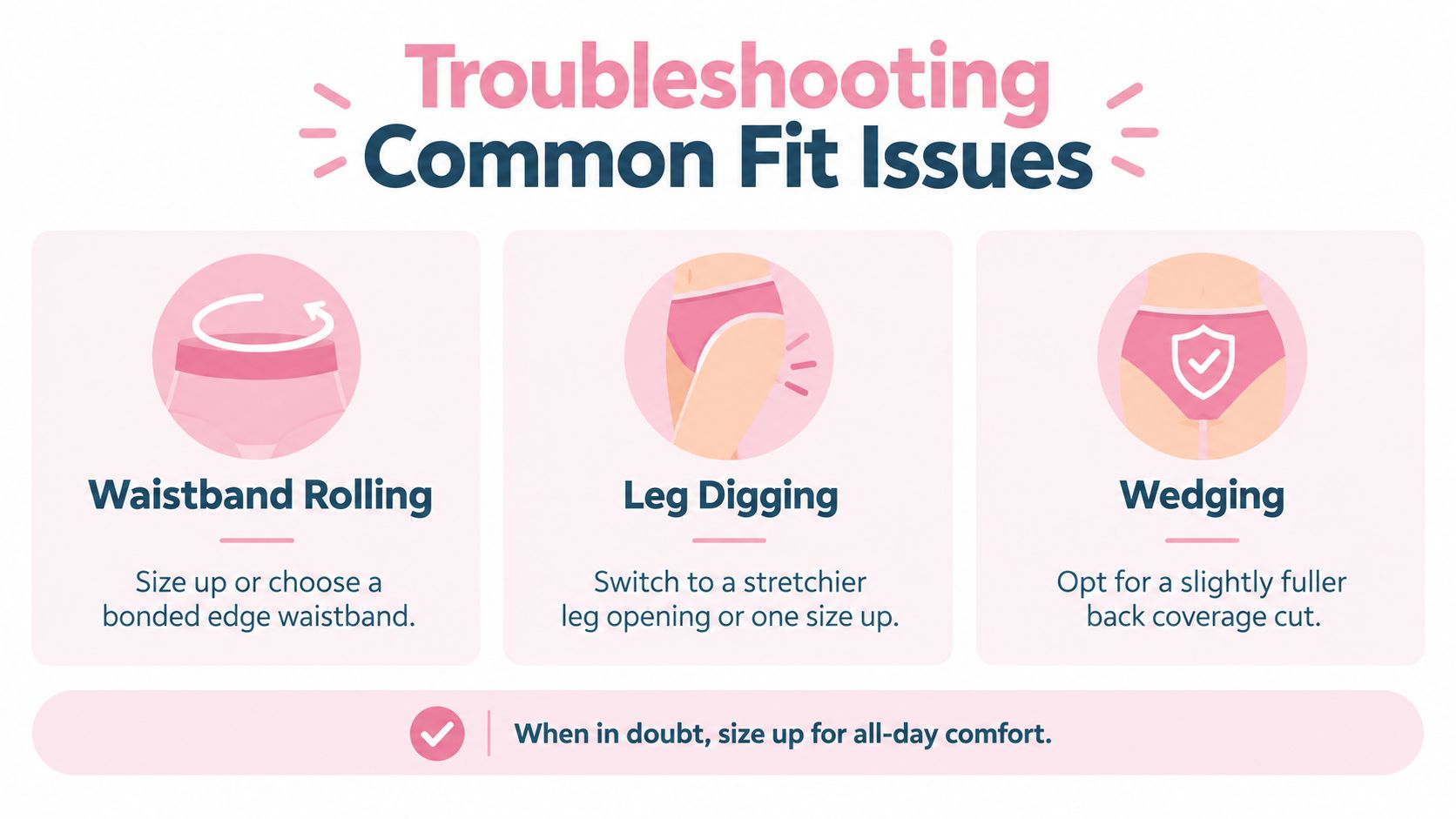
You sit down, bend to pick something up, and notice the waistband folding or the back shifting. These symptoms can feel like a sizing problem, yet they often reveal how the garment responds to movement. Rolling, leg digging, and wedging each point to a different relationship between tension, body contact, and construction.
Start with a movement test
Put the panties on correctly, then test the actions your day requires:
- Sit for several minutes. A sharp fold at the front or back can mean the rise is too long, the edge lacks stability, or the garment is too tight.
- Squat and bend. If the cheeky panel travels upward, the rear may be too narrow for your shape, or the leg openings may not recover their position.
- Walk and climb stairs. A leg edge that leaves a sharp mark or shifts inward needs a softer, stretchier opening or a different cut.
- Check the pressure points. Notice the front waist, side seams, lower back, and leg openings. Comfort depends on how tension spreads across these contact areas, not on waistband height alone.
A mirror shows only a still position. The technical movement research helps explain why friction can become more noticeable during activity, when heat, moisture, and repeated movement change the clothing microclimate.
Match the fix to the symptom
- Waistband rolling: Try a larger size or a bonded edge. If a shorter torso makes the rise bunch, choose a shorter high-rise shape instead of adding compression.
- Leg digging: Look for a stretchier opening or move up a size. A wide edge can still dig when its elasticity is limited.
- Wedging: Choose slightly fuller rear coverage, then check whether the gusset stays centered while you walk and sit.
- Pressure after bending: Reassess the side seams and lower back. Uneven tension may be the cause, even when the waist measurement seems correct.
Body proportions can also change. If you are learning more about how pregnancy alters your body, remember that a rise that once worked may feel different as your abdomen and torso change. Recheck the full fit rather than forcing an old size to work.
Conclusion - Elevating Your Intimate Wardrobe
High-waisted cheeky panties work because they solve two different needs in one silhouette. The higher rise provides torso coverage and waist definition, while the cheeky back keeps the shape modern and avoids the full rear coverage of a traditional brief. That balance makes them useful for everyday dressing, not just a particular style mood.
The most important lesson is that comfort comes from coordinated details. The waistband needs controlled pressure and dependable recovery. The fabric needs enough openness for airflow without sacrificing stability. The leg openings and rear panel need to match your proportions so the garment stays put when you sit, walk, bend, and climb.
Choose based on the outfit and the movement you expect. A smooth edge can help under fitted clothing, a targeted mesh zone can support moisture release, and a slightly fuller back may solve wedging more effectively than sizing up blindly. For anyone with a shorter torso, a long high-rise panel may bunch even when the waist measurement is correct, so test the full garment rather than relying on a label.
Quality underwear shouldn't demand constant attention. It should give you a stable foundation for the clothes you already love, from work trousers to soft travel layers. Treating fit as a combination of pressure, fabric, geometry, and movement turns shopping from guesswork into a practical form of self-care.
Nuage Wears offers comfort-first underwear designed around real problems such as rolling, digging, visible lines, wedging, and overheating. Visit Nuage Wears to explore high-rise, breathable, and stay-put styles for a more comfortable everyday wardrobe.