

The most popular underwear-washing advice is also the least useful: wash everything as hot as possible to kill bacteria. Boiling-hot water isn't a universal hygiene setting, and it can shorten the life of the very fabrics that make modern underwear comfortable. Elastane, bonded waistbands, laser-cut edges, modal softness, and moisture-wicking mesh all need a more precise routine.
Underwear should be washed after every wearing, according to the American Cleaning Institute's laundry basics guidance. The core question is how to wash underwear so it stays hygienic without losing its recovery, shape, or breathability. For routine wear, that means matching temperature, agitation, detergent, and drying to the garment instead of treating every pair like a towel.
Table of Contents
- The Hygiene Versus Fabric Preservation Tradeoff
- Sorting and Preparing Your Intimates for the Wash
- Machine Washing Rules for Modal Cotton and Mesh
- Hand Washing Techniques for Shapewear and Delicates
- Drying Methods That Protect Elasticity and Shape
- Targeted Stain Removal and Longevity Troubleshooting
The Hygiene Versus Fabric Preservation Tradeoff
Why hotter isn't always better
Underwear sits against the skin and collects sweat, body oils, and moisture, so cleanliness matters. But cleaning and fabric preservation are competing goals when a garment contains stretch fibers or bonded construction. Repeated high heat can accelerate the breakdown of elastic components, while aggressive agitation adds friction to seams, mesh, and raw-cut edges.
Higher temperatures do have a place. For higher-risk sanitation, the CDC's laundry guidance notes that hot-water washing is commonly recommended at at least 160°F (71°C) for a minimum of 25 minutes. Chlorine bleach cycles typically achieve a total available chlorine residual of 50–150 ppm, while carefully controlled lower-temperature cycles of 71°F–77°F (22°C–25°C) can also reduce microbial contamination when washer cycling, detergent, and additives are properly managed.
That doesn't mean every everyday pair needs a high-risk sanitation protocol. It means the right setting depends on soil level, illness exposure, fabric tolerance, and care-label instructions.
Practical rule: Wash normal-wear underwear at the lowest temperature that suits the fabric and condition. Reserve stronger sanitation for situations that justify the extra wear.
The real failure mode of premium intimates
Most comfort-first underwear doesn't fail because one ordinary wash leaves it visibly dirty. It fails when the waistband stops recovering, the leg opening rolls, the gusset stays damp, or the fabric loses its ability to move moisture away from the body.
Cotton can tolerate more mechanical stress than delicate mesh, but even durable fabric benefits from moderate care. Modal and performance fabrics need especially careful handling because residue, heat, and friction can alter softness and breathability. The aim isn't sterile fabric after every routine wear. The aim is a garment that remains clean, supportive, and structurally intact across repeated laundering.
Sorting and Preparing Your Intimates for the Wash
The wash cycle can't undo damage caused before it starts. A quick pre-wash sort protects color, stretch, and the fine edges that make underwear disappear beneath clothing.
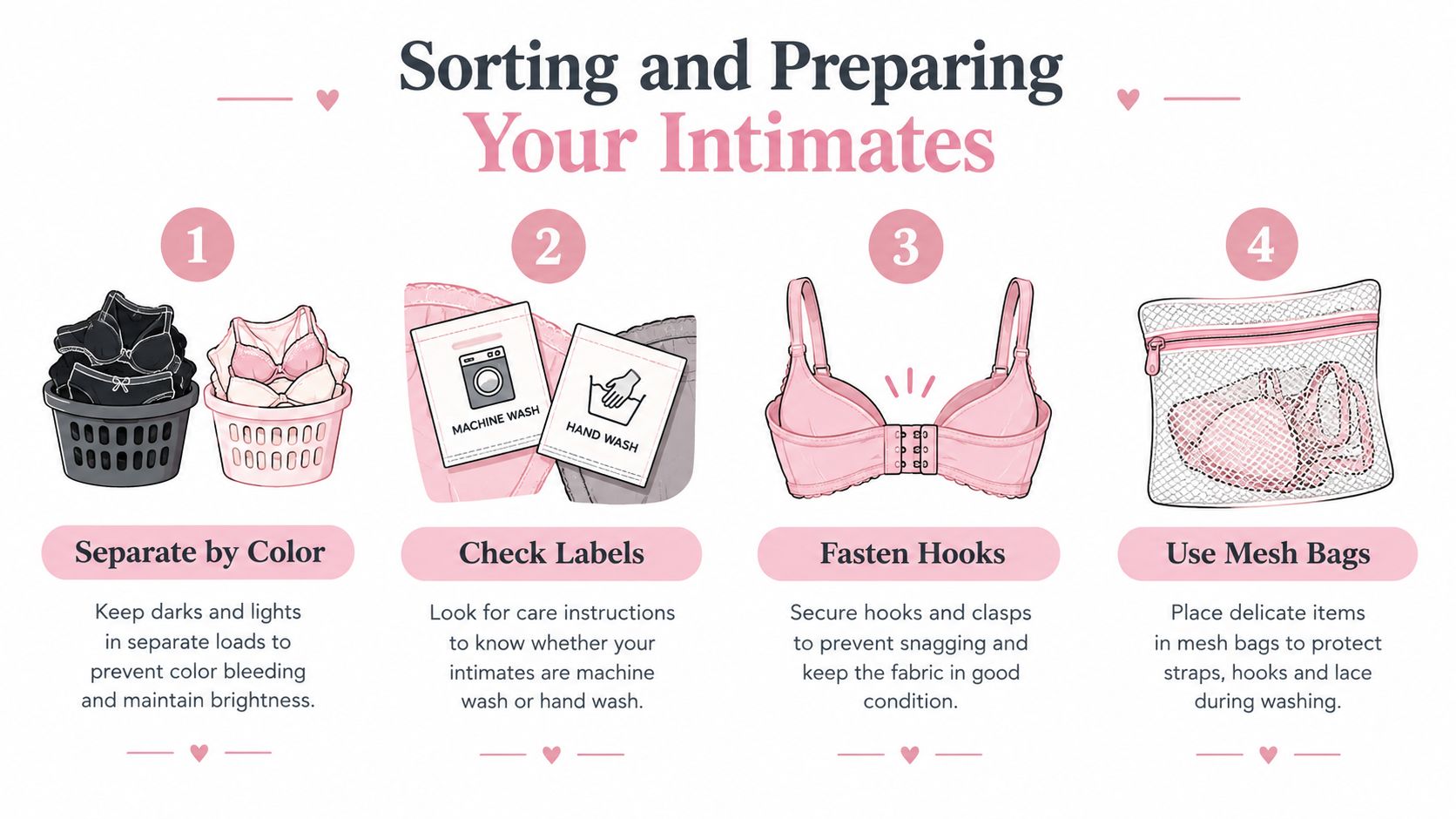
Use a simple triage system
First, separate by color. Keep darks, lights, and garments likely to bleed apart. New deep-colored pieces deserve extra caution because color transfer can affect pale gussets and mesh.
Next, read the care label. Machine-washable cotton can usually join a regular gentle load. Hand-wash instructions, structured shaping panels, intricate lace, silk, and delicate mesh are signals to isolate the garment.
Then, close anything that can catch. Fasten bra hooks, close snaps, and turn garments inside out when the outer surface has a printed finish. Open hooks and metal hardware can snag laser-cut hems or stretch mesh during tumbling.
Finally, use a mesh bag for vulnerable pieces. Put delicate underwear into a lingerie bag before adding it to the drum. The bag limits contact with zippers, denim, and heavy garments, reducing twisting and friction around bonded bands and thin edges.
Keep heavy laundry away
Underwear can be washed with everyday clothes when the garments have similar color and care needs, but jeans, towels, and other heavy items create unnecessary friction. A durable cotton brief may cope with a lighter T-shirt load, while modal, mesh, lace, and smooth pieces should stay in a protected load.
Don't pack the drum tightly. Overloading prevents garments from moving freely and increases rubbing. Empty pockets, remove rough accessories, and check the gusset for visible contamination before washing. A small pre-treatment is gentler than forcing a stained area through repeated harsh cycles.
Machine Washing Rules for Modal Cotton and Mesh
Machine washing works well for everyday underwear when the settings reflect the fabric. Temperature and agitation matter more than a blanket rule about machine versus hand washing. The right cycle removes routine sweat and residue while limiting the forces that flatten, stretch, or clog technical fibers.
Modal is soft and fluid, so it benefits from a gentle cycle, modest temperature, and careful drying. If you want a closer look at the material itself, this guide to what modal underwear is provides useful fabric context. Cotton is more forgiving, but cotton with elastane still needs protection from excessive heat. Mesh needs low agitation and a bag, especially when it includes bonded or laser-cut sections.
| Fabric Type | Temperature | Cycle | Detergent Rule |
|---|---|---|---|
| Cotton underwear | About 30–40°C for routine care | Gentle or normal, depending on construction | Use a mild detergent and avoid excess |
| Modal blends | Cool to about 30–40°C | Gentle or delicate | Use a mild detergent, rinse thoroughly |
| Performance mesh | Cool to about 30°C | Delicate, preferably in a mesh bag | Skip softener to protect moisture management |
| White cotton with higher hygiene needs | Up to 60°C when the care label allows | Suitable cotton cycle | Use the detergent system appropriate to the garment and soil level |
Cotton versus modal
For everyday cotton, 30–40°C is a practical routine range. Guidance summarized by Which? through NBC News places underwear, towels, and household linen at 60°C to help prevent germ spread, or at 40°C with a bleach-based laundry product. The same guidance describes 90°C as a setting for very heavily soiled loads, not a normal underwear requirement.
Use 60°C only when the garment allows it and the situation warrants it, such as heavy soiling, illness, blood, or white cotton. A higher setting can improve microbial reduction, but it can also shorten the useful life of stretch components.
The non-negotiable detergent rule
Skip fabric softener. Its residue can coat fibers, reduce breathability, and interfere with moisture-wicking performance. Too much detergent creates a similar problem, especially in gussets and layered mesh where rinsing is less efficient.
Choose a mild detergent, use the recommended amount, and select an extra rinse if the fabric feels slick or heavily fragranced after washing. Don't use bleach casually on colored modal or performance mesh. For technical underwear, a clean rinse is part of cleanliness.
Hand Washing Techniques for Shapewear and Delicates
High-compression shapewear, lace, silk, intricate bralettes, and pieces with silicone grip bands need controlled movement. Hand washing lets you clean the gusset and waistband without subjecting recovery fibers to the repeated pulling of a machine drum.
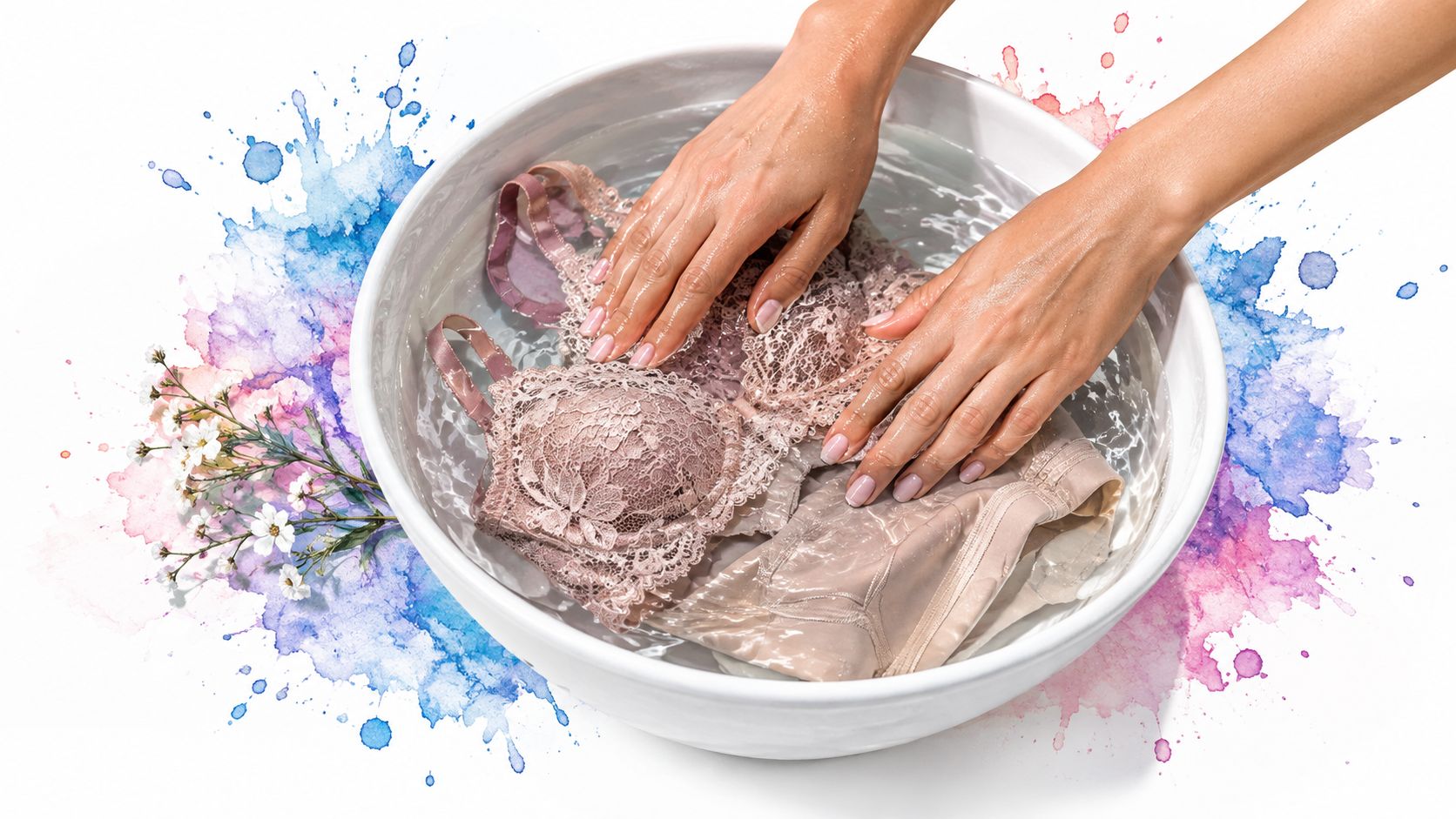
A careful basin method
Fill a clean basin with cool or lukewarm water and dissolve a small amount of mild detergent before adding the garment. Avoid hot water, particularly for lace, silk, elasticized shapewear, and bonded details.
Let the piece soak for 15–30 minutes, depending on how delicate and soiled it is. The soak loosens sweat and oils, so you won't need aggressive scrubbing. Press the water through the fabric with your hands, then gently knead the cotton gusset and other high-contact areas.
Don't twist, wring, or stretch the waistband to force water through it. Those motions can deform compression panels and loosen silicone grip bands. Instead, lift the garment with both hands, support its full weight, and press excess water against the basin.
Rinse in clean water until detergent residue disappears. Leftover detergent can irritate skin and may leave technical fibers feeling coated. A final gentle press is enough before drying.
Handle structure, not just fabric
For shapewear, preserve the direction of compression by keeping panels flat while you work. Don't bunch the garment into a small ball. If the item has molded sections, reshape them while damp and check that seams, grip bands, and leg openings are lying naturally.
This video demonstrates the controlled approach visually:
Lay delicate pieces flat on a clean towel or drying rack. If you hang a wet garment, support it from a broad central area rather than a narrow strap or elastic edge. The garment should dry away from direct heat and strong sunlight.
Drying Methods That Protect Elasticity and Shape
Washing removes soil, but drying determines whether the garment keeps its fit. High dryer heat is especially hard on elastane, spandex, bonded seams, and silicone details, so air-drying is the default for stretch underwear.
Remove water without stretching the garment
After a hand wash, press water out gently. For machine-washed pieces, use a moderate spin rather than repeatedly forcing a fragile garment through extreme extraction. Reshape the waistband and leg openings while the fabric is damp.
Lay shapewear, modal, and delicate mesh flat when their weight could pull them out of shape. Durable cotton may hang in a ventilated space, but don't suspend wet underwear from a narrow elastic edge. Use a rack with plenty of airflow and leave space between layers.
A practical reference on fabric care while drying at sea is useful when you need to improvise a drying setup in a compact space. The same principles apply at home: support the garment, maximize ventilation, and avoid concentrated heat.
Dry thoroughly, especially in thick areas
Air-drying isn't only about protecting elasticity. Complete drying matters for hygiene because damp gussets, layered panels, and dense waistbands can retain moisture. Don't fold or store underwear until the thickest area feels fully dry.
Technical textile research shows why drying deserves attention. A review in Applied and Environmental Microbiology reports that washing at 60°C can reduce bacterial counts by roughly 1,000- to 100,000-fold, with tumble drying afterward adding another 1,000- to 10,000-fold reduction. Those figures describe textile decontamination research, not a reason to expose every delicate garment to high heat.
For routine stretch underwear, use thorough air-drying. For higher hygiene risk, follow the care label and choose the sanitation method the fabric can tolerate. Don't leave damp garments in the washer, and don't store them in a closed drawer while moisture remains.
Targeted Stain Removal and Longevity Troubleshooting
Treat stains early, but don't answer every mark with harder scrubbing. Rinse biological stains with cold water, apply a fabric-compatible pre-treatment, and let the product work before a gentle wash. Hot water can set some protein-based stains, so blood deserves a cold-water soak only.
Sweat marks often respond to a light pre-wash treatment, followed by thorough rinsing. Test any treatment on an inconspicuous area first, especially on modal, mesh, dark dyes, or bonded finishes. Don't pour concentrated bleach onto colored stretch fabric, and don't combine cleaning chemicals.
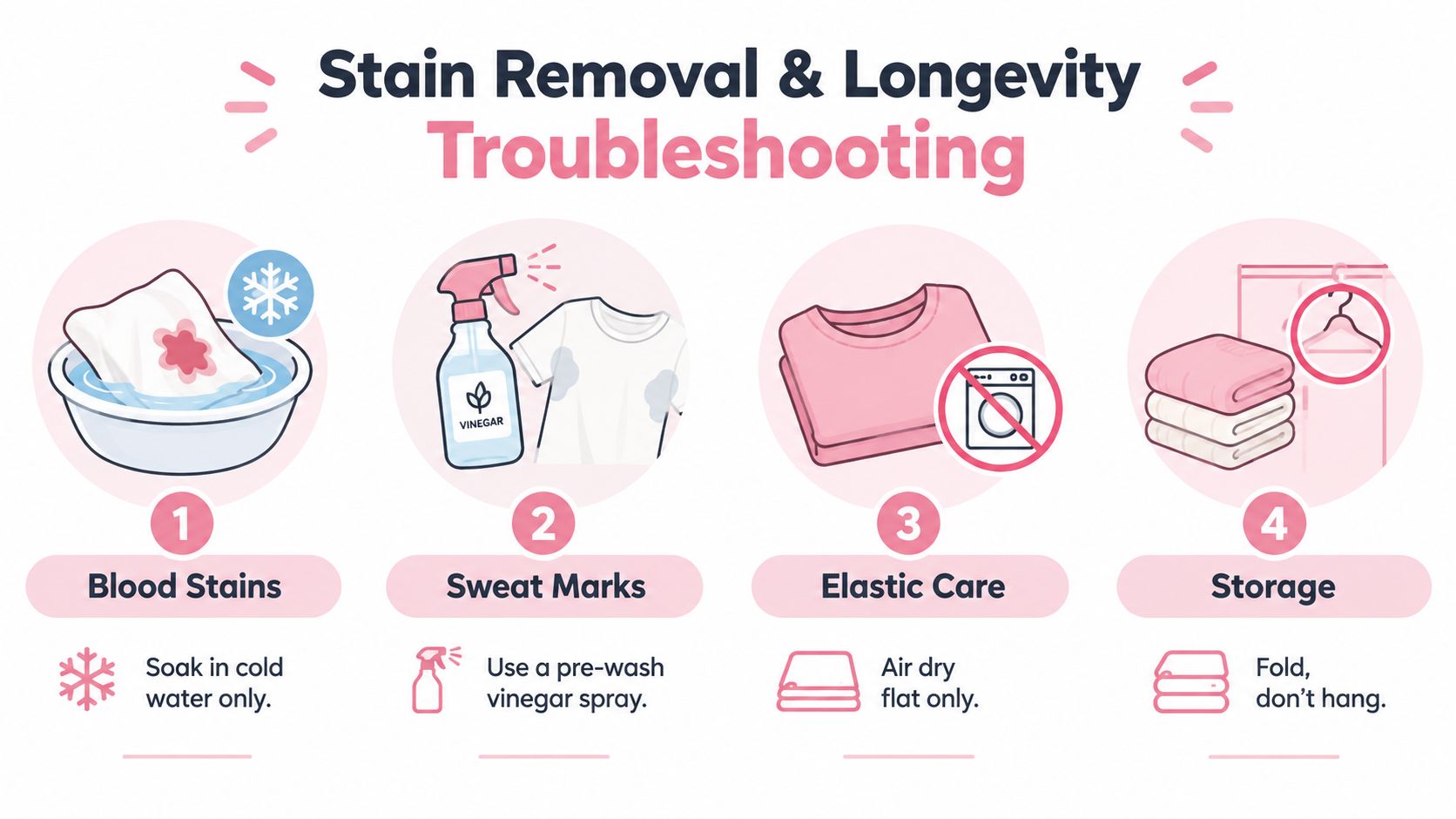
Use these symptoms to diagnose care problems:
- Pilling: Reduce friction, separate underwear from rough heavy garments, and turn pieces inside out.
- Loss of snap-back: Lower heat, choose gentler agitation, and stop hanging wet garments from narrow elastic.
- Fading: Separate colors, reduce temperature, and avoid harsh products.
- Persistent odor: Check detergent buildup, improve rinsing, and dry the gusset completely.
- Holes or thinning: Inspect the garment before each wash and review guidance on underwear with holes before continuing to wear a compromised pair.
Store clean underwear folded in a dry drawer rather than tightly compressed. Replace a pair when its waistband no longer recovers, fabric has thinned substantially, or permanent odor remains after proper laundering. Care can't restore lost structure, but it can prevent avoidable damage.
Nuage Wears offers comfort-first underwear with modal bases, targeted mesh, bonded bands, and smooth edges, so the care routine above helps protect the features these designs rely on. Visit Nuage Wears to explore everyday briefs, breathable styles, bras, and multipacks built around fit, airflow, and stay-put comfort.