
Modal underwear is made from a silky, breathable semi-synthetic fiber derived from beech trees, and it's known for feeling softer than cotton during all-day wear. The fiber is a regenerated cellulose material with a moisture regain of about 11–13%, helping it manage dampness comfortably next to the skin.
You may be standing in front of your wardrobe right now, trying to choose underwear that will disappear under a fitted dress, stay put through a long workday, and still feel fresh after a commute. Cotton can feel familiar but heavy when damp, while some synthetics can leave you warm or clammy. Modal offers a useful middle ground, combining a smooth hand-feel with flexibility, moisture management, and better stability when wet.
The important question isn't only whether modal feels soft when you first put it on. It's whether the fabric suits your shape, your clothing, your routine, and your laundry habits. Once you understand what modal is and how its properties work in real underwear designs, shopping becomes much easier.
Table of Contents
- The Everyday Underwear Problem Modal Solves
- What Modal Fabric Actually Is
- Modal vs Cotton vs Synthetic Fibers
- Why Nuage Wears Uses Modal for NuCloud Styles
- How to Care for Modal Underwear
- Frequently Asked Questions About Modal Underwear
The Everyday Underwear Problem Modal Solves
You leave home in a fitted green dress, feeling polished and comfortable. A few hours later, the waistband has shifted, the leg opening has crept upward, and you're thinking more about adjusting your underwear than about the meeting, dinner, or journey ahead. Add perspiration and a fabric that holds onto dampness, and a normal day can become surprisingly distracting.

Modal underwear addresses several of these frustrations at the material level. Its smooth surface feels gentle against the body, and its moisture absorption can reduce the clammy sensation that often appears during heat, travel, or extended wear. Its high wet modulus also helps the fiber retain strength and dimensional stability when garments are washed or stretched.
Comfort is more than softness
Softness gets the attention, but a comfortable pair has to do several jobs at once. It should move with you without creating friction, keep its position without pinching, and maintain a clean outline under clothing. A fabric that feels pleasant in the morning but loses its shape after laundering doesn't solve the whole problem.
Modal's structure supports close-to-body garments because it balances flexibility with resilience. Technical references describe typical modal tenacity around 3–5 grams per denier and dry elongation of 6–14%, a combination that supports stretch without making the material feel insubstantial. These figures are reported in the technical overview of modal fiber properties.
Practical rule: Choose underwear by matching the fabric with the construction. A soft fiber can't compensate for a waistband that digs or an edge that cuts into the skin.
Why the difference shows up during a long day
The benefit becomes clearest when your clothing is close-fitting or your schedule is demanding. A smooth, flexible brief can reduce visual lines under trousers, while a stay-put cut can limit riding up during walking. Breathable panels or carefully placed seams can then support airflow without sacrificing coverage.
That's why modal works best as part of a considered design rather than as a magic material. The fiber helps manage comfort, but rise, gusset, leg finish, waistband, and fit determine how the garment behaves on your body.
What Modal Fabric Actually Is
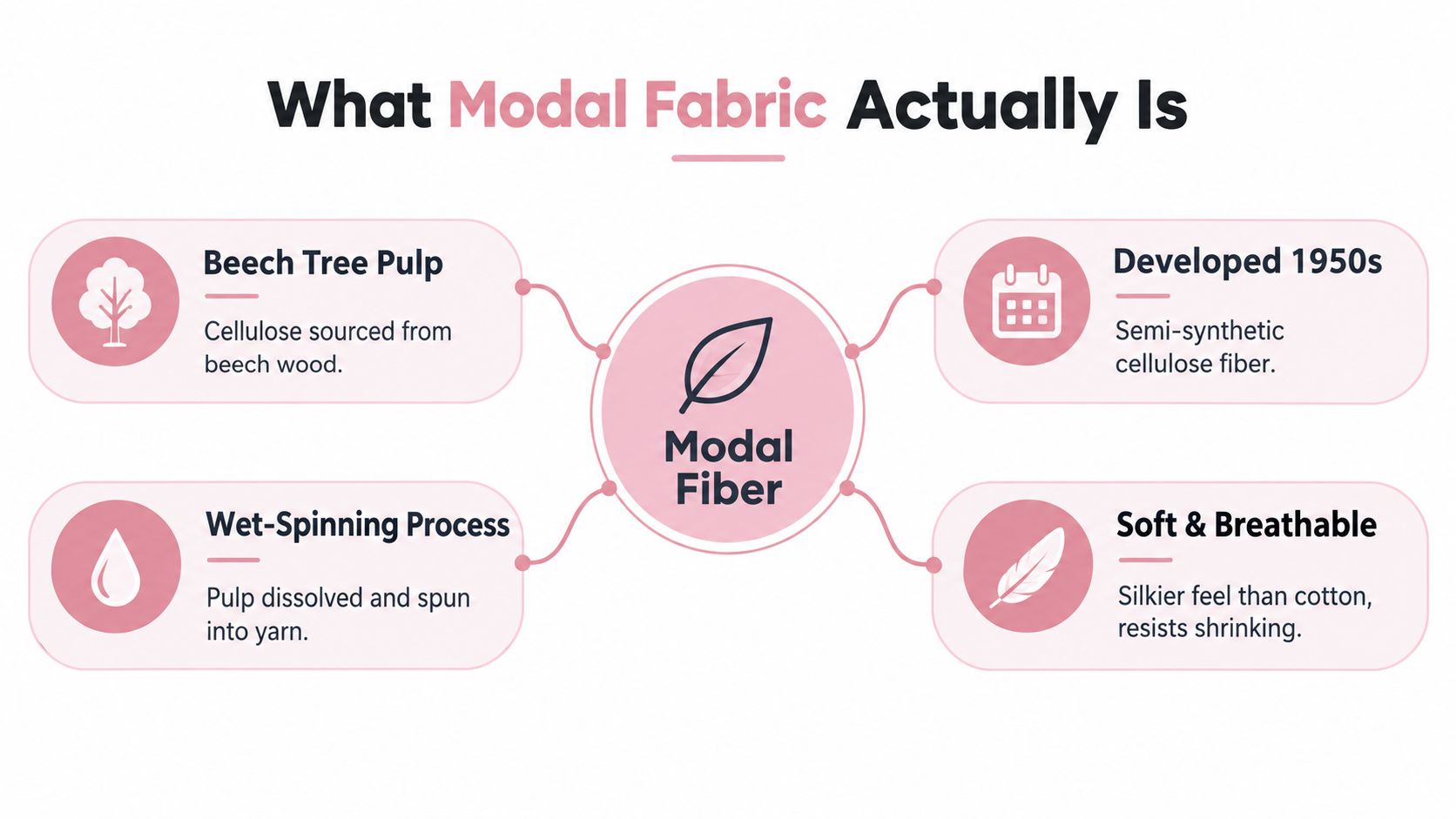
Start with the raw material. Modal is a semi-synthetic regenerated cellulose fiber, meaning manufacturers begin with plant-based cellulose and process it into a new fiber that can be spun into yarn. The cellulose is commonly sourced from beech wood pulp, then dissolved and re-formed into fine filaments.
A simple analogy helps. Cotton grows as a ready-made fiber around a seed, while modal starts as wood-derived cellulose that is engineered into a consistent textile strand. That manufacturing step gives designers a material with a smooth surface, fluid drape, and dependable performance in lightweight knits.
From rayon development to underwear
Modal has roots in the 1930s, when early versions were developed for industrial uses such as tires, conveyor belts, and hose pipes. A major technical milestone came in 1951, when Japanese inventor Shozo Tachikawa patented a higher-strength version known as high wet modulus rayon. The improved wet performance helped establish the modern modal category, as described in this history of modal fiber development.
Lenzing commercialized modal in 1964 and launched its first high wet modulus fiber in 1965. Those developments shifted modal from an experimental material into a specialty textile suitable for apparel. The technical story matters because underwear is repeatedly stretched, washed, and exposed to perspiration. Modal was designed to cope with those conditions more effectively than older rayon formulations.
Why wet modulus matters
Wet modulus describes how well the fiber keeps its strength and dimensions when wet. Think of it as the difference between a paper shape that collapses in water and a flexible sheet that keeps its structure. In underwear, that stability can help reduce distortion, sagging, and shape loss compared with conventional viscose.
The fabric also absorbs and releases moisture effectively. Under standard conditions, modal typically has a moisture regain of 11–13%, compared with cotton's roughly 7–8%, according to this modal moisture and care reference. That doesn't mean modal will keep every wearer dry during intense exercise, but it can make everyday heat and perspiration feel less oppressive.
Modal vs Cotton vs Synthetic Fibers
The best choice depends on what you need your underwear to do. Cotton offers a familiar, natural feel and can work well for people who prefer a more structured fabric. Synthetic fibers can provide durability and stretch, but their moisture behavior and surface feel vary widely by construction.
Modal sits between these categories. It begins with plant-derived cellulose, but manufacturers regenerate it into a fiber with a smoother, more uniform structure. That combination gives it a soft hand-feel, useful moisture absorption, and improved wet stability.
| Feature | Modal | Cotton | Synthetic |
|---|---|---|---|
| Source | Regenerated cellulose, commonly from beech pulp | Natural plant fiber | Manufactured fiber, often petroleum-derived |
| Feel | Smooth, silky, and lightweight | Soft, familiar, and often more structured | Varies from smooth to slick or technical |
| Moisture behavior | Absorbs and releases moisture effectively | Absorbs moisture but can feel heavier when damp | Often dries quickly, but may not absorb perspiration |
| Wet stability | High wet modulus supports shape retention | Can lose structure as it becomes wet and stretched | Usually strong, depending on the fiber and knit |
| Best fit for | Close-to-body comfort and everyday softness | Familiar basics and natural-fiber preferences | Stretch, durability, or performance-focused designs |
For shoppers prioritizing next-to-skin comfort, modal's smoothness and moisture regain can make it appealing. For someone who wants rapid drying during high-output activity, a purpose-built synthetic construction may suit the situation better. Fabric choice should follow the use case, not a blanket claim that one fiber is always superior.
The environmental story also needs care. This guide to breathable and moisture-managing underwear can help you think about fabric alongside fit, airflow, and garment construction.
Why Nuage Wears Uses Modal for NuCloud Styles
A fabric only becomes useful when a design translates its properties into a better wearing experience. Consider someone moving from a desk to dinner in close-fitting trousers. They need an edge that stays visually quiet, a waistband that doesn't dig, and a fabric that feels comfortable after hours of sitting.
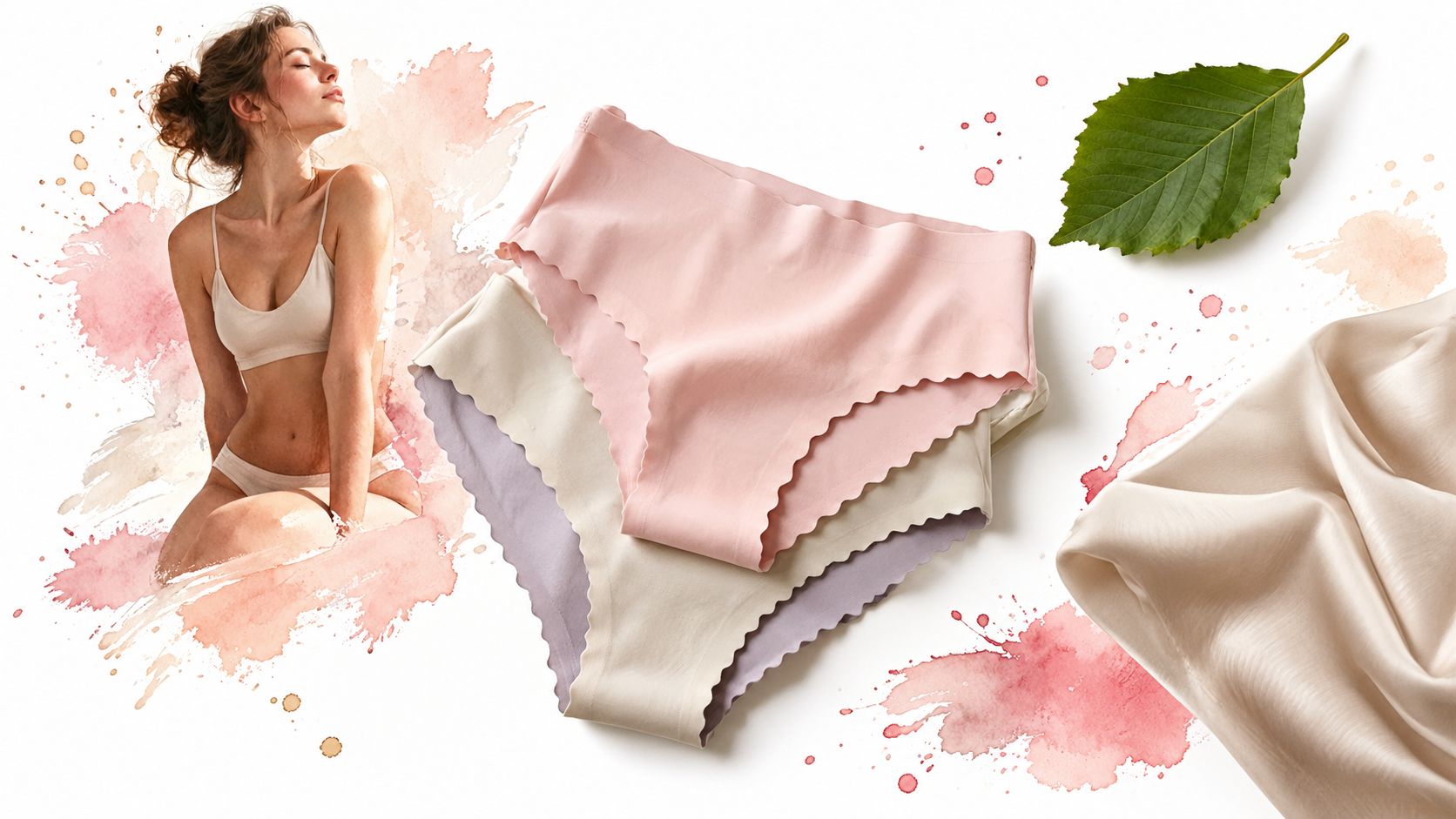
NuCloud styles use modal as the soft, flexible foundation for problem-solving underwear. The collection includes hipster, mid-rise brief, high-rise, and thong shapes, so the same material concept can support different coverage preferences. Laser-cut edges are used in the no-visible-lines approach, while stay-put waistbands and leg finishes address movement.
Matching the construction to the complaint
If visible panty lines are your main concern, the fabric is only part of the answer. A laser-cut edge can create a flatter transition beneath leggings, silk, or fitted clothing. If you struggle with wedgies, a coverage-focused cut and stable placement matter more than softness alone.
For waistband discomfort, a high-rise design can distribute pressure across a broader area instead of concentrating it at one narrow edge. A front shield construction can also help create a smoother outline beneath thinner dresses and skirts. These features respond to different problems, so shoppers should use the brand's problem-solution categories rather than choosing by fabric name alone.
Nuage Wears' NuCloud material guide describes the material and construction approach behind the styles. The useful buying habit is to identify your most persistent irritation first, then select the rise, cut, edge, and support feature that addresses it.
Targeted mesh belongs to a different design logic. NuAir styles use mesh zoning to encourage airflow and moisture management, which can be useful when the day includes walking, travel, or activity. Modal provides the soft base, while the pattern and fabric placement determine where ventilation or support is needed.
Here's a closer look at how material and construction work together in everyday underwear design:
Nuage Wears' range also includes briefs designed for coverage, thongs intended to reduce visible lines, and styles with front shielding or bonded bands. The practical lesson is simple: modal can improve the feel of underwear, but the right silhouette solves the specific fit problem.
How to Care for Modal Underwear
Modal is durable, but durability depends on what happens in the laundry. Repeated high heat and harsh treatment can reduce softness and shorten the useful life of the garment, even when the fiber itself has good wet stability.
A gentler laundry routine
Follow the garment label first, then use this general approach:
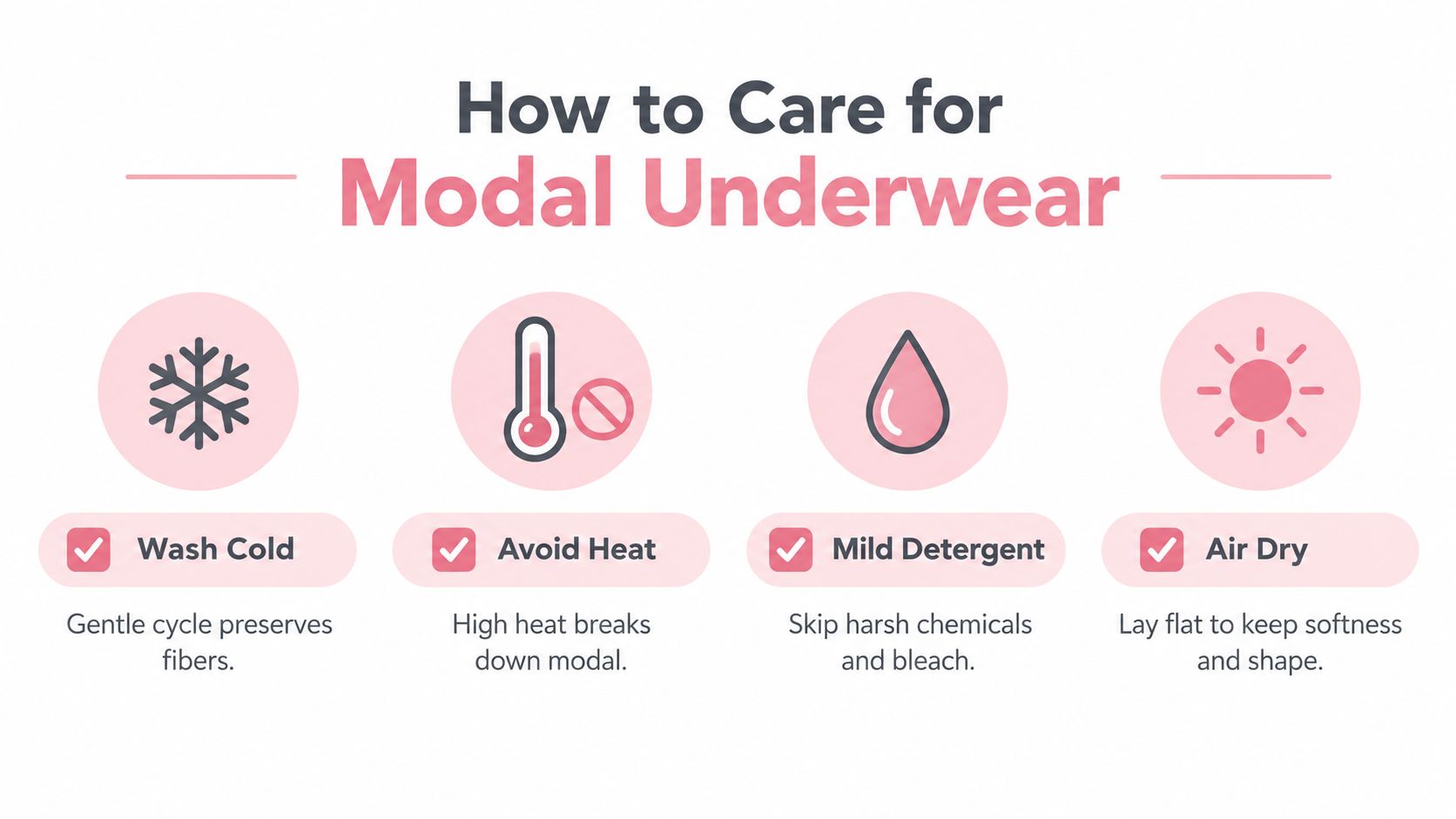
- Wash at 30–40°C on a gentle cycle. Lower mechanical stress and moderate water temperature help protect the knit and its softness. The modal care guide from Swegmark recommends this temperature range.
- Use mild detergent. Skip bleach and harsh chemicals, which can weaken fibers, affect color, and leave the fabric less pleasant against the skin.
- Protect delicate shapes. Place underwear in a laundry bag, especially when washing it with garments that have zippers, hooks, or rough surfaces.
- Avoid high-heat tumble drying. Heat can reduce softness and affect elasticity. Air drying is the safer everyday choice.
- Lay the garment flat or hang it carefully. Don't pull wet modal into shape, because stretching while saturated can distort the fit.
Laundry habit that pays off: Treat modal underwear like a close-to-skin essential, not like a towel. Gentle washing and lower heat preserve the feel you bought it for.
Care also affects value. Modal's comfort proposition depends on maintaining stretch, shape, and hand-feel over ordinary wear, so a careful routine is part of the purchase decision. If you prefer minimal laundry effort, check the care label before buying and choose a style that fits your normal routine.
Frequently Asked Questions About Modal Underwear
Is modal underwear breathable?
Modal is generally breathable and manages moisture effectively because it has a higher moisture regain than cotton under standard conditions. It can feel comfortable for everyday wear, but no fabric eliminates sweat in every climate or activity.
Is modal better than cotton?
Not universally. Modal tends to feel smoother and more fluid, while cotton may suit shoppers who prefer a familiar, more structured natural fiber. The better choice depends on your sensitivity, clothing, preferred feel, and care habits.
Is modal sustainable?
Modal has a plant-derived cellulose base, but the word modal alone doesn't confirm a specific environmental standard. Production methods vary, so look for clear information about sourcing, processing, and certification rather than treating every modal label as equally responsible.
TENCEL reports that its modal fibers use at least 50% less carbon emissions and water consumption than generic modal, as explained on the TENCEL fiber information page. Another comparison says modal production can use 10–20 times less water than cotton, but the result depends on the production system and the comparison boundaries.
Does modal stay soft after washing?
It can, especially when washed gently and kept away from high heat. The fiber is known for resistance to shrinkage and pilling, but poor care can still reduce softness and shorten garment life.
What should I check on the label?
Look for the fiber composition, care instructions, gusset material, waistband construction, and edge finish. If sustainability matters to you, check whether the product provides specific sourcing or certification information instead of relying on a broad eco-friendly description.
Nuage Wears offers modal-based NuCloud briefs and thongs, plus styles focused on no visible lines, no wedgies, no digging, and breathable support. Visit Nuage Wears to compare the rise, cut, and construction that match your everyday comfort needs.