
You've got the fitted dress, the leggings, the well-cut trousers, and one thong in the drawer because it's the only cut that disappears under all of them. You tried it on, it felt fine, and forty minutes later you're shifting in your chair and planning to change the second you get home. That gap between "fine in the mirror" and "unbearable by lunch" is where most thong advice stops being useful. Comfort isn't a property of the cut. It comes down to pressure, friction and moisture, and a 2008 peer-reviewed study of skin–textile contact documented friction as a real mechanism behind blisters and abrasions in its research on epidermal hydration and fabric friction. Control those three and a thong becomes the pair you forget you're wearing.
Table of Contents
- Fit Checks and First-Wear Routine
- Choosing Breathable Fabric and a Comfortable Gusset
- Staying Comfortable During Movement, Sweat and Heat
- Fixing Chafing, Itching and Other Discomfort
- Test Your Thong Before a Full Day
Fit Checks and First-Wear Routine
A thong feels comfortable when five things are true at once: the waistband lies flat without rolling, the gusset fully covers the vulva, the back string sits centered out of the crease, the leg edges lie flat, and everything stays put while you move. Miss one and you'll feel it within the hour.
Size from your current measurements, not from the size you wish you wore. Hold a soft tape level around the fullest part of your hips, then around your natural waist, and compare both numbers against the brand's chart rather than the label in your last pair. Our guide to measuring your underwear size at home walks through the tape placement. Sizing down to get a smoother outline backfires: you trade coverage for concentrated elastic pressure, plus more heat and sweating.
| Checkpoint | Comfortable sign | Warning sign | Quick fix |
|---|---|---|---|
| Waistband | Lies flat and stays put | Rolls down or pinches the hips | Move up one size or choose a higher rise |
| Gusset | Fully covers the vulva with no gap | Gaps open or fabric bunches | Choose a size or cut with a fuller gusset |
| Back string or strap | Sits centered, out of the crease | Cuts into the cleft or slides sideways | Try a wider back panel or a briefer cut |
| Leg edges | Lie flat against the skin | Dig in or roll over the top | Size up if elastic feels tight |
| Movement test | Stays in place after 5 to 10 minutes of sitting, walking, squatting and bending | Shifts or needs repeated adjusting | Choose a more stable cut or a size that fits your measurements |
Pressure is measurable, even if you can't measure it at home. Textile-comfort work cited in the Journal of Midwifery & Women's Health puts comfortable waist pressure around 0–1.47 kPa, tolerable pressure at 1.47–2.46 kPa, and discomfort above 2.46 kPa in the garment system studied, and clinicians there advise avoiding binding garments and choosing the correct size for sensitive skin. Treat those as engineering reference points, not a target to chase with a bathroom scale.
The first-wear routine
- Start dry. Clean, completely dry skin and a freshly washed thong, because damp fabric rubs more than dry fabric.
- Pull up over the hips, not out at the waist. Stretching the band sideways leaves the leg edges perched too high.
- Smooth the gusset forward until it covers the vulva with no gap. A bunched gusset is the usual source of that raw, irritated feeling.
- Center the back string and slide it down so it isn't twisted. A twist you ignore at 8am shows up as rubbing by midday.
- Check the leg openings with a fingertip. No edge should roll or dig.
- Walk, sit and squat for two to three minutes, then readjust only if something moved.
- Keep the first wear short. An hour at home beats a twelve-hour shift as a test run.
Friction is a wear-duration problem as much as a fabric problem. The University of Iowa Hospitals & Clinics vulvar skin care guidelines name rubbing, moisture, tight clothing and irritating materials as contributors to discomfort, recommend airflow, and advise against sitting in damp clothing, so change promptly after exercise or swimming and check your skin afterward for redness, burning, fissures or itching.
Persistent marks, numbness, pinching or constant readjusting mean the cut, rise or size is wrong. Change the size before you blame the fabric.
Choosing Breathable Fabric and a Comfortable Gusset
Fabric and gusset decide how heat and moisture build against your skin, and that buildup drives most of the discomfort people blame on the cut. The Centers for Disease Control and Prevention advises lightweight, breathable clothing including cotton underwear, because tight fabrics trap moisture and heat and create conditions where germs can grow. Moisture is also a decisive physical factor in skin-on-textile friction, and prolonged damp contact can accelerate skin injury.
That doesn't make cotton compulsory. It sets three priorities: less trapped heat, shorter wet contact, no repeated rubbing. A synthetic thong with a breathable gusset that you change after a sweaty commute can beat a cotton pair you sit in damp all afternoon.
Matching fabric to the day
| Fabric | Strengths | Trade-offs | Best for |
|---|---|---|---|
| Cotton or cotton blend | Breathable and absorbs moisture | Holds sweat and can stretch out with wear | Desk days and light everyday wear |
| Modal | Soft and smooth with little bulk | Can feel clingy when damp | Smooth lines under fitted clothing |
| Mesh or ventilated knit | Strong airflow and moisture management | Thin panels offer less coverage | Workouts and hot weather |
| Silk gusset lining | Cool, smooth and gentle on skin | Costs more and needs gentle care | Warm days and all-day wear |
| Synthetic stretch (nylon or spandex) | Sleek, stable stretch that dries fast | Traps heat and moisture unless the gusset is breathable | Travel and short wear with a breathable gusset |
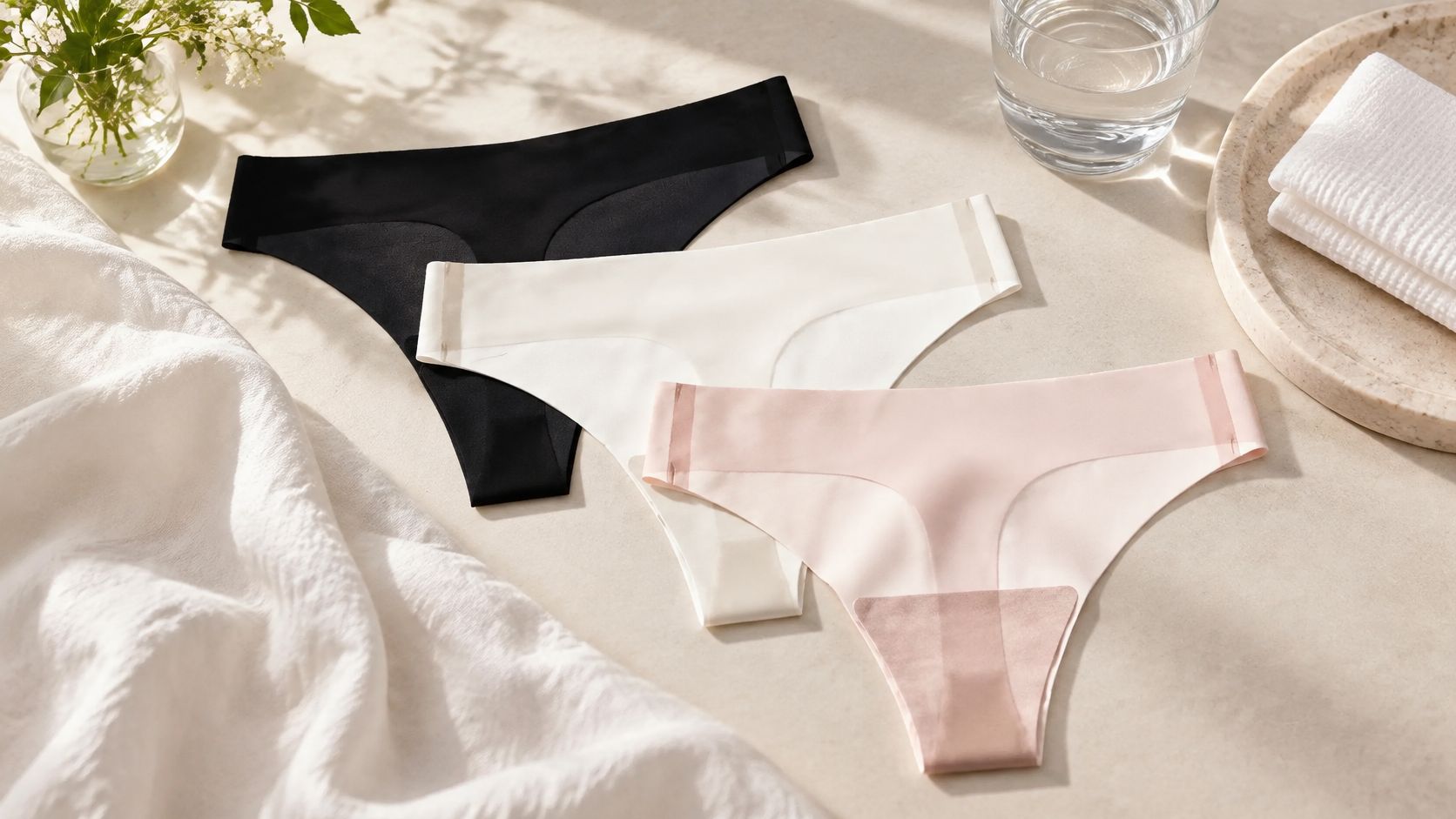
For desk work and formal clothing, a smooth, correctly sized style reduces shifting under fitted fabric. For workouts and humid travel, moisture-wicking or ventilated panels matter more, along with changing soon after you sweat. One example of the second approach: the NuCloud Original Thong(3-Pack) pairs buttery-soft fabric with raw-cut edges that stay invisible under clothing, so nothing prints through leggings or adds bulk under a fitted travel outfit.
Here's the gusset and fabric pairing to look for on a hot-weather day.
The gusset checklist
- Breathable panel: cotton, cotton blend or silk against the skin, even when the body is lace or mesh.
- Low-bulk seams: flat or raw-cut edges, since a raised seam is a pressure line waiting to happen.
- Full coverage: the panel should reach the whole vulvar area without folding when you sit.
- Soft edges: run a finger along the leg opening; anything stiff or scratchy will feel worse after four hours.
Fabric rule: no single material wins for everyone, so pick by the day you're dressing for rather than by a fibre you've been told is best.
Staying Comfortable During Movement, Sweat and Heat
A thong that feels invisible while you stand in front of the mirror can turn into a problem after an hour of walking, a spin class, a bike commute or a long flight. Nothing about the garment changed. Your posture, stride and sweat did.
The mechanism is mechanical rather than microbial. In work published in Acta Dermato-Venereologica, a string-panty system produced more self-reported chafing even though measured differences in the vulvar microenvironment were negligible, which points at movement and edge construction rather than heat alone. That same literature cautions that tight or synthetic fabrics can raise heat, moisture and friction, a material-and-fit issue rather than a verdict on the style.
A quick look at the two situations where fit gets tested hardest.
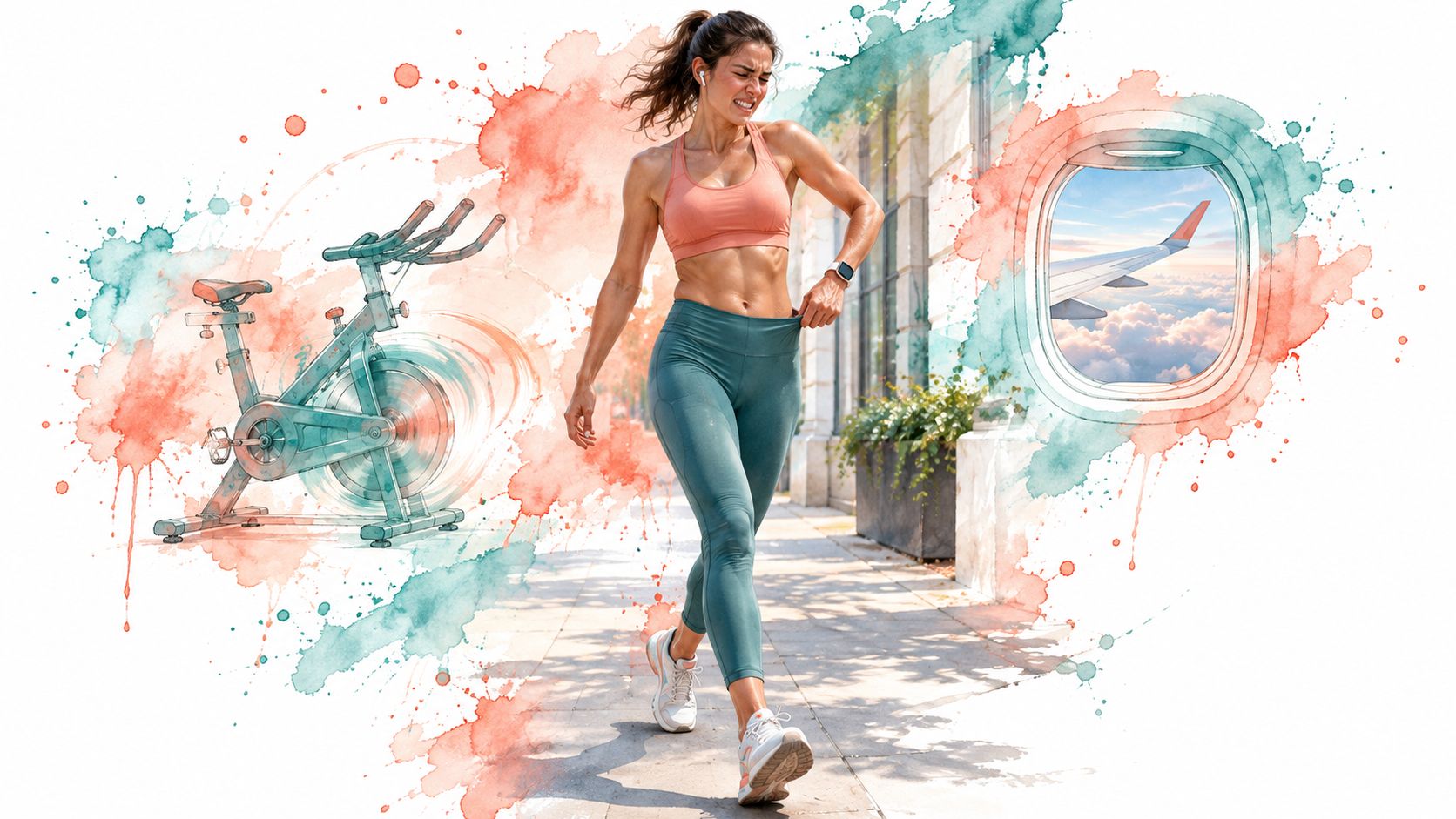
Adjust by activity. For a workout, choose a moisture-wicking or ventilated gusset, pack a spare, and change as soon as you're done sweating. For a desk-to-dinner day, a smooth thong works under leggings and fitted dresses if it stays centered when you cross and uncross your legs, so test that exact motion before you commit. For long-haul travel, pick a stable cut and recheck the fit after security and again before boarding, because a waistband that rolled in the queue will keep rolling for eight hours. In hot climates, shorten the wear window and go lighter.
Practical rule: looser isn't automatically comfier. A garment that shifts, twists or rolls creates repeat friction, so stability and edge finish count as much as breathability.
Switch cuts without guilt. A brief or hipster is the better call during active irritation, prolonged sweating or repeated chafing, while a thong earns its place under close-fitting clothing when it stays stationary.
Watch this walkthrough of movement testing before your next full-day wear.
Four habits that keep movement days quiet:
- Carry a spare in your gym bag or carry-on, folded flat in a pouch.
- Default to breathable on heavy-sweat days rather than saving mesh for the gym only.
- Rotate two cuts across the week so no single pair takes every long day.
- Separate workout pairs from everyday pairs, and wash them cool to protect the stretch.
Fixing Chafing, Itching and Other Discomfort
The first worry that stops people trying thongs is infection, and it usually sends attention to the wrong place. A 2019 obstetrics and gynecology survey covered in the Journal of Obstetrics and Gynaecology Research found thong use wasn't an independent predictor of urogenital infection. The practical takeaway is narrower: infection myths should be separated from the everyday causes of discomfort, which are usually friction, trapped moisture, unstable fit and skin sensitivity.
That distinction matters because the body responds to mechanical irritation quickly. In a small crossover study of 32 women, a string-panty system produced no meaningful change in vulvar temperature, humidity, pH or aerobic microflora compared with regular panties, yet mechanical chafing was reported by 12 participants versus 3, as described in the Journal of Obstetrics and Gynaecology Research. In plain terms, fabric can leave the local environment similar while still rubbing where the cut moves. Fit and edge behavior deserve the first pass.
| Symptom | Likely cause | Fix |
|---|---|---|
| Rubbing or raw skin at the cleft | Back string or strap is too tight or narrow | Check the back coverage against section 1, then change the cut only if the rubbing repeats |
| Red, sore leg edges | Leg openings are tight or roll during wear | Size up or pick a style with a softer band |
| Burning or itching after sweating | Moisture stays trapped against the skin | Change promptly and choose a breathable gusset |
| Repeated rubbing from shifting | Cut is loose or unstable during movement | Switch to a more stable cut or a brief |
| Persistent burning, sores or unusual discharge | Possible medical condition rather than fit | Stop wearing the garment and see a clinician |
Work down that list in order, one change at a time. Red leg edges usually point to a tighter opening or an edge that rolls, so compare the same motion that caused it: sitting, walking or climbing stairs. Burning after sweat calls for a faster change and a gusset that breathes. Repeated rubbing after steps or long sitting means the cut is moving too much for that day, and a brief may be the better tool. Our breakdown of anti-chafing underwear features covers which construction details do the work.
Sensitive or reactive skin needs a wider lens than underwear alone. If irritation keeps returning in the same spots, or you already manage a diagnosed skin condition, Haven Medical's eczema explainer is a useful read on triggers and barrier care, because a garment change won't settle a flare driven by other factors. Treat skin history as part of the fit conversation, especially when the same area flares with heat, sweat or friction.
Marketing claims deserve the same practical skepticism. Antimicrobial finishes and breathable labels can sound reassuring, but they don't replace a medical assessment when burning, sores or discharge persist. I would judge underwear by what happens during real wear: does it stay centered, does it breathe, and does the skin stay calm afterward. When pain or unusual symptoms keep returning, stop wearing the garment and ask a clinician.
Test Your Thong Before a Full Day
A thong that feels fine for ten minutes in front of a mirror can rub raw by hour six of a flight. The fix is a short trial run rather than a leap of faith: buy for fit and fabric first, then prove the pair on an ordinary day before trusting it with a long one.
Run the trial like this:
- Wear it at home for one to two hours. Sit through a meal, walk around, climb stairs and do a few squats. Movement exposes what a mirror check misses: a back strap that creeps, a waistband edge that starts to press.
- Check your skin afterward. Look for redness along the leg openings and waistband line, not just soreness. Pink marks that fade quickly are normal pressure; marks that linger or itch mean the cut is wrong for you.
- Decide by the result, not the brand. A pair that passed earns the trip and the long shift. If it rubbed in one spot, adjust that single variable before writing off thongs entirely.
If you want a starting point rather than a blank search box, our NuCloud High Waist Thong is designed for everyday, travel, movement and vacation wear, with smooth raw-cut edges, gentle high-waist shaping and a 100% cotton gusset. It runs very large, so order two sizes down from your usual, and it holds a 4.5 out of 5 rating across 95 reviews.
Comfort looks like a thong you forget about after an hour of walking. A good trial tells you whether yours qualifies before the stakes are real.
We build underwear around the exact problems this guide fixes: raw-cut edges that don't dig, breathable gussets, and cuts tested through sitting, walking and sweating rather than just a mirror check. Browse the thong, brief and hipster cuts at Nuage Wears, pick the fabric that matches your busiest day, and give your first pair a short trial wear before the long shift.