
You're dressed for an important meeting, the silk midi skirt sits perfectly, and then the room's bright spotlight reveals the lace brief underneath. The problem isn't the color. It's the raised edge tracing across the fabric every time you move.
Seamless underwear for women is designed to remove that interruption. The construction uses knitted or bonded layers with smooth edges and fewer raised joins, allowing the garment to sit unnoticed beneath jersey, leggings, tailored trousers, slip fabrics, and fitted dresses. It's not magic, and “seamless” doesn't automatically mean breathable or comfortable. The right result depends on construction, fabric, cut, rise, and fit working together.
The category has also grown far beyond a niche solution for avoiding visible panty lines. One market analysis valued global no-show underwear at about US$46.7 billion in 2023 and projects roughly US$92.3 billion by 2034, with a 6.4% CAGR from 2024 to 2034. Women represented 44.43% of demand in 2024, and the women's segment consumed about 4,151.6 million units that year, according to Transparency Market Research's seamless underwear analysis.
This guide takes the fitting-room approach. You'll learn how invisible underwear is built, what you'll feel during a desk day or workout, how fabrics behave, which cut suits different outfits, and how to create a useful rotation instead of buying one pair that has to do everything.
Table of Contents
- What Invisible Underwear Really Means
- How Invisible Underwear Is Constructed
- Everyday Benefits You Can Feel
- Fabric Options and How They Perform
- Choosing the Right Cut for Your Wardrobe
- The Comfort Trade-Offs Nobody Talks About
- A Practical Fit Checklist Before You Buy
- Building Your Seamless Underwear Rotation
What Invisible Underwear Really Means
You dress for a dinner, pull on a silk skirt, and notice a raised line tracing the brief beneath it. The color may match perfectly, yet the outline remains visible because the garment is built with edges that stand proud of the skin.
Smooth underwear for women solves that problem at the construction stage. A pair may be knitted in a continuous form, finished with laser-cut edges, or joined with bonded layers instead of bulky stitched seams. The goal is a flatter surface against your body and a cleaner outline beneath clothing. This plain-language explanation of smooth-edged underwear is useful if the category is new to you.
Why ordinary seams show
A seam adds height. Even a narrow stitched line can press outward when leggings, jersey dresses, silk, satin, or lightweight trousers stretch over it. Fabrics with little structure reveal what lies underneath, much like thin paper shows the shape of an object placed below it.
A darker shade can make an edge harder to notice while you dress, but it cannot remove the raised construction. Reducing the ridge addresses the cause directly.
What invisible construction does on the body
A good pair lies flat around the waist, sits smoothly at the leg openings, and moves with you without creating another line under your clothes. The result should feel like a flexible layer following your shape, rather than several joined panels tugging in different directions.
The finish still affects comfort. A dense synthetic knit may look very smooth but feel warm during a long day. A high-rise brief can cover the lower abdomen neatly, yet roll if its waistband lacks enough width or recovery. A thong may disappear beneath a dress while becoming tiring during hours in a chair.
The best choice depends on both the outfit and the schedule. For a desk day, a stable brief may matter more than the smallest possible edge. At the gym, stretch and moisture control deserve attention. On a flight, a soft rise and gentle leg opening can be more useful than maximum invisibility. For dinner, the smoothest finish may take priority if the fabric is close-fitting.
Practical rule: Choose underwear for the clothes and the hours you will wear it, not only for the label on the packaging.
Ask which construction and cut can stay comfortable for that particular day.
How Invisible Underwear Is Constructed
A brief, bikini, or thong can achieve a smooth finish through several manufacturing routes. The label alone may not reveal which method was used, so examine how the fabric is formed, joined, and finished at the waist and legs.
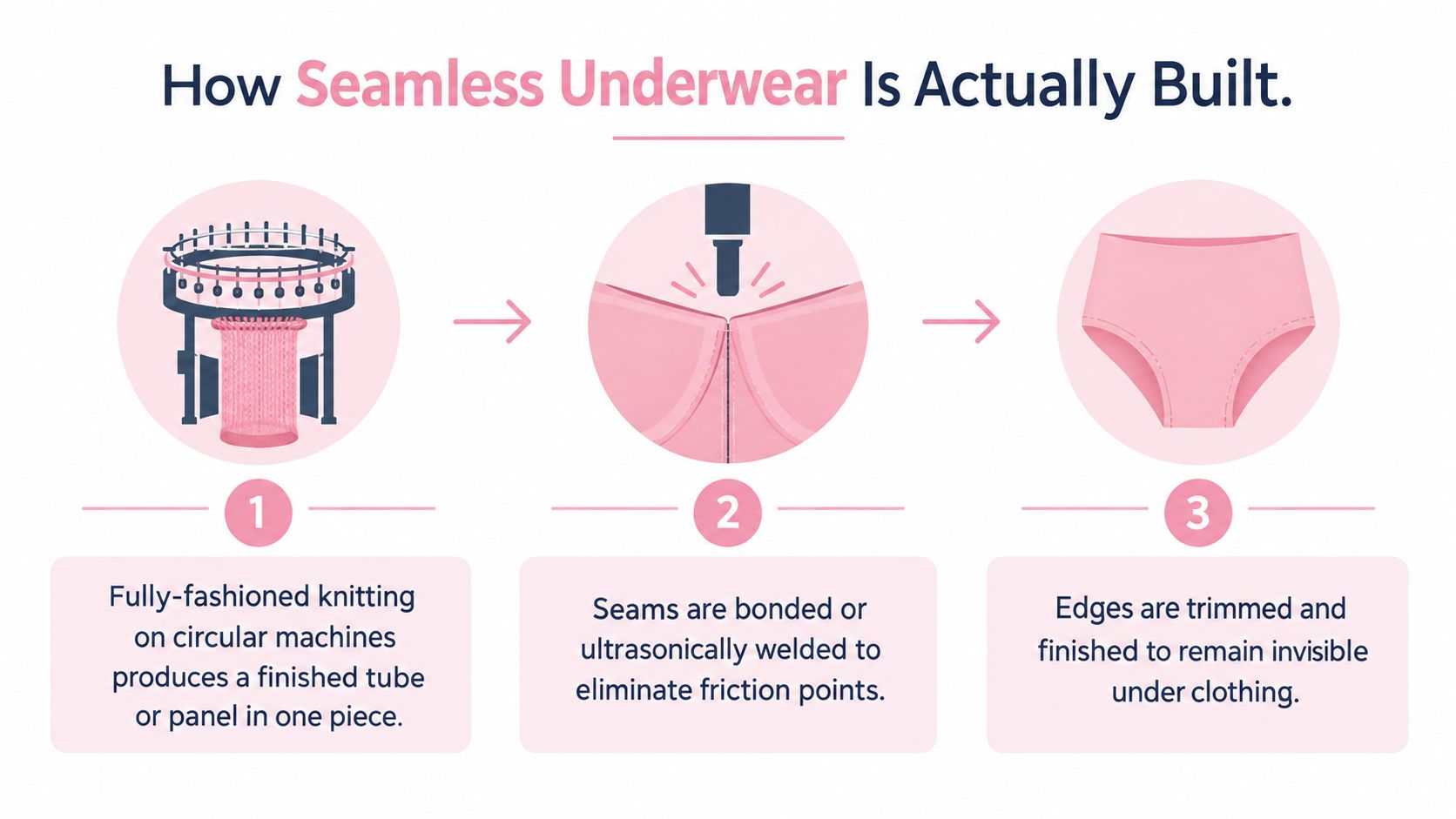
Fully-fashioned knitting
Circular knitting machines can produce a finished tube or shaped panel in one piece. This reduces the need for side seams because the fabric forms as a continuous knitted structure instead of being cut into many separate pieces.
The result often has multidirectional stretch. Rather than relying on one stitched join to control movement, the knit can expand across the waist, hips, and leg openings. That flexibility supports sitting, walking, bending, and changes in pace without making one seam carry all the tension.
The knit's recovery matters too. Fabric should stretch with the body and return to its intended shape, so the waist and leg openings remain stable during wear.
Laser-cut edges
Laser cutting trims the waistband and leg openings with a precise heated blade. Heat seals the fibers, removing the need for a folded, stitched hem. The finish is very thin and can sit close to the body beneath fitted clothing.
Laser-cut underwear can feel exceptionally light, but the edge still needs balanced tension. Too much grip may leave marks or encourage rolling. Too little can allow the garment to shift as you move.
For a closer look at this construction, see this guide to laser-cut underwear.
Bonded or welded joins
Bonded construction uses heat, pressure, or ultrasonic welding to join narrow sections without conventional thread. Bonded joins eliminate the bulky ridge of a stitched seam by fusing fabric layers, producing a surface that lies flatter against the body. This can reduce friction along the inner thigh or side of the brief.
A gusset is still present. It has not disappeared because the garment has few visible seams. Instead, it may be attached as a bonded insert rather than a separately sewn patch.
These methods also affect stretch and recovery. A pair may look nearly invisible beneath clothing, yet still roll at the waist or pull at the leg if the joining method, fabric tension, and cut do not work together. Construction determines both the outline under clothes and how the garment behaves through a full day.
Everyday Benefits You Can Feel
The best benefits are mechanical, not mysterious. A flat edge creates less height beneath clothing. A flexible knit distributes movement across the garment. A wider bonded band spreads pressure instead of concentrating it in one narrow stitched channel.
Independent shopping guidance also connects breathable, quick-drying materials with more comfortable wear, especially because bulky seams and low-airflow fabrics can increase heat retention, chafing, and outline visibility under fitted clothing, as discussed in this guide to cooling underwear.
Where the comfort comes from
No visible panty lines usually comes from laser-cut edges or bonded seams. Without a thick folded hem or raised stitch line, the outer garment has less to catch and reveal.
A smooth waistband can feel gentler because knitted or bonded elastic spreads tension over a wider area. A narrow sewn elastic channel tends to press into one line, especially when you sit for hours.
Circular-knit panels can stretch across more than one direction. That allows the leg opening to follow your movement instead of pulling sharply against a single seam. It may help reduce riding up and wedging during walking or light workouts, although the cut and size still decide whether the garment stays put.
A thin, single-layer knit can also feel less bulky than a doubled sewn hem. That doesn't guarantee coolness, because the fiber and knit density still control airflow. If daily liner use is part of your routine, this resource on daily liner use and vaginal irritation offers useful context about why the layer closest to your skin deserves attention.
Benefits linked to construction detail
| Felt Benefit | Construction Detail Behind It |
|---|---|
| Fewer visible lines | Laser-cut edges and bonded joins reduce raised ridges under clothing. |
| Less waistband digging | Wider knitted or bonded bands distribute pressure over more surface area. |
| Less riding up | Multidirectional stretch lets leg openings move with the body. |
| Reduced seam friction | Flat joins remove bulky ridges that can rub at the inner thigh. |
| Lighter feel | Single-layer knits avoid the extra thickness of folded, stitched hems. |
For a desk day, the difference often appears as the absence of irritation after hours of sitting. During walking, the benefit is fewer adjustments. Under leggings, it's a cleaner outline. Those are separate experiences produced by related construction choices.
Fabric Options and How They Perform
Construction controls the shape and edge, but fabric controls the climate inside the garment. The same laser-cut finish can feel cool in one fiber and sticky by mid-afternoon in another.
| Fabric | Feel on Skin | Breathability | Stretch & Recovery | Best For |
|---|---|---|---|---|
| Modal | Soft, smooth, and almost brushed | Comfortable for ordinary wear, but can feel warm in dense knits | Flexible, with recovery depending on the blend | Long desk days, travel, and soft everyday wear |
| Nylon-spandex knit | Slick and close-fitting | Usually warmer than open structures | Strong stretch and reliable recovery when well made | Invisible lines under trousers, leggings, and fitted dresses |
| Microfiber | Smooth, light, and practical | Moderate, with a quick-drying feel | Durable stretch and useful recovery | Travel, packed wardrobes, and easy-care rotation pieces |
| Mesh | Airy, textured, and light | Highest where the mesh is placed | Stretch varies by the zone and elastic support | Workouts, hot conditions, and targeted ventilation |
| Cotton-lined gusset | Soft at the body's most sensitive contact point | Improves airflow and comfort at the gusset | The lining itself stretches less than the outer knit | Everyday wear when breathability matters |
Matching fiber to the day
Modal is the soft-touch choice. It can feel buttery and gentle during a long office day or a flight, but a dense modal blend may hold warmth more than an airy mesh panel.
Nylon-spandex knits usually create the smoothest invisible finish under trousers. They stretch well and recover effectively, but their close, dense surface can run warmer during a sweaty class or a humid commute.
Microfiber earns its place in a travel drawer because it's durable, lightweight, and quick to dry. Mesh works differently. It doesn't need to cover the entire garment to help. A strategically placed panel can add ventilation where heat builds.
A cotton-lined gusset addresses the body's hottest contact point without requiring the whole brief to be cotton. That distinction matters. You can choose a smooth synthetic outer layer for invisibility while keeping a more breathable lining next to the skin.
The right pair should feel like a second skin, not a sealed layer. If you're comfortable at breakfast but sticky by three o'clock, examine the fiber and knit density before blaming the construction itself.
Choosing the Right Cut for Your Wardrobe
A cut is a wardrobe decision. The right one disappears because its edges meet your clothing at compatible heights and locations. The wrong one may be technically without visible edges and still roll, ride, or press into the body.
Thong
A thong is the most direct choice for leggings, silk skirts, thin dresses, and fitted trousers. With minimal fabric across the back, it has fewer opportunities to create a visible line.
Its weakness is sustained sitting. If the narrow back feels irritating at a desk, on a train, or at dinner, the invisible finish may not justify the distraction. A thong also needs accurate sizing. Too small, and the narrow structure can feel abrasive. Too loose, and it may shift.
Bikini
A bikini balances moderate coverage with a lower profile. It works well under mid-rise jeans, fitted shorts, and casual trousers where you want more fabric than a thong without a full brief rising too high.
It can fail when the waistband lands directly beneath a tighter waistband or when the leg opening meets a fuller hip at the wrong angle. Check for a clean lay across the hip rather than assuming the same size will work in every brand.
Hipster
A hipster sits lower on the hip and can pair neatly with low-rise trousers or casual bottoms. Its wider side coverage may suit someone who wants more stability than a bikini.
Fuller hips can expose the limitation. If the side edge cuts into the hip or the back rides downward as you walk, the low position is working against your shape.
Mid-rise brief
A mid-rise brief anchors under standard-rise trousers and skirts. It offers more lower-belly coverage than a bikini without extending as high as a shaping brief.
This cut is often practical for workwear because it stays aligned with common trouser rises. It may fail if the waistband lands at the exact point where your trousers press, creating a stacked line even though the underwear edge is smooth.
High-rise brief
A high-rise brief with no visible seams can create a continuous line beneath high-waisted trousers, bodycon knits, and formal skirts. It covers more of the torso and can feel secure when you want the garment to remain anchored.
The familiar failure is rolling. A narrow waistband, insufficient recovery, or a size that's too small can make the top fold over. Full coverage only helps when the upper edge stays flat.
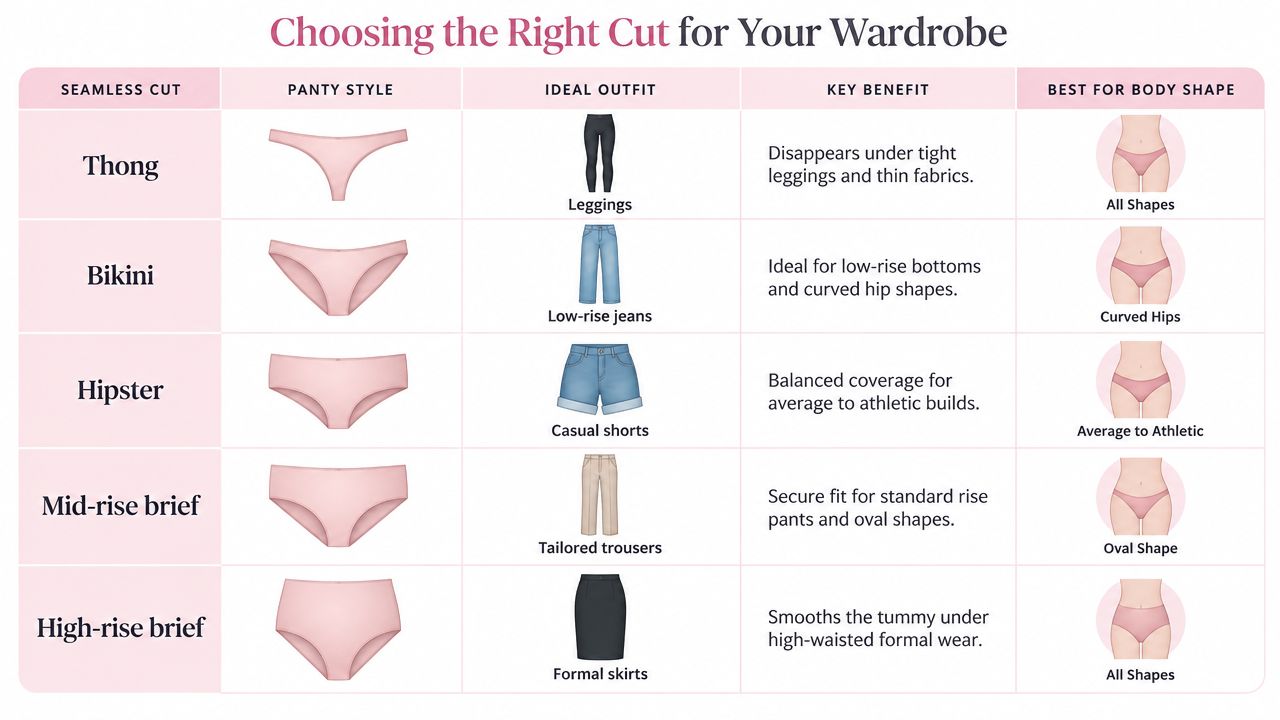
Use the cut to solve the outfit first. Then adjust for your body's movement, hip shape, rise preference, and tolerance for coverage.
The Comfort Trade-Offs Nobody Talks About
Construction alone doesn't guarantee comfort. The same dense surface that hides a panty line can limit ventilation when bonded panels cover a large area.
One comparison cited 12% lower airflow for smooth panties than for flatlock-seamed styles, highlighting the central trade-off between invisibility and breathability in this comparison of women's underwear. A pair may work well under a fitted dinner outfit yet feel too warm during a hot commute, a full office day, or a long flight. For gym sessions, look for ventilation zones and fabric that can move moisture away from the skin.
The edge can still misbehave
Laser-cut edges have no stitched hem to anchor them. They rely on fabric tension and grip. If the waistband or leg opening is slightly too tight, the edge may roll inward, dig into the skin, or leave a visible indentation by lunchtime.
A garment can feel smooth in your hand and still fail during movement. Walk, sit, bend, and raise one knee when trying it on. A waistband that stays flat while standing may fold as soon as your hips flex, especially under a desk or during a flight.
Size is part of the construction
Sizing down rarely creates a smoother result. It increases tension, which can make bonded edges roll and leg openings bite. Sizing up may improve comfort, but excess space allows the fabric to shift, making the edge visible beneath close-fitting clothing.
Body shape also matters more than generic one-size-fits-most language. Recent market coverage identifies strong growth in plus-size demand and increased interest in joined and laser-cut styles for reducing rolling during activity, as discussed in this coverage of women's panty-line concerns. The useful question is whether the width, recovery, rise, and leg construction remain stable through your actual movements.
The final choice depends on four variables: construction determines the outline, fabric determines the climate, cut determines coverage, and fit determines whether the garment stays there.
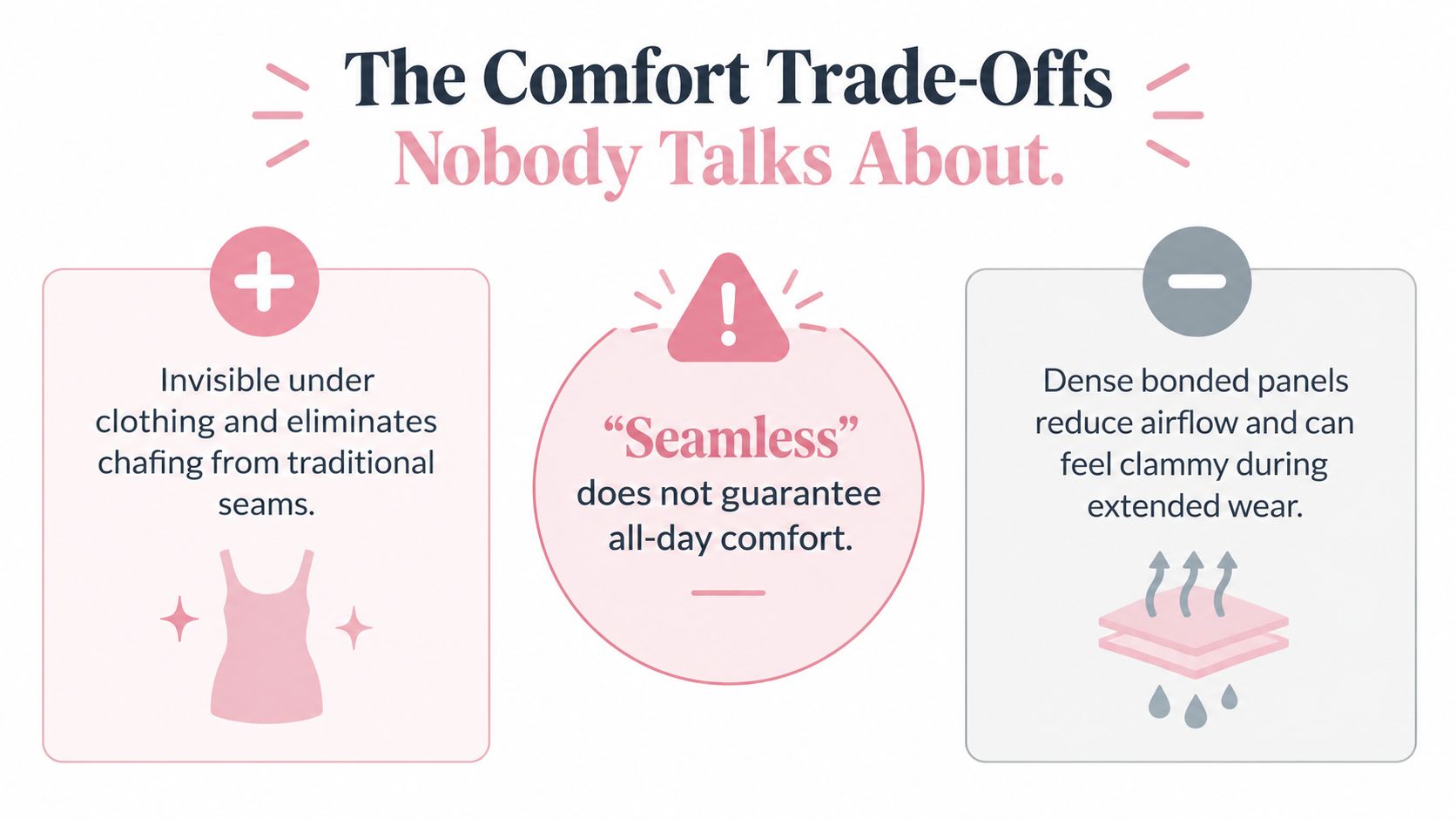
Invisibility is a construction feature. Breathability is a fabric and zoning decision. Fit is what decides whether either feature works on your body.
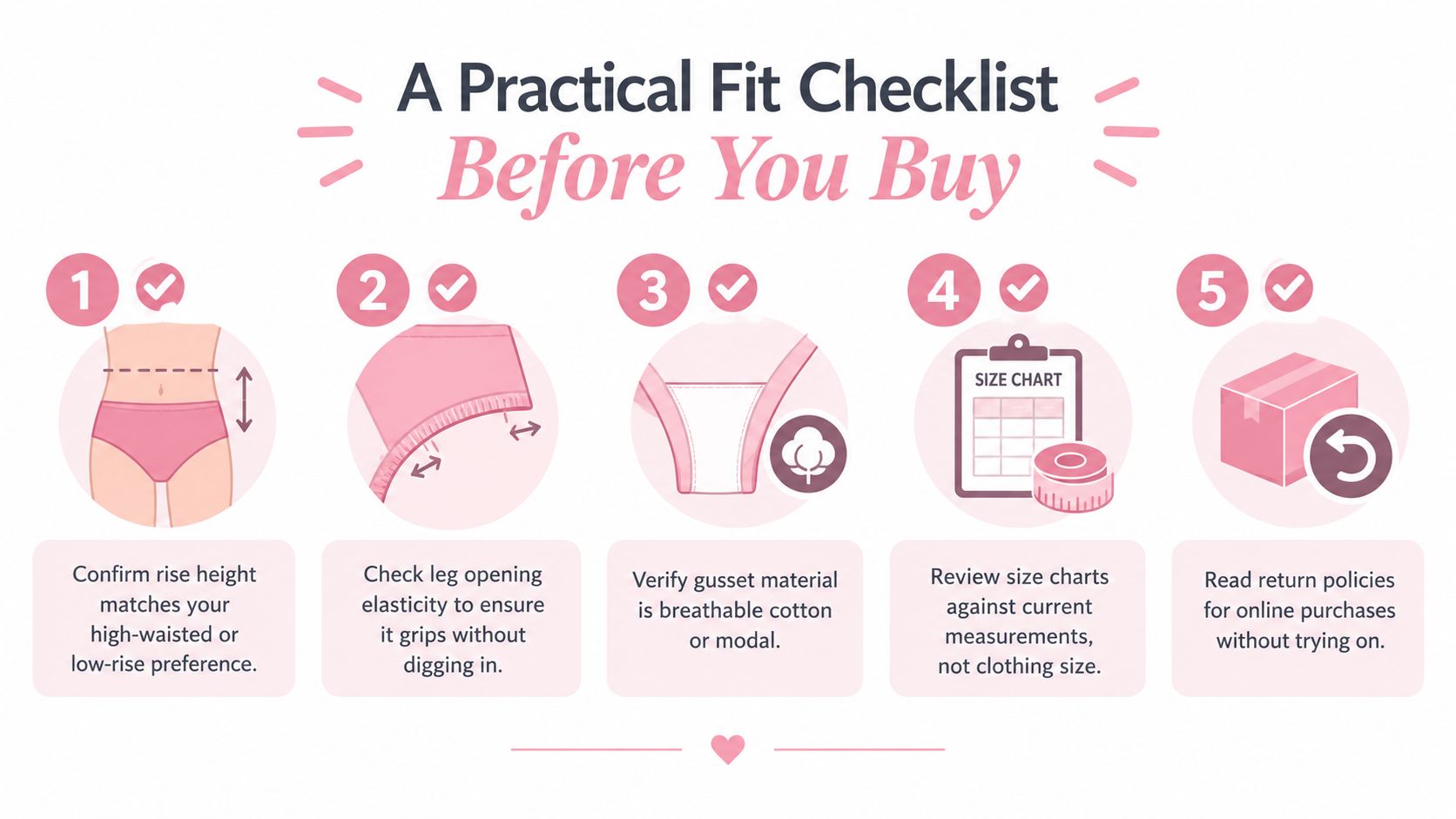
A Practical Fit Checklist Before You Buy
Shopping online removes the fitting-room mirror, so replace guesswork with a short inspection routine. Product photos can show a smooth edge, but they can't tell you whether the waistband will roll after an hour of sitting.
Check the rise first
Look at the trousers and skirts you wear most often. A high-rise brief should meet high-waisted clothing rather than stop below its waistband. A hipster or bikini makes more sense when your everyday bottoms sit low on the hips.
If the rise ends at an awkward midpoint, you may create two competing lines. The underwear can lie flat and still look visible because it doesn't align with the garment above it.
Inspect the leg opening
The opening should grip without creating a narrow pressure mark. Product descriptions that mention laser-cut or bonded edges tell you how the edge is finished, but not whether its tension suits your thighs.
On arrival, walk and sit before wearing the pair under an important outfit. Watch for a leg edge that curls inward, cuts into the thigh, or creeps upward as you move.
Verify the gusset
Look for a gusset made with a breathable lining, commonly cotton or another soft, moisture-managing material. The outer fabric can be sleek and synthetic while the gusset provides a more comfortable surface next to the body.
A very narrow gusset may feel restrictive even when the rest of the brief fits. Check its width and placement in the product images when the information is available.
Test stretch recovery
Gently stretch the waistband and leg opening, then release them. The material should return smoothly rather than staying slack, and it shouldn't feel so tight that it leaves immediate deep marks.
Recovery matters because a pair that loses tension can shift during walking. A pair with excessive tension can roll, dig, or create pressure points.
Read the chart as a measurement document
Use current waist and hip measurements, not the size you usually buy in unrelated clothing. Knit styles from different factories can behave differently even when the labeled size looks familiar.
When you're between sizes, inspect the construction. A very firm bonded edge may call for the roomier option, while a knit-only waistband may need enough tension to stay anchored. Check the return policy before ordering, especially when you can't try the garment on first.
Your arrival check is simple: put on the underwear, add the outfit you intend to wear, then view the front, side, and back in natural movement. Look for a rolling waistband, a leg edge visible under leggings, fabric bunching at the gusset, or a back panel that shifts when you sit.
Building Your Seamless Underwear Rotation
One pair can't optimize every day. Desk wear needs stable coverage and a waistband that doesn't distract you. A workout needs movement control and ventilation. Travel rewards a soft rise that stays comfortable while seated. Dinner outfits prioritize the cleanest possible outline.
| Scenario | Best Cut | Rise | Fabric |
|---|---|---|---|
| Desk days in tailored trousers | Bonded brief | Mid-rise | Microfiber |
| Gym sessions | Laser-cut thong or hipster | Mid-rise | Nylon-spandex with a cotton gusset |
| Long flights | Seamless brief | High-rise | Modal |
| Dinners and fitted dresses | Invisible thong | Low or mid-rise, matched to the outfit | Thin knit |
For a practical starting drawer, choose five to seven pairs across two rises and two cuts. That gives you enough variation to match different clothes without turning shopping into a search for a mythical all-purpose brief.
Start with nude or skin-matching shades when invisibility is the priority. Add black for darker outfits, then bring in a color you enjoy once the fit and fabric have proved themselves. Color is the finishing choice. Construction and comfort come first.
The same logic applies across sizes and body shapes. A fuller hip may need a hipster with a more forgiving side edge. A person who sits for long periods may prefer a brief over a thong. Someone who overheats may prioritize mesh zoning or a cotton-lined gusset over the smoothest dense knit.
Nuage Wears organizes its comfort-first underwear around concerns such as no visible lines, no wedgies, no digging, breathability, and no rolling, with options including modal-based NuCloud styles, mesh NuAir designs, bonded-band briefs, and laser-cut finishes. Its scenario groupings include Desk to Dinner, Long-Haul Ease, Made to Move, and Off-Duty Soft, giving shoppers a way to filter by daily use rather than cut alone.
Think of the final choice as one equation: construction determines the outline, fabric determines the climate, cut determines coverage, and fit determines whether the garment stays there. If one part fails, the label's promise can't rescue the experience.
Choose your next pair by starting with the outfit and the hours ahead, then match the rise, cut, fabric, and edge finish to that situation. Explore the problem-solving collections at Nuage Wears to find smooth, breathable, stay-put options for workwear, movement, travel, and fitted clothing.