Introduction
Seamless underwear is designed for modern, active lifestyles—providing invisible comfort that moves with you during workouts, travel, or long days. Unlike traditional styles, it minimizes common issues like chafing, visible lines, and shifting, thanks to its smooth construction and performance fabrics.
For all-day ease, focus on key comfort factors: reducing friction, managing moisture, and ensuring fit stability. Whether you're at the gym, on a flight, or relaxing at home, seamless designs—like those from Nuage—offer a lightweight, barely-there feel that supports you without distraction.
Core Foundations
What “seamless” really means
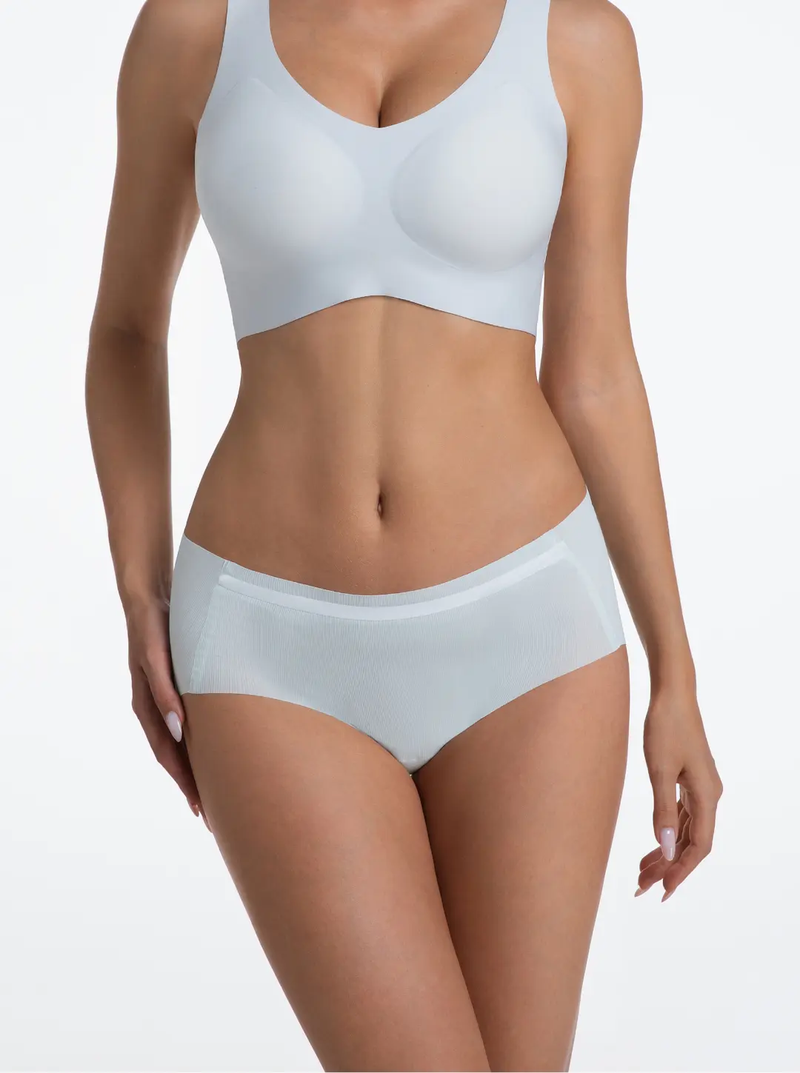
“Seamless” can mean a few different construction methods, and the details matter. In modern intimates, seamless often refers to circular knitting or engineered knit zones where the garment body is formed with minimal seams, then finished with raw-cut edges or subtle bonding at the leg openings and waistband. The goal is fewer raised ridges pressing into skin—especially in high-friction zones like the groin crease, inner thigh, and glute fold.
However, seamless doesn’t automatically mean “no structure.” Many seamless styles still use engineered compression, knit-in support zones, or strategically reinforced edges so the garment doesn’t slide during movement. The most comfortable seamless pieces tend to balance two forces: enough grip to prevent shifting, but not so much localized tension that you feel digging or pinching.
Traditional construction: stitched seams, elastics, and why people still choose it
Traditional underwear and bras use stitched seams and elastics to create structure, offering benefits like a firmer waistband and secure leg openings. Many people prefer these styles for their durability, fit, and shaping.
However, seams and elastics create edges that concentrate pressure. Combined with sweat and movement, this can lead to chafing. Traditional comfort relies on proper seam placement, elastic softness, and matching the garment to your activity and outfit.
The three comfort drivers
If you want a practical framework for choosing underwear for active women, think in three drivers:
- Friction control: Any raised seam or thick edge can act like a rubbing point. The risk grows with repetitive motion (walking commutes, runs, stair climbing) and with sweat, because damp skin is more vulnerable to irritation.
- Pressure distribution: Comfort isn’t just “loose vs tight.” A garment can feel snug and still be comfortable if tension is spread evenly. Digging happens when the same holding force is concentrated in a narrow elastic band.
- Moisture management: Breathability and dry time matter more than most people admit. In heat, clothing and certain ensembles can meaningfully affect how your body dissipates heat (including through sweat evaporation). OSHA’s guidance on heat exposure even accounts for clothing adjustment factors because clothing can change heat burden and perceived stress. (https://www.osha.gov/heat)
Fit outcomes: stability, invisibility, and support
When these comfort drivers work together, you get three outcomes that active women usually care about:
- Stability: the piece doesn’t shift, roll, or wedge during movement.
- Invisibility: edges lay flat and don’t print under leggings or trousers.
- Support: especially for bras and bralettes, support should feel stable without underband irritation or strap digging.
Movement & Friction Control
How seams interact with chafing zones

Movement creates friction in predictable areas like the inner thighs and under the bust, where traditional seams and elastics often sit. This constant rubbing can lead to irritation, especially when combined with moisture.
Seamless design addresses this by removing bulky stitching and using raw-cut edges for a thinner, flatter profile that minimizes the "rubbing lip." As noted by the Cleveland Clinic, "Chafing is skin irritation from your skin rubbing against something else," and "smooth, properly fitting, moisture-wicking clothing can reduce the risk." (https://my.clevelandclinic.org/health/diseases/23517-chafing)
The most effective solution combines these low-profile edges with a stable, body-hugging fit that moves with you to prevent fabric slippage and irritation.
Nuage example: NuCloud and NuAir for movement-heavy days
Nuage designs several seamless underwear options that map well to movement-heavy scenarios. For everyday motion—walking, errands, light gym sessions—NuCloud™ Original Low-Rise Brief is built around a second-skin feel, raw-cut edges along waistband and leg openings, and a 3D contour fit intended to lay flat rather than bunch. It also uses a cotton gusset for breathability, which matters when you’re wearing the same piece for many hours.
If your movement includes more heat and sweat (hot studio classes, yoga, Pilates, or a long active day), NuAir Mesh Raw Brief leans more performance. NuAir highlights raw-cut edges for a no-line look under leggings, ultra-light mesh fabric for breathability, and a quick-dry + antibacterial positioning, again with a 100% cotton gusset. The fabric composition listed for NuAir’s O₂ Fabric™ is 62% polyamide and 38% elastane, designed with breathable mesh zones for airflow.
A practical way to use these: choose NuCloud when you want buttery softness for general wear, and choose NuAir when you anticipate heat buildup and want maximum ventilation.
Shop: https://www.nuagewears.com/products/nuair-mesh-raw
Sweat, Breathability, and Dry Time
Sweat magnifies seams and friction, making underwear feel scratchy or restrictive after physical activity. Fabric clings when damp, and friction rises on damp skin, making breathability essential for comfort. It helps sweat evaporate, reducing the damp, sticky feeling.
From a health perspective, clothing impacts heat dissipation. Heat-risk models in occupational settings explicitly account for how clothing can increase heat exposure (https://www.osha.gov/heat-exposure/hazards).
For gym-goers and runners, prioritize quick-dry and airflow over traditional cotton. Cotton may feel comfortable for lounging but retains moisture during high-sweat activities, while performance blends dry faster.
What to Look for in Breathable Underwear
- Fabric structure: Mesh zones, jacquard ventilation, and lightweight knits improve ventilation.
- Fiber blend: Polyamide/elastane blends dry faster than cotton; modal blends feel soft and breathable.
- Gusset material: Cotton-lined gussets are breathable and comfortable against the skin.
- Edge design: Flatter edges reduce moisture build-up, while thick elastics can trap it.
Nuage Example: NuAir Mesh Raw Brief for Hot Workouts
Designed with sweat management in mind, the NuAir Mesh Raw Brief features breathable mesh zones and quick-dry fabric to stay lightweight and comfortable during running and cardio. The seamless, raw-cut edges avoid panty lines and prevent the “damp elastic” feeling after workouts.
Pairing Strategy for Active Women
For gym workouts, choose raw-cut seamless edges to avoid panty lines and leg-crease bulk. For post-workout errands, the same edges ensure comfort without the discomfort of thick, stitched bands.
Shop: https://www.nuagewears.com/products/nuair-mesh-raw
Invisible Layering Under Clothes
The difference between “no show” and truly invisible
Everyday invisible layering is mostly an engineering problem. Panty lines appear when an edge creates a ridge under tight fabric—leggings, fitted trousers, bodycon skirts, and many athleisure sets amplify this because the outer layer stretches and conforms to every underlying contour. Traditional seams and thick elastics are the usual culprit, but even some “seamless” pieces still have a reinforced band that can print.
To get closer to truly invisible, look for:
- Raw-cut edges (or very thin bonded edges)
- A flat-laying contour fit that doesn’t bunch
- A fabric that glides instead of gripping the outer layer
This is where women’s seamless underwear shines: fewer raised transitions, fewer pressure points, and a cleaner silhouette under your clothes.
Nuage example: NuCloud + NuShield for leggings days
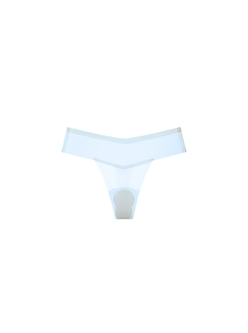
For an "invisible under everything" option, NuCloud briefs feature raw-cut edges and a contour fit to minimize visible panty lines under everyday outfits. If you prefer a thong for zero lines, NuShield Thong Light addresses another common concern: camel-toe visibility. Designed with a built-in 7A antibacterial latex gusset and seamless raw-cut edges, it ensures no digging and no panty lines.
NuShield also uses a breathable, soft, lightweight stretch fabric for all-day comfort, with a 7.2% silk-enhanced gusset for added luxury. Perfect for office commuters who switch from tailored pants to leggings, this piece offers both invisibility and comfort, reducing the need for adjustments.
Shop: https://www.nuagewears.com/products/nushield-thong-light
Support Needs: Bras and Bralettes
Comfort isn’t “less support”—it’s smarter pressure placement
Bras and bralettes sit at the intersection of support and irritation. Traditional bras often use underwires, stitched seams, and firmer elastics to shape and lift. Many people like that structure, especially for fuller busts, because it feels stable. The discomfort tends to come from localized pressure: underwires pressing at the ribcage, straps digging at the shoulder, or bands rolling when the fit isn’t right.
Seamless or low-seam bras often shift the engineering toward molded cups, knit-in support zones, or internal structures that provide lift without hard edges. The goal isn’t “no structure”—it’s avoiding harsh contact points.
Nuage options: structured comfort without harsh edges
Nuage’s bra collection offers a blend of technical support and stylish designs:
- Push Up Full-Cup Back-Hook Bra features a W-shaped structure for lift and side support, a U-shaped back for coverage and reduced back bulge, seamless molded cups with non-removable padding, and adjustable 2cm-wide straps for firm support without digging. It also has an ultra-thin, "invisible" hook-and-eye closure for discreet adjustability.
- NuBloom Bra takes a softer approach with lace and breathable mesh, fixed padding, and inner silicone strips for secure support without underwire. It is made with skin-friendly materials, free from formaldehyde, fluorescent agents, and silicone oil, and emphasizes shape retention through washing.
In practical terms, choose the molded-cup, engineered-structure bra for all-day stability and support, and opt for the lace/mesh option when you want breathable comfort and a lighter feel, especially for lower-impact days.
Shop: https://www.nuagewears.com/products/push-up-full-cup-back-hook-bra
All-Day Lifestyle Comfort Scenarios
The “one day, many environments” problem
A modern day often includes conflicting requirements: a morning workout, all-day commuting wear, hours at a desk, then errands, then lounging at home. Traditional underwear can be comfortable for one slice of that day but become noticeable in another—like a waistband that feels fine standing but digs when you sit for long periods, or a seam that’s fine when dry but irritates after you sweat.
This is where building a small “comfort wardrobe” helps. You don’t need dozens of pieces; you need the right mix by scenario:
- Frequent travelers: prioritize breathable, quick-drying fabrics and low-bulk edges that don’t press during sitting.
- Office commuters: prioritize invisibility under trousers and stability that won’t shift during walking.
- Lounging at home and sleepwear comfort nights: prioritize softness and non-restrictive stretch.
- Gift shoppers and holiday gifting occasions: prioritize size flexibility, bundles, and universally comfortable styles.
Nuage beyond underwear: Sleep and loungewear + socks and accessories
Nuage extends the “comfort engineering” idea into Sleep and loungewear and Socks and accessories.
For sleep and lounge, NuLounge Thermal Pajamas Sleep Set highlights anti-static, fade-resistant, and pill-resistant technology, positioning it as durable and machine washable while staying soft. The listed fabric blend is 49% regenerated cellulose fibers, 43% polyamide, 8% spandex, which signals a softness-plus-stretch approach that works for lounging and cooler nights.
For everyday add-ons, Ribbed Stacked Mid-Calf Socks focus on a soft, breathable blend (41% cotton, 40% modal, 17% nylon, 2% spandex in the body; 93% cotton, 7% spandex in the sole), AAA-grade antibacterial positioning, and a seamless toe design intended to reduce friction—useful for all-day commuting wear or travel days when feet take the brunt.
These categories matter for gift boxes and bundles because a comfort-themed set is easier to size and tends to feel “safe” as a gift: socks + underwear + lounge tends to fit many lifestyles without guessing someone’s fashion preferences.
Shop: https://www.nuagewears.com/products/nulounge-thermal-pajamas-sleep-set
How to Choose Seamless vs Traditional
Decision table: scenario-first selection
| Scenario | Main comfort risk | What to prioritize | Best construction approach |
|---|---|---|---|
| Gym workouts and training | Sweat + friction | Breathability, quick-dry, low-profile edges | Seamless/raw-cut, ventilated knit |
| Running and cardio sessions | Repetitive motion | Stay-put fit, minimal rubbing points | Seamless with stable contour fit |
| Office commuters | Sitting pressure + walking | No-dig edges, invisibility under trousers | Seamless/raw-cut or very flat seams |
| Travel and long flights | Heat + sitting + swelling | Breathable fabric, gentle compression, no tight bands | Seamless, smooth edges |
| Sleepwear comfort nights | Pressure sensitivity | Softness, stretch, non-restrictive fit | Soft knits, gentle waist finishing |
| Holiday gifting occasions | Sizing uncertainty | Size-flexible styles, bundles, everyday comfort focus | Seamless basics + accessories |
Best Practices & Pitfalls
Best Practices
Choose rise and coverage based on movement pattern. If you do a lot of squatting, running, or stair climbing, many people prefer a rise that feels secure at the waist and coverage that doesn’t shift at the glute fold. For yoga or Pilates, a low-bulk edge that disappears under leggings often matters more than extra structure.
Rotate pairs to reduce fabric stress. Even high-quality stretch fabric benefits from recovery time. Rotating a few pairs helps maintain stretch retention and reduces the odds of edges loosening and sliding.
Follow care instructions to protect elasticity. Many comfort issues show up after washing: stretched bands, warped cups, or stiffened fabric from heat. Cold water and air drying (or low heat when allowed) can preserve the “barely there” feel longer.
Use the “sweat test” to pick your workout pair. If you regularly finish workouts with damp fabric that stays damp, switch to a more breathable, quick-dry option. Moisture lingering at the leg crease is a common trigger for irritation. (https://www.osha.gov/heat-exposure/hazards)
Common Pitfalls to Avoid
Choosing a size that’s too small for “support.” Too-tight elastics create digging and can actually increase ride-up and wedgies because the garment is fighting your movement. If you’re between sizes, sizing up often improves all-day comfort.
Assuming all seamless styles are invisible. Some seamless pieces still have thicker reinforced edges. If leggings are your main use case, look specifically for raw-cut edges or truly low-profile finishing.
Wearing thick seams under tight compression leggings. This is one of the fastest ways to create visible lines and friction hotspots—especially during running and cardio sessions.
Ignoring gusset material when you sweat. The gusset is the highest-contact zone. Breathable, comfortable gusset construction matters as much as the outer fabric when you’re active.
FAQ
1) What’s the difference between raw-cut edges and traditional seams under leggings?
Raw-cut edges are designed to lie flatter, so you’re less likely to see ridges or lines through thin leggings. Traditional seams can add structure and sometimes feel more secure, but they can also create a visible outline or a pressure point where the seam sits. If you’re an office commuter wearing fitted pants, raw-cut edges often feel smoother when you sit and stand repeatedly. If you need more “hold,” a traditional elastic edge (or a reinforced leg band) can be the better choice.
2) Why does my underwear ride up during runs or squats?
Ride-up usually comes from a mismatch between your movement pattern and how the leg opening grips—especially when fabric stretches and relaxes as you sweat. If the leg opening doesn’t have enough stability for your stride and glute/hamstring movement, it can migrate upward with each step. Sizing can also cause problems: too small increases tension (and shifting), while too large removes the “anchor” effect. For running, look for designs that explicitly emphasize stay-put leg openings and test them during a short run before buying multiples.
3) Can I use shapewear underwear all day without feeling restricted?
Yes—if you choose gentle shaping and prioritize anti-roll features rather than maximum compression. For all-day wear, the most comfortable shapewear usually spreads pressure evenly across the waist and avoids harsh top elastic that digs when you sit. If you’re traveling, consider how long you’ll be seated and whether you’ll want bathroom convenience; ultra-high compression can feel annoying on long flights. Start with one pair, wear it on a full workday, and adjust size up if you’re between sizes.
4) Which underwear style is best for avoiding panty lines under leggings?
No-show performance usually comes down to edge design: raw-cut leg openings and a smooth waistband tend to be the easiest path to fewer visible lines. Coverage matters too—thongs reduce back lines, but many people prefer briefs that still disappear. If you’re wearing thin, light-colored leggings, even small seam ridges can show, so prioritize the flattest construction and test under your most “see-through” pair. Also check that the fabric doesn’t bunch at the back during movement—flat-laying coverage helps.
5) How do I prevent thigh chafing on travel days or long walks?
First, reduce moisture and friction at the same time: change out of sweaty clothing promptly and consider a barrier layer that prevents skin-on-skin rubbing. Many people find longer-leg underwear (like a boxer style) helpful because it replaces friction with smooth fabric. If you’re still prone to irritation, medical resources often recommend moisture-wicking clothing choices and addressing seams/tags that rub. (MedlinePlus: https://medlineplus.gov/ency/article/002034.htm)
Conclusion
Seamless vs traditional isn’t a one-size answer—your best option depends on what your day looks like: gym and runners need stability, office commuters need smooth edges, and frequent travelers usually need breathable comfort that doesn’t dig after hours of sitting.
If you’re building a practical drawer for an active life, start with women’s seamless underwear that’s genuinely no-show for everyday outfits, add a stay-put performance pair for workouts, and keep one piece of shapewear underwear for smoothing and travel. Then, round it out with supportive bras and bralettes, cozy sleep and loungewear, and a few socks and accessories—or simplify gifting with gift boxes and bundles when holiday gifting occasions roll around.
Table of Contents
- Introduction
- Core Foundations
- Movement & Friction Control
- Sweat, Breathability, and Dry Time
- Invisible Layering Under Clothes
- Support Needs: Bras and Bralettes
- All-Day Lifestyle Comfort Scenarios
- How to Choose Seamless vs Traditional
- Best Practices & Pitfalls
-
FAQ
- 1) What’s the difference between raw-cut edges and traditional seams under leggings?
- 2) Why does my underwear ride up during runs or squats?
- 3) Can I use shapewear underwear all day without feeling restricted?
- 4) Which underwear style is best for avoiding panty lines under leggings?
- 5) How do I prevent thigh chafing on travel days or long walks?
- Conclusion