

Terry women's shorts can hold roughly 5–7 times their dry weight in moisture, but plush, heavier terry can become too warm for intense activity. For the coolest feel, choose lighter, shorter-pile fabric, and reserve thick terry for lounging, travel, and gentle movement.
You know the moment. You get home on a warm afternoon, trade stiff denim or clingy activewear for soft shorts, and your whole body relaxes. The best terry women's shorts feel like a small reward, with enough structure for errands and enough softness for an unplanned hour on the sofa.
That balance explains their staying power. Looped fabric combines softness, absorbency, and easy care, making terry a warm-weather staple rather than a throwaway lounge trend. If you're preparing imagery for this article, keep the cover image at a 280:210 aspect ratio, the format used for the blog display.
Table of Contents
- The Allure of Terry Comfort
- Understanding Terry Fabric Science
- French Terry vs Standard Terry
- Choosing the Perfect Fit and Style
- Styling Beyond Loungewear
- Essential Care Instructions
- Maximizing Comfort and Breathability
The Allure of Terry Comfort
Slip into a fresh pair of terry shorts after a long day and the appeal is immediate. The fabric doesn't cling like a slick synthetic, and it doesn't feel rigid like woven cotton. Instead, its raised loops create a soft, tactile surface that feels relaxed against the legs while the waistband gives just enough security for walking around the house, picking up groceries, or stepping out for coffee.
That sensory contrast is why terry has moved beyond the “pajama drawer” category. A pair in a clean cut can feel intentional, especially when the shorts have a smooth waistband, neat hems, and a controlled drape. They offer the emotional ease of loungewear without forcing you to look as though you've surrendered the day.

Why the texture feels so restorative
Terry fabric is typically made from terry cloth or French terry. Its loops improve breathability and moisture absorption, while common retail constructions use cotton blended with polyester or recycled polyester for durability and easier care. A current French terry short example shows how this blend-led construction has become part of everyday women's apparel.
The result is a fabric that works across moods. Wear it with a tank top for a slow morning, a button-down for travel, or a sweatshirt when the temperature drops. For more ideas on dressing through relaxed, transitional moments, this guide to a cozy in-between hour outfit offers useful styling context.
Stylist's rule: If the shorts feel good before you leave the house but look sloppy once you add shoes, the cut needs refinement, not a different fabric.
Understanding Terry Fabric Science
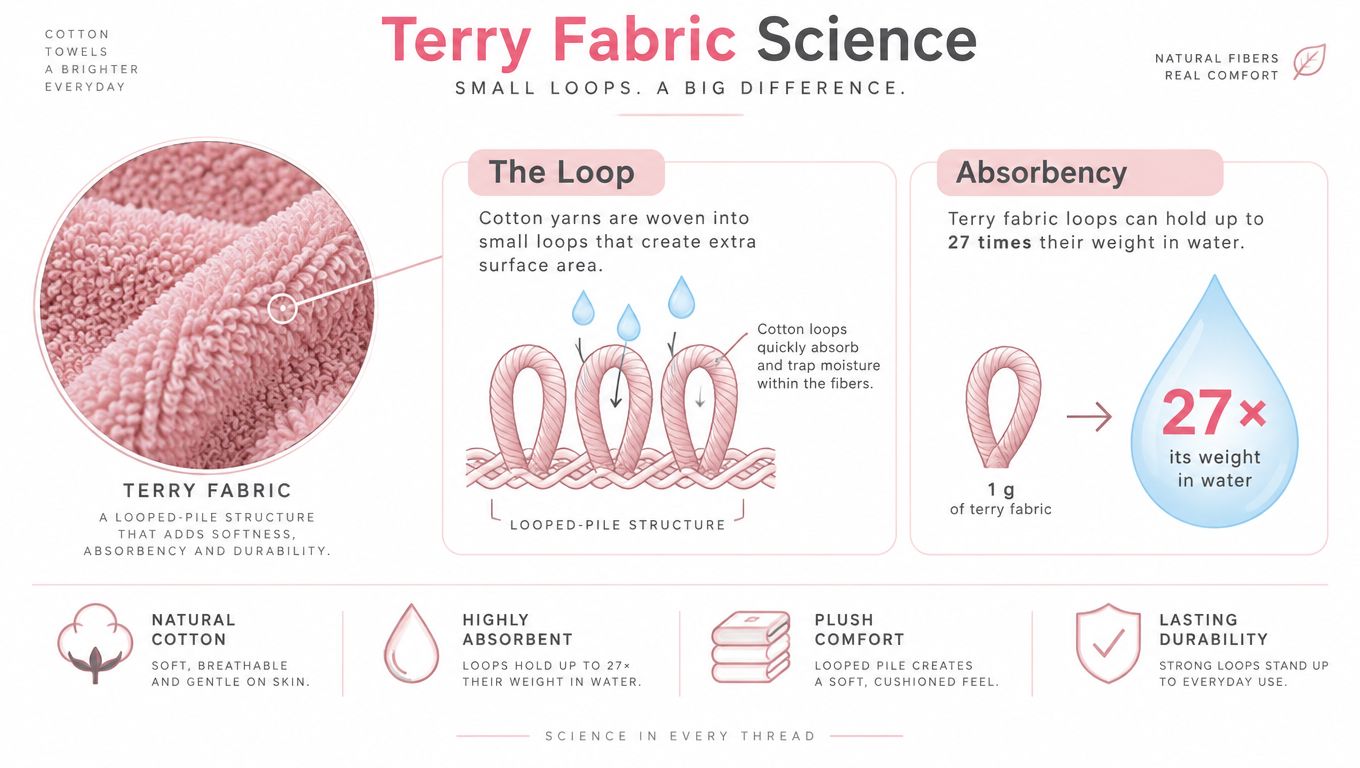
Terry feels plush because its surface is engineered for contact, airflow, and moisture movement. The looped-pile structure lifts fibers above the base cloth, increasing the area available to catch moisture and hold small pockets of air. That construction gives terry its soft texture, but it also creates the trade-off that matters in women's shorts: more surface and bulk can improve comfort while making the fabric feel warmer during movement.
Raised loops also change how quickly moisture reaches the fabric. In optimized constructions with approximately 4 mm pile height, absorption can occur in 1–2 seconds, compared with 3–5 seconds for a 2 mm pile variant. This breakdown of terry fabric characteristics explains why pile height affects both hand-feel and performance.
The comfort trade-off
Choose a thicker loop when softness and warmth matter more than quick drying. Choose a lighter construction for walking, travel, or humid weather, when trapped heat becomes distracting. A short that feels perfect in an air-conditioned room can become too warm once activity and moisture build.
Fabric weight reinforces that difference. Lightweight single terry is commonly placed around 200–350 GSM, while heavier double terry sits above 600 GSM, according to industry guidance on loop-pile terry. Use those ranges as a practical filter, not a substitute for checking the actual fabric and fit.
For everyday summer wear, start with lower-to-mid GSM. It delivers softness and airflow without making the shorts feel blanket-like. The same balance appears in fabric types for luxury bedding, where surface texture, density, and moisture handling shape comfort.
French Terry vs Standard Terry
French terry and standard loop-pile terry can look similar online, but they serve different wardrobes. The easiest distinction is surface placement. French terry typically has loops on the interior and a smoother outer face, while standard terry may use looped pile more generously across both sides.
That difference changes the mood of the short. French terry usually looks cleaner and holds a more refined silhouette, which makes it the stronger choice for travel, errands, and outfits that include a structured layer. Standard terry feels more plush and relaxed, so it belongs naturally in lounge sets, resort dressing, and slow weekends.
| Feature | French terry | Standard loop-pile terry |
|---|---|---|
| Surface | Smooth outer face with looped interior | More visibly plush looped surface |
| Feel | Soft, lighter, and easier to layer | Cushioned and tactile |
| Shape | Often looks more controlled | Can drape more casually |
| Best use | Errands, travel, polished casual outfits | Lounging, resort wear, relaxed home dressing |
Make the choice by lifestyle
Choose French terry if you want one pair to work with a crisp shirt, low-profile sneakers, and a compact jacket. Choose standard terry if your priority is softness against the skin and you don't mind a more overtly casual appearance.
Inseam matters too. Current women's styles commonly appear around 3.25 inches and 4 inches, while longer versions create more coverage and a less athletic impression. This overview of French terry shorts is useful when you want to compare the category's relaxed and more wearable interpretations.
Choosing the Perfect Fit and Style
You are dressing for a warm travel day, but your favorite soft short starts feeling hot after an hour of walking. Fit decides whether terry feels easy and breathable or plush and restrictive. Choose the silhouette before focusing on fabric weight.
| Style | Best inseam | Ideal occasion |
|---|---|---|
| Short lounge terry | Around 3.25 inches | Home, poolside, hot-weather relaxation |
| Everyday French terry | Around 4 inches | Errands, travel, casual lunches |
| Longer terry short | Longer than short athletic cuts | Coverage, resort wear, relaxed commuting |
For background on loop construction and how it affects the feel of terry, see this fabric construction guide. Use that information as context, then judge the actual garment by its cut, lining, and finish.
Check the fit where it counts
Measure the rise in inches from the crotch seam to the top of the waistband. A mid-rise usually feels secure without pressing into your stomach, while a shorter rise can shift when you sit or climb stairs. Try the shorts seated as well as standing. The waistband should stay flat and keep its position without digging in.
Check the leg-opening width across the hem. A narrow opening can cling to the thigh and trap warmth during movement. A wider opening improves airflow, though excessive volume can make a short look untidy. Choose enough room for walking, sitting, and bending without the fabric pulling across the hips.
Waistband construction matters just as much. A covered elastic waistband feels softer, while a drawstring gives more control during travel. Look for secure stitching and a smooth inner finish.
For a polished silhouette, choose a moderate opening and a smooth outer face. For relaxed wear, select a roomier cut with a clean hem. Plushness should support comfort, not overwhelm breathability.
Styling Beyond Loungewear
Terry shorts look polished when the rest of the outfit supplies structure. Pair a simple pair with a crisp button-down worn open over a fitted tank, then add clean sneakers and a small shoulder bag. The shorts stay comfortable, while the shirt and accessories tell the eye that the outfit is planned.
A blazer works particularly well with French terry. Choose a jacket with defined shoulders, keep the top close to the body, and let the shorts remain the soft element. Avoid adding a slouchy sweatshirt and oversized tote at the same time, because too many relaxed pieces create the pajama effect you're trying to avoid.

Build outfits around contrast
The strongest combinations mix textures and proportions:
- For travel: Pair mid-length French terry shorts with a fitted tee, lightweight overshirt, and supportive walking shoes.
- For errands: Add a tucked-in poplin shirt, slim belt, and structured crossbody bag.
- For casual work settings: Use a longer, opaque short with a structured blazer and minimal sneakers, if your workplace permits relaxed dressing.
- For resort wear: Choose a bright terry short with a matching tank, leather-look sandals, and simple jewelry.
Current summer 2026 trend reporting, presented as trend coverage rather than a guarantee, points toward elasticated shorts, Bermuda silhouettes, and sporty pairs becoming more mainstream. Current retail assortment pages also position soft terry as cozy, breathable, and easy to style beyond the sofa, as shown by this soft terry shorts assortment.
Polished-casual test: Add one structured piece, one refined shoe, and one smooth accessory. If the outfit still looks like sleepwear, change the proportions before changing the shorts.
Essential Care Instructions
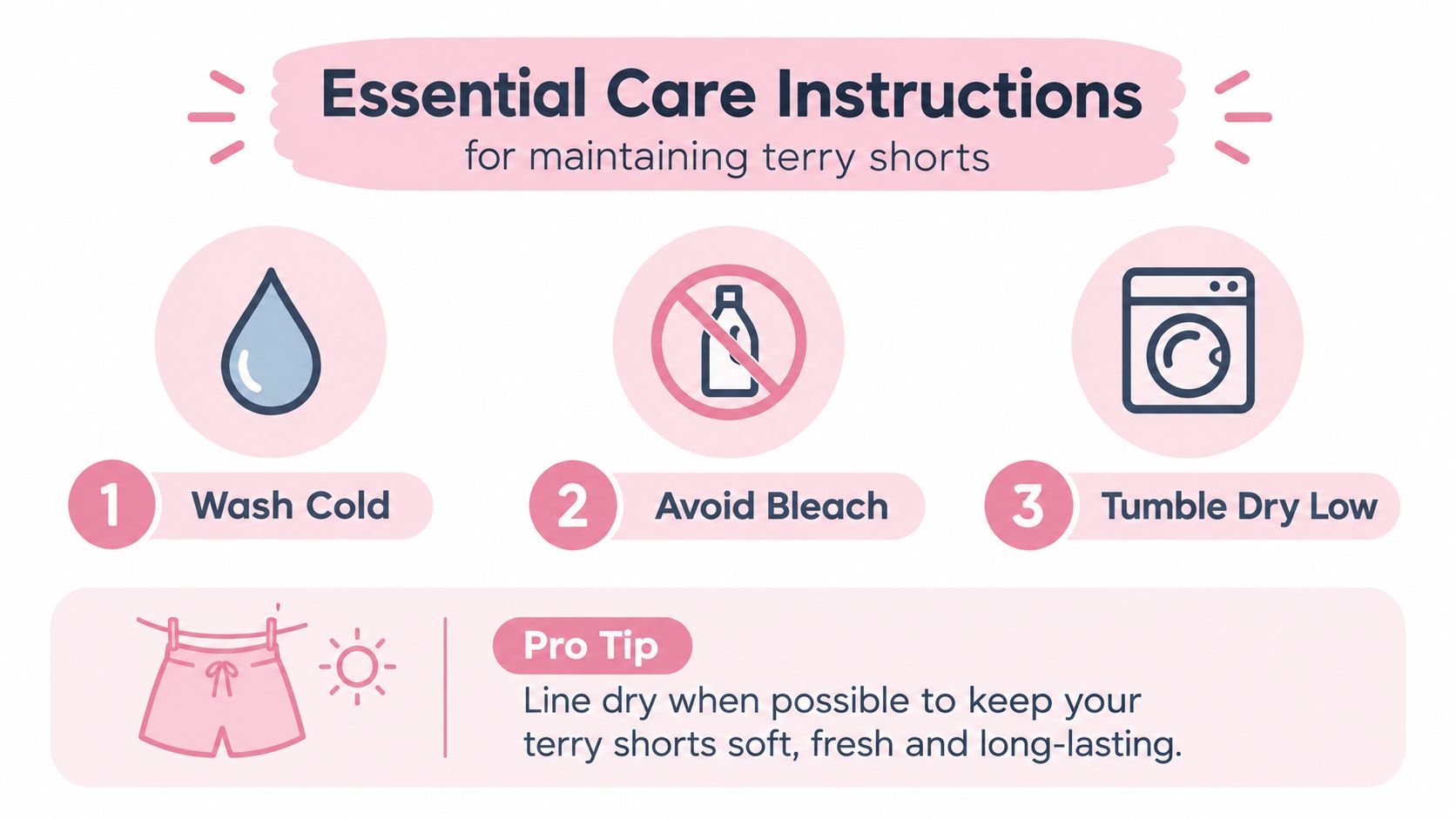
Terry stays soft when you treat its loops gently. Read the care label first, then use a simple routine that limits friction, harsh chemicals, and excessive heat.
- Wash cold. Turn the shorts inside out and wash them with similar soft garments. Cold water helps protect the fibers, color, and elastic structure.
- Avoid bleach. Bleach can weaken fibers and dull the finish. Use a mild detergent, especially for darker or dyed terry.
- Tumble dry low. High heat can stress elastic and make the fabric feel rougher over time.
- Line dry when practical. Hanging the shorts allows the loops to settle naturally and reduces unnecessary dryer exposure.
- Store folded. Avoid leaving them on a hanger that stretches the waistband or distorts the shape.
Don't overload the washing machine. Terry needs room for water and movement to rinse away detergent, and a gentle cycle is a sensible choice when the fabric feels especially plush.
Maximizing Comfort and Breathability
Your favorite soft terry shorts can become too warm once plush comfort meets sustained movement. Thick, long-loop fabric absorbs moisture, but it also holds more material against your skin. During intense exercise, humid weather, or a long walking day, that extra softness can retain heat around the waistband and feel heavy.
Choose the fabric for the activity. Medium-weight terry works well for lounging, airport travel, gentle sightseeing, and casual indoor wear. For cycling, fast walking, outdoor workouts, or very humid climates, choose a lighter construction with a shorter pile and less bulk.
This review of terry bike shorts highlights the practical drawback of thicker fabric during hard rides and humid conditions: more heat retention and sweat buildup around the waistband. The recommendation is straightforward. Plush terry suits comfort, while lighter activewear handles sustained exertion better.
Match fabric to the day
- Choose plush terry for lounging, resort mornings, relaxed travel, and cool indoor spaces.
- Choose lighter terry for warm errands, casual walking, and all-day wear.
- Choose another lightweight breathable category for high-output exercise or extreme humidity.
Your base layer can decide whether shorts feel airy or clammy. Breathable, stay-put underwear reduces bunching and moisture buildup during travel and movement. Read this guide to breathable, moisture-wicking underwear before choosing what to wear underneath. If heat and bunching are the problem, start with a mesh-zoned, stay-put base layer. Nuage Wears offers women's underwear and everyday apparel with invisible laser-cut edges, secure fits, and breathable mesh options. Explore the range at Nuage Wears.
Start with lightweight French terry around 200–350 GSM for versatile warm-weather wear. Add plush terry when softness matters more than airflow, and select the inseam, waistband, and finish around your actual routine.