
High rise hipster underwear combines a hipster's moderate-coverage leg line with a waistband that sits at or above the natural waist, pairing a brief's smoothing coverage with a hipster's ease. Independent textile testing found modal moved moisture in approximately 50% less time than comparison cellulosic fibers, but a comfortable pair still depends on its waistband, fit, and finished construction.
You pull on high-waisted jeans, glance in the mirror, and spot the problem: your underwear waistband lands in the wrong place, digs into your middle, or shows through the fabric. A higher rise can help the waistband meet your outfit where you want it, but height alone won't prevent pinching or slipping.
The difference comes down to mechanics. Pressure distribution affects whether a waistband feels like a gentle hug or a tight belt; fabric construction affects how moisture moves; and the right fit stays in place without leaving deep indentations. Knowing what to check makes it easier to choose underwear for a long desk day, a commute, or a fitted skirt without relying on vague promises about comfort.
Table of Contents
- Why Everyone Is Talking About High Rise Hipster Underwear
- What Exactly Is High Rise Hipster Underwear
- Why Fabric Choice Matters More Than You Think
- The No Digging, No Lines, No Wedgie Payoff
- How to Choose the Right High Rise Hipster for Your Body and Outfits
- Nuage Wears High Rise Styles Worth Trying
- Finding Your Everyday Pair
Why Everyone Is Talking About High Rise Hipster Underwear
That awkward waistband mismatch is familiar: your trousers rise to your natural waist, while your underwear ends lower down, leaving a visible gap or a band caught under the waistband. Pulling the underwear higher might seem like an easy fix, until the leg openings shift or the waistband starts digging in when you sit.
High rise hipster underwear combines a hipster's moderate leg coverage with a waistband that reaches the natural waist. The result gives you more coverage through the midsection than a standard hipster, without turning the leg line into a high-cut brief. It can be a useful middle ground for people who like a hipster's everyday shape but want their underwear to meet high-waisted clothing more comfortably.
The appeal isn't just that the cut covers more skin. A high waistband can create a smoother transition under high-rise jeans or a fitted dress, but it can also feel restrictive if the band concentrates pressure on one narrow area. A garment that looks smooth in a fitting-room mirror can still roll, pinch, or press uncomfortably once you bend to tie a shoe or sit through a commute.
A higher waistband is only an advantage if it stays comfortable when your body moves.
The most useful way to shop is to look past the name on the label and examine how the garment is built. Rise and leg shape determine where the fabric sits; knit and lining influence how it feels against your skin; and the waistband's width and stretch affect whether it stays put without squeezing.
That's what separates a thoughtfully designed pair from one that sits higher. You'll want to know how to distinguish rise from cut, why fabric construction matters, and how to check fit in your own clothes. Instead of trusting a generic comfort claim, use the practical tests below to judge whether a pair works for your body and your day.
What Exactly Is High Rise Hipster Underwear
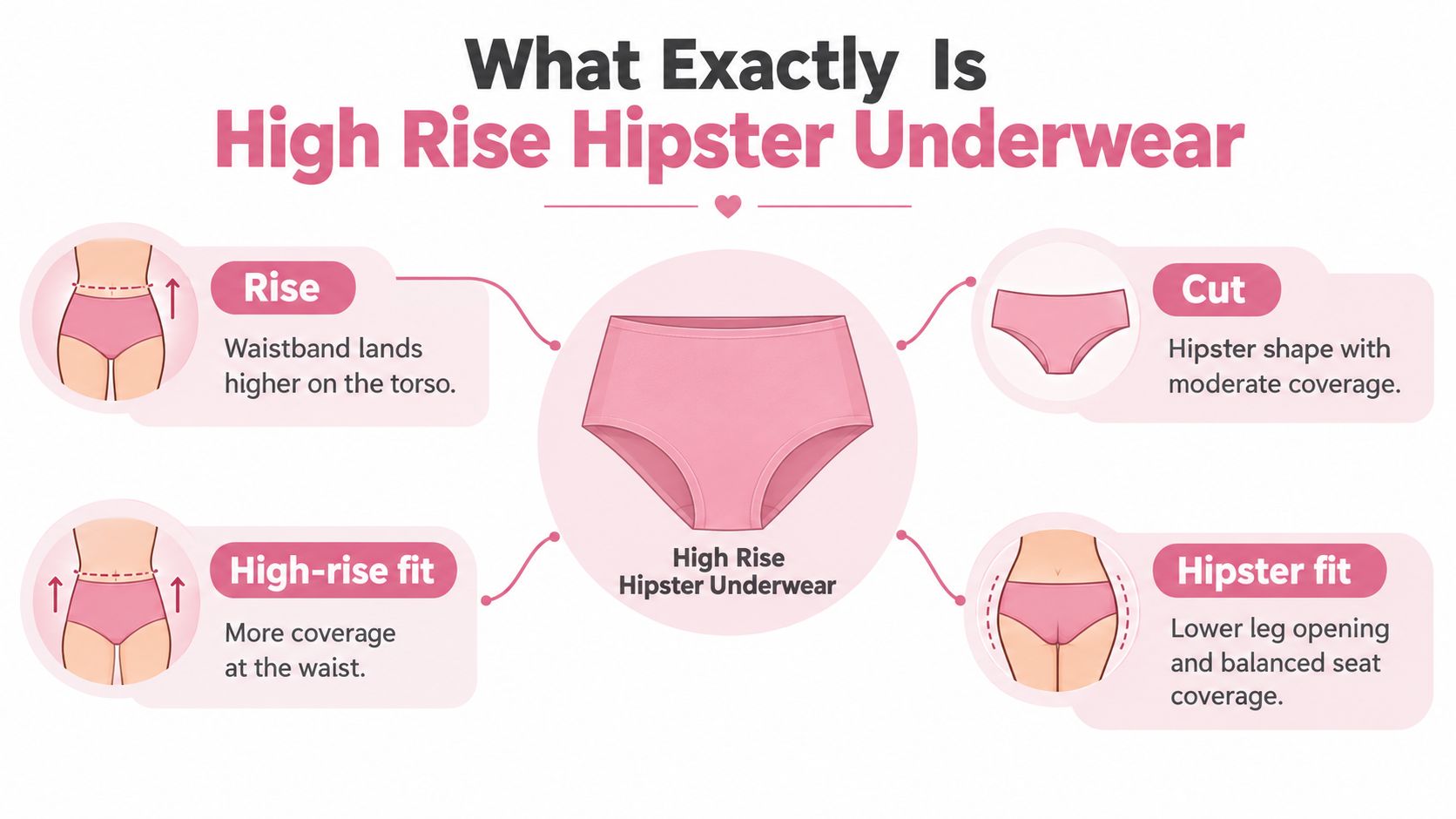
Start with two separate questions: Where does the waistband sit? And how much coverage does the leg and seat shape provide? The first is the rise; the second is the cut. Shoppers often use those terms interchangeably, but they describe different parts of a garment.
Think of a picture frame. The cut is the picture, shaping the leg openings and seat coverage; the rise is where the frame hangs, determining the waistband's position on your torso. A high rise hipster brings those features together: a hipster's moderate leg line and balanced seat coverage, paired with a waistband that reaches the natural waist, roughly at or just below the belly button.
Place the cut on the coverage spectrum
A regular hipster generally sits lower on the torso while keeping a moderate leg opening. A high-rise hipster lifts that waistband while retaining a similar hipster shape. A full brief often gives more coverage through the sides and seat, while a mid-rise brief describes a brief cut with a lower waistband than a high-rise option. A thong reduces back coverage and has a different leg and seat shape altogether.
The labels can vary between brands, so use them as a starting point rather than a guarantee. Two pairs both called high-rise hipsters might land at different points on your torso or provide different seat coverage. Check the garment's shape and rise on your own body, not just the product name.
Match the shape to your wardrobe
The combination became especially useful as high-waisted bottoms became a common part of everyday wardrobes. A waistband near the natural waist can sit more naturally beneath high-rise trousers than a lower-cut style, while the hipster leg shape offers a familiar alternative to a brief or thong.
If you're weighing hipster coverage against a brief, it helps to compare the leg line and seat shape separately from the rise. This guide to briefs versus hipsters can help clarify the cut difference.
Why Fabric Choice Matters More Than You Think
Two pairs can look almost identical on a hanger and feel completely different by lunchtime. The reason isn't just softness. A fabric that moves moisture across a wider area can feel different from one that leaves sweat concentrated in a small patch, while thickness and construction influence how much air can move through the garment.
Independent textile testing found that modal had the shortest wicking time, longest lateral wicking radius, and highest spreading speed among the evaluated cellulosic fibers. The study reported that modal required approximately 50% less time than comparison fibers to move moisture and rated single-jersey modal as a superior moisture-management fabric (independent textile testing of cellulosic fibers). In a lightweight knit, spreading liquid across more fabric area can help reduce localized dampness and may improve perceived comfort during sitting, commuting, or moderate movement.
Read the construction, not just the fiber label
Fiber is only one part of the experience. Knit density, fabric thickness, elastane content, gusset lining, and waistband construction all influence drying and airflow. A dense knit or a heavily compressed waist section can hold moisture or create a local barrier even when the body fabric moves moisture well.
Look for a gusset that feels comfortable against your skin and check its lining rather than assuming the body fabric tells you everything. A cotton-lined gusset is one construction detail shoppers may prefer for the area in direct contact with skin. Breathable choices still depend on fit and garment construction: Cleveland Clinic recommends breathable cotton because it's less likely to trigger irritation and helps manage sweat and moisture, while noting that fabric choice alone doesn't guarantee a comfortable result (Cleveland Clinic's guidance on underwear materials).
Fabric check: Treat the label like a spec sheet. Check fiber content, lining, and how thick or compressed the waistband feels.
The finished garment matters more than a swatch. For a technically sound comparison, a maker can test candidate knits for vertical and radial wicking, drying time, and moisture-vapor transmission, then repeat relevant checks on the finished design. A body panel that feels airy won't tell you how a dense waistband behaves.
For everyday wear, compare the feel of the body fabric with the feel of the gusset and waist area. A lightweight modal knit may suit a long day of sitting, but the overall experience still depends on whether the finished pair allows comfortable airflow. For more practical pointers on fabric and construction, see this guide to breathable, moisture-wicking underwear.
The No Digging, No Lines, No Wedgie Payoff
The best high-rise waistband doesn't work by squeezing harder. It works by spreading tension across a broader area, so no one narrow edge has to bear the whole load. A wide, soft band with controlled recovery can hold its position without feeling like a belt; a dense, heavily compressive band may improve resistance to rolling but can also concentrate pressure and impede moisture transport.
Textile research doesn't establish a universal safe pressure limit for underwear waistbands. That's why fit claims should be grounded in how a finished garment performs across movement, rather than the assumption that a particular amount of compression suits everyone. The construction trade-off is real: a firm band may stay in place, but more force isn't automatically more comfortable.
Smooth edges and a seat that stays put
Visible lines are a separate issue. Raw-cut or laser-cut edges can lie flatter than bulky seams, making them useful beneath leggings, silk, and other fitted fabrics. But “seamless” doesn't guarantee invisibility. Fabric thickness, garment fit, and the contrast between the underwear and outer layer can all affect what shows.
Wedgies usually call for a different fit check. The back panel needs enough coverage and shaping to sit over the seat rather than pulling upward during a stride or a bend. Contoured seat construction can help the fabric follow the body, but the shape still has to suit the wearer.
When judging the three common annoyances, check them in motion:
- Digging: Notice whether the waistband presses into one narrow strip or feels evenly supported around your torso.
- Visible lines: Try the underwear beneath the actual leggings or skirt you plan to wear.
- Riding up: Walk, sit, and bend to see whether the seat stays in place without needing adjustment.
Construction should do the work, not force. For product development, measuring waistband pressure at the front, sides, and back in different postures can reveal uneven pressure points; pairing those measurements with wearer feedback helps show whether a band stays stable without feeling restrictive.
How to Choose the Right High Rise Hipster for Your Body and Outfits
Use the dressing room like a movement test, not a still photograph. A pair might look smooth while you stand tall in front of the mirror, then roll at the waist as soon as you sit. Body shape, posture, and the garment's rise all change how the waistband lands, so the right choice comes from checking the fit in the positions you use.
Start with what you want the underwear to do. If you want more coverage beneath high-waisted trousers, look for a waistband that reaches your natural waist without bunching under the outer waistband. For fitted dresses or silky skirts, prioritize flatter edges and check them under the actual fabric. Leggings may make edges more visible, so a smooth finish matters; for desk work or travel, a soft waistband that feels comfortable while seated may matter more.
Choose for your shape and outfit
Body-shape language can offer a starting point, but it shouldn't dictate what you wear. A high-rise cut may feel smoothing across the waist on an apple shape, sit differently over fuller hips on a pear shape, or follow curves on a peach shape. The useful question is whether the waistband and leg openings lie flat on your body without pulling or pinching.
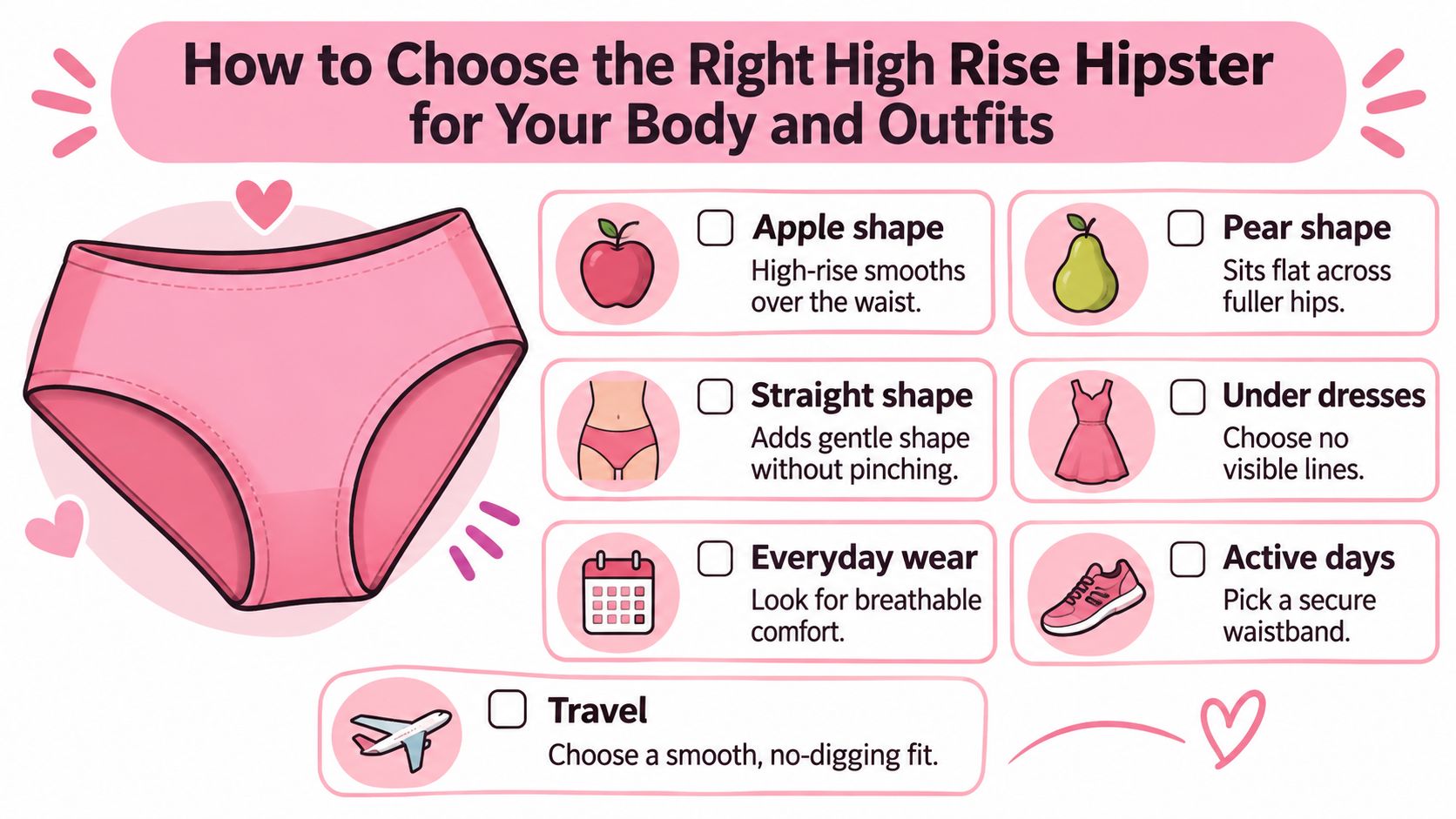
Also consider how the outfit moves. Jeans and trousers may conceal small shifts that are obvious under a fitted dress; leggings can reveal bulky edges. If a pair is intended for active days, walk and bend in it to check placement. For any outfit, it's worth checking the underwear under the actual outer layer rather than guessing from its appearance alone.
Run a fit test at home
Underwear that's too tight can contribute to irritation and chafing, and tight clothing can restrict airflow and increase moisture buildup. Clinical guidance also links overly tight or chafing underwear with problems including folliculitis, ingrown hairs, abrasions, and numbness (neutral clinical guidance on underwear fit and health). Staying in place isn't proof that the fit is right.
Try this check after wearing the pair for a while:
- Look for deep indentations: A pronounced mark after wear can signal too much pressure.
- Sit and breathe normally: The band shouldn't make sitting or unrestricted breathing uncomfortable.
- Walk and bend: The underwear should stay in place without slipping or needing constant adjustment.
- Check the stretch: You should be able to slide a finger beneath the waistband without forcing it.
Posture and bloating can change how a waistband feels throughout the day. If a pair pinches during ordinary movement or feels tight when you sit, try a different size or construction instead of assuming you need to get used to it.
Nuage Wears High Rise Styles Worth Trying
Different days call for different fabric and construction choices. A soft modal style can suit everyday wear; targeted mesh can make sense when heat or movement is a concern; and a flatter, laser-cut finish can be useful under fitted clothing. No one fiber label answers every question. Fit, gusset construction, and where the garment adds structure matter too.
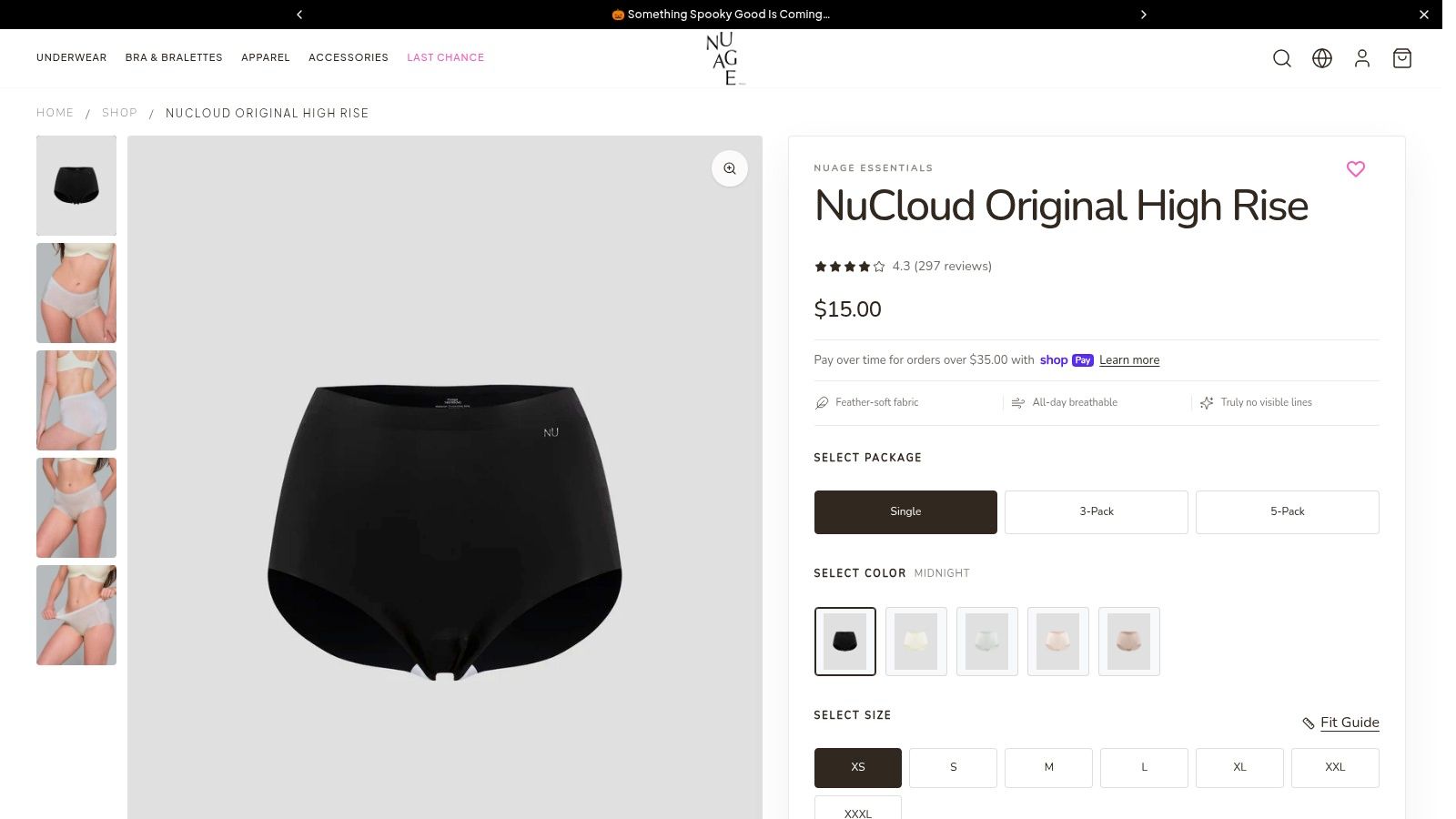
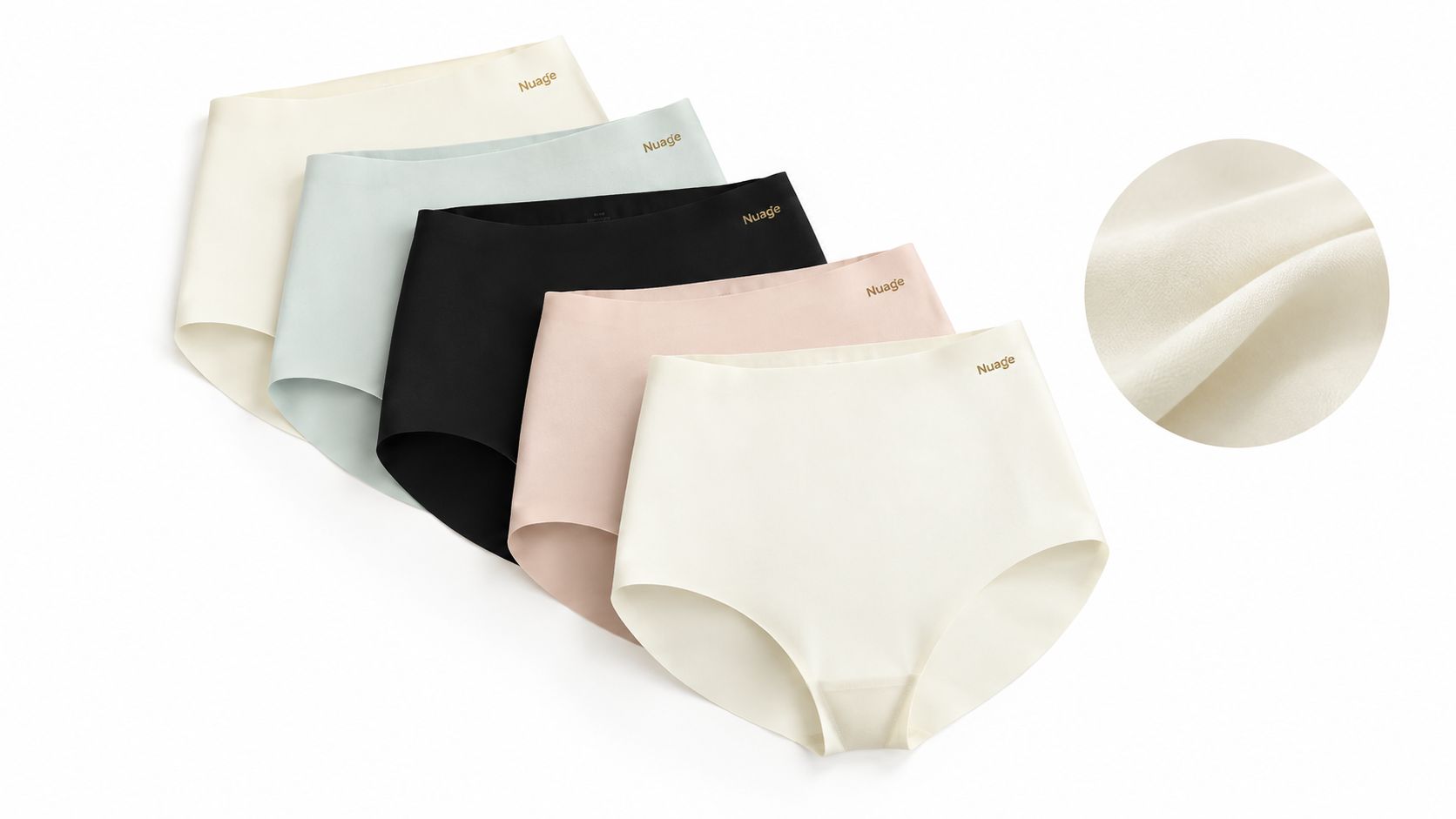
The NuCloud Original High Rise 5-Pack is described as a weightless, PFAS-free modal style with raw-cut edges, a 3D-contoured full-coverage seat, and a 100% cotton-lined gusset. Those details make it a relevant option to consider for everyday wear beneath high-waisted clothing, travel, and low-impact movement. They don't replace a fit check: assess whether the rise lands comfortably on your torso and whether the edges remain smooth beneath your outfit.
| Nuage style | Standout feature | Best for |
|---|---|---|
| NuCloud Original High Rise | Modal fabric, raw-cut edges, contoured seat, cotton-lined gusset | Everyday wear and high-waisted outfits |
| NuAir Mesh styles | Targeted mesh for airflow and moisture management | Heat, movement, and longer travel days |
| Seamless laser-cut options | Flat edges designed for a smooth finish | Fitted clothing and silky fabrics |
A quick look at the garment in motion can help you evaluate how the high-rise silhouette and edges sit against the body.
For daily desk-to-dinner wear, a soft modal knit may be a sensible starting point; for heat or a more active day, targeted mesh is another construction to consider. Beneath fitted clothes, focus on edge thickness and whether the garment stays smooth. If you're trying the cut, a multipack can make it easier to wear the style across different outfits and routines before deciding how well it fits your life.
Breathability and gusset design deserve attention alongside the fiber label. Underwear can't prevent or treat infections, so persistent itching, odor, pain, or unusual discharge calls for medical evaluation rather than a change of fabric alone.
Finding Your Everyday Pair
A useful everyday pair is a match among rise, cut, fabric, and your own body, not a universal winner. Start with a waistband that meets your natural waist where you want it to sit. Then look for a comfortable body knit, a gusset lining that suits your preferences, and a band that holds its position without concentrating pressure.
Before you settle on a style, check that the waistband doesn't leave deep indentations, that you can sit and breathe comfortably, that the underwear doesn't slip as you walk, and that there's enough stretch beneath the band. Try the pair under the clothes you wear. A smooth mirror fit in underwear alone can't tell you whether the edges will show under leggings or whether the waistband will roll under trousers.
Don't judge comfort only at the start of the day. A waistband may feel fine while you're standing and turn restrictive once you sit at a desk, bend, or commute. If you notice pinching or repeated adjustment, consider a different size, a softer or wider band, or another fabric construction rather than assuming that a higher rise should automatically feel better.
For a practical trial, start with a multipack of a high-rise style and wear it through a full week of ordinary life: work, errands, and movement. Use the fit test to decide whether to size up, try another fabric, or add more pairs. Your own routine, not a promise on a label, is the best guide to what earns a place in the drawer.
Explore Nuage Wears to browse high-rise underwear alongside modal, mesh, and smooth, unlined styles organized around everyday fit needs. Choose a pair that suits your wardrobe, then put its waistband and fabric to the test through your real routine.