

Polka dots are often sold as a fleeting fashion moment, but that advice misses how people really wear underwear. A playful print doesn't need to be loud, impractical, or reserved for special occasions. Choose the right scale, fabric, and cut, and polka dot underwear becomes a cheerful base layer that works beneath everyday clothes.
The smarter question isn't whether dots are “back.” It's whether the pair stays comfortable, discreet, breathable, and attractive through a full day. Here's how to judge it.
Table of Contents
- Rethinking Polka Dots as an Everyday Base Layer
- Matching Print Scale to Fabric and Outfit Visibility
- Styling Polka Dots for Workwear Travel and Activewear
- Choosing Flat-Edge and Stay-Put Cuts for Printed Intimates
- Washing and Curing Rules to Prevent Fading and Cracking
- Building a Versatile and Comfortable Printed Drawer
Rethinking Polka Dots as an Everyday Base Layer
Polka dots have the staying power of a wardrobe basic, not the fragility of a novelty trend. Evenly spaced dots became practical as mechanized weaving improved textile precision around the late 1700s and early 1800s. The term “polka dot” first appeared in print in 1857 in Godey's Lady's Book, linking the pattern's identity to the rise of repeatable, mass-produced textiles rather than hand decoration alone. Cosmopolitan's history of polka dots traces that transition from textile technology to recognizable fashion language.
That origin matters for underwear. A repeatable motif translates naturally across knits, jersey fabrics, stretch blends, and lingerie trims. Dots can look playful without requiring lace, embellishment, or a complicated silhouette. They also create visual interest in a garment that still needs to perform discreetly under clothing.
A print with a long memory
By the 1920s, polka dots had become a mainstream fashion signal, helped by Norma Smallwood's 1926 Miss America swimsuit appearance. The pattern grew more established through the 1930s, 1940s, and 1950s, appearing in high-visibility clothing associated with figures such as Marilyn Monroe and Audrey Hepburn. CR Fashion Book's account of the pattern's fashion history describes polka dots as a permanent fixture by the 1940s, not a passing decoration.
That history gives polka dot underwear a useful advantage: the print already feels familiar. You can choose a small, restrained pattern for a neutral drawer or a high-contrast version when you want the garment itself to feel more expressive.
Practical rule: Treat the dots as a color and texture decision, not as a costume decision.
For daily wear, prioritize a soft hand feel, stable stretch, and a waistband that doesn't pinch. The print comes second. A beautiful pattern won't rescue underwear that rolls, rides up, or traps heat.
Matching Print Scale to Fabric and Outfit Visibility
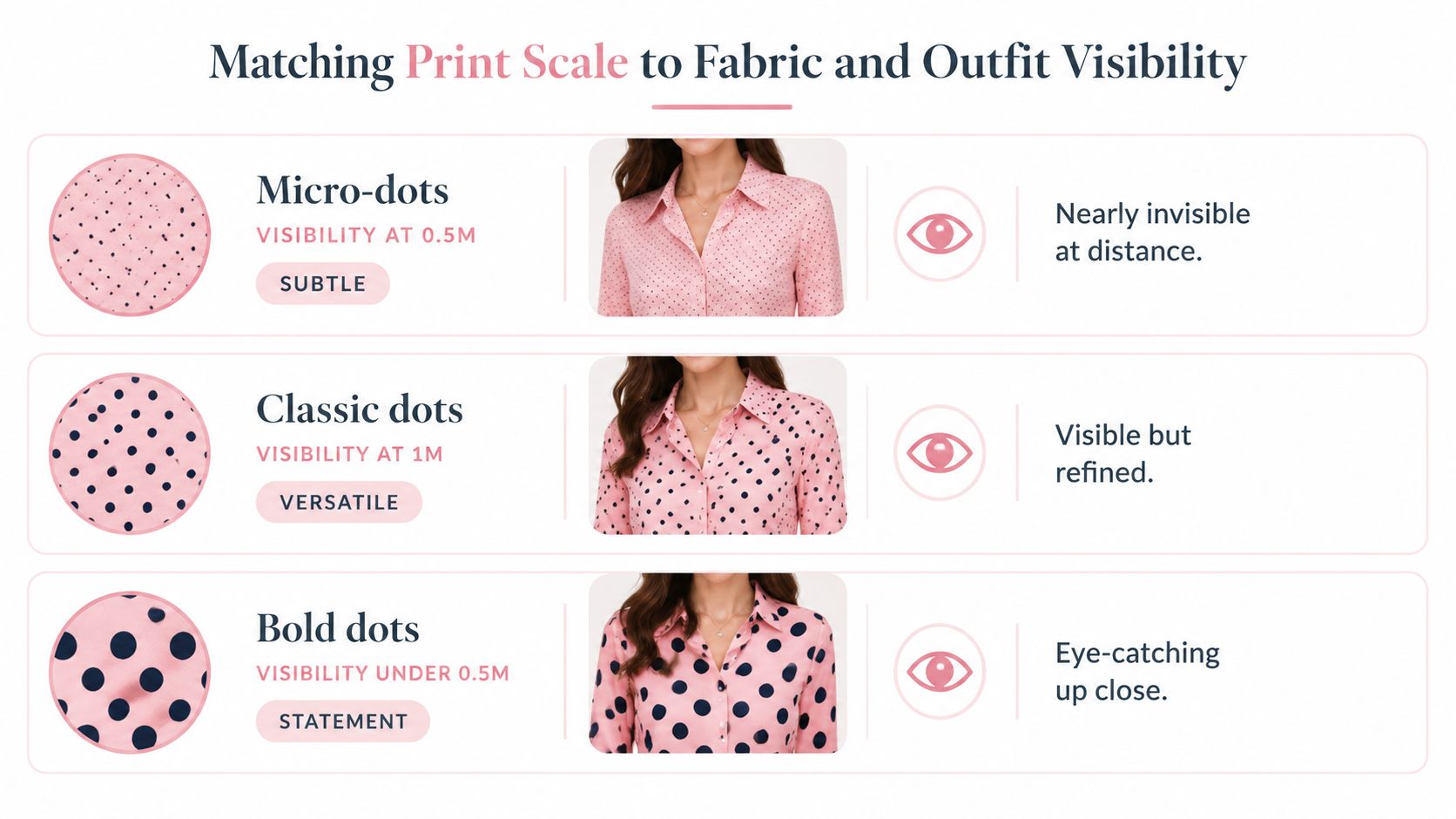
Dot size changes the way underwear behaves visually. Micro-dots often blend into the overall color from a normal viewing distance, while classic dots remain visibly patterned without dominating the outfit. Bold graphic dots draw attention quickly, especially beneath pale, close-fitting, or lightweight garments.
Use scale as a styling tool
For thin work trousers, fitted skirts, or a light-colored dress, start with micro-dots in a low-contrast color combination. Tightly spaced marks can read almost like a textured solid from across a room, which makes them less visually disruptive than large, high-contrast circles. This doesn't guarantee invisibility, though. Fabric opacity, garment tension, lighting, and underwear color still determine what shows through.
Classic dots are the most flexible choice for a general underwear drawer. They provide personality without turning every outfit into a styling project. Wear them beneath denim, relaxed trousers, opaque knit dresses, or everyday skirts where a little pattern won't compete with the outer layer.
Bold dots need more intention. Reserve them for thicker clothing, darker fabrics, relaxed fits, or moments when you're happy for the print to feel like part of the outfit. If the outer garment is thin and tightly stretched, the outline of the dots may become more noticeable than you expect.
Fabric performance matters more than print charm
A printed synthetic base can feel durable, but the printing method may change how air moves through the fabric. A textile study of sublimation-printed underwear reported very high colorfastness against rubbing, domestic and commercial laundering, and perspiration, while also measuring about a 40% reduction in air permeability after printing. The study on sublimation printing and underwear effectiveness makes the trade-off clear: durable color is valuable, but full-surface printing can reduce airflow.
For long days, choose lighter coverage or targeted print placement when the fabric is synthetic and breathability matters. A printed gusset or panel can deliver the visual effect without covering every breathable surface. If you run warm, don't judge a pair only by its colorfastness. Check the fiber feel, stretch recovery, lining, and ventilation.
Styling Polka Dots for Workwear Travel and Activewear
Polka dots are not limited to playful outfits. Used as an everyday base layer, they can work under office clothes, travel outfits, and activewear. The rule is simple: match the print's contrast and coverage to the day's demands, then test how the underwear behaves under movement.
At the office
Under a silk blouse, fitted dress, or lightweight dress trouser, choose micro-dots or a quiet classic pattern. Keep the contrast low when the outer garment is pale, thin, or slightly sheer. A smooth surface and clean finish matter as much as the motif. A visible seam or raised edge can attract more attention than the dots.
Check the outfit in strong daylight before leaving home. Stand, sit, bend, and move your arms. A print that disappears while standing may show more clearly when the outer fabric stretches across the hips or seat. For delicate workwear, choose underwear close in value to the garment and save high-contrast dots for opaque fabrics or relaxed silhouettes.
On long travel days
Travel calls for underwear that stays dry, keeps its shape, and needs little adjustment. Choose soft stretch fabric with moisture management, a supportive but gentle waistband, and a cut that remains comfortable while sitting for long periods. Quick-drying construction helps when you pack lightly or move between humid and cool environments.
Breathability deserves equal attention, especially with printed synthetic fabric. A pair can look durable and still feel warm if the textile allows limited airflow. Check the fiber feel, lining, stretch recovery, and ventilation before choosing a print for a full day in transit.
Avoid a bulky waistband under fitted trousers. A smooth mid-rise or high-rise edge layers more cleanly than a thick elastic channel. Comfort should lead on a long journey, so choose a subtle dot scale and keep statement prints for relaxed clothing.
Under activewear
Under leggings or close-fitting workout clothing, select a low-profile cut with leg openings that stay in place. Match coverage to the activity. A fuller brief offers a secure feel during stretching and low-impact movement, while a slim thong can suit a tightly fitted outer layer if the waistband and gusset remain comfortable.
Movement test: Squat, walk, sit, and reach before trusting a pair under activewear. If the underwear shifts during those movements, the print is the least important problem.
Test synthetic printed styles during a short session before wearing them for a longer workout. If the fabric already feels warm or damp, a longer session will only make the problem more noticeable. Let polka dots finish the outfit. Do not let them override heat, moisture, friction, or everyday comfort.
Choosing Flat-Edge and Stay-Put Cuts for Printed Intimates
A lively print makes shifting underwear more noticeable, so construction matters as much as the dots. Traditional hemmed edges suit relaxed clothing, but they can leave a ridge beneath leggings, silk, or fitted skirts. Laser-cut and bonded edges sit flatter, creating a cleaner transition between underwear and outer fabric.
Compare the construction before the pattern
Choose a flat-edge design when visible panty lines are the outfit problem. It will not hide the print, but it removes one major source of show-through. Bonded waist and leg bands can also hold the garment in place without the bulky pressure of conventional elastic.
A three-dimensional contoured shape supports movement better than a flat panel pulled tight across the body. Look for adequate rear coverage, a gusset that stays centered, and leg openings that rest against the body without digging in. The waistband should feel secure, never punishing. If you notice it while standing still, it will become more distracting during a commute or workout.
| Outfit Challenge | Recommended Cut | Key Construction Feature |
|---|---|---|
| Thin skirt or fitted dress | Laser-cut brief or thong | Flat bonded edges that reduce visible ridges |
| Leggings or close-fitting trousers | Flat-edge mid-rise brief | Smooth leg openings and a stable gusset |
| Long sitting and travel | Stay-put hipster or brief | Soft bonded waistband with secure rear coverage |
| High-rise dress trousers | High-rise brief | Wide, gentle waistband that resists rolling |
| Light-colored workwear | Low-contrast flat-edge brief | Subtle print scale with a clean outer finish |
For a closer look at smooth construction under fitted clothing, read this guide to smooth underwear for women.
Solve the wedgie before blaming the print
Riding up usually signals a fit or proportion problem, not a pattern problem. A leg opening that is too tight can pull the garment upward, while insufficient rear coverage encourages shifting as you walk. Match the cut to your body and activity before judging the dot placement. A print across a stable panel looks cleaner than one stretched and distorted by constant movement.
Test the fit through ordinary movements. Walk, sit, bend, and reach. The right pair stays put without requiring repeated adjustments.
Nuage Wears organizes options around concerns such as no visible lines, no wedgies, breathable wear, and no digging. Its range includes modal-based everyday styles, targeted mesh designs, bonded bands, and laser-cut finishes. Use those construction details as shopping criteria, whether you select that range or another well-made option.
Washing and Curing Rules to Prevent Fading and Cracking
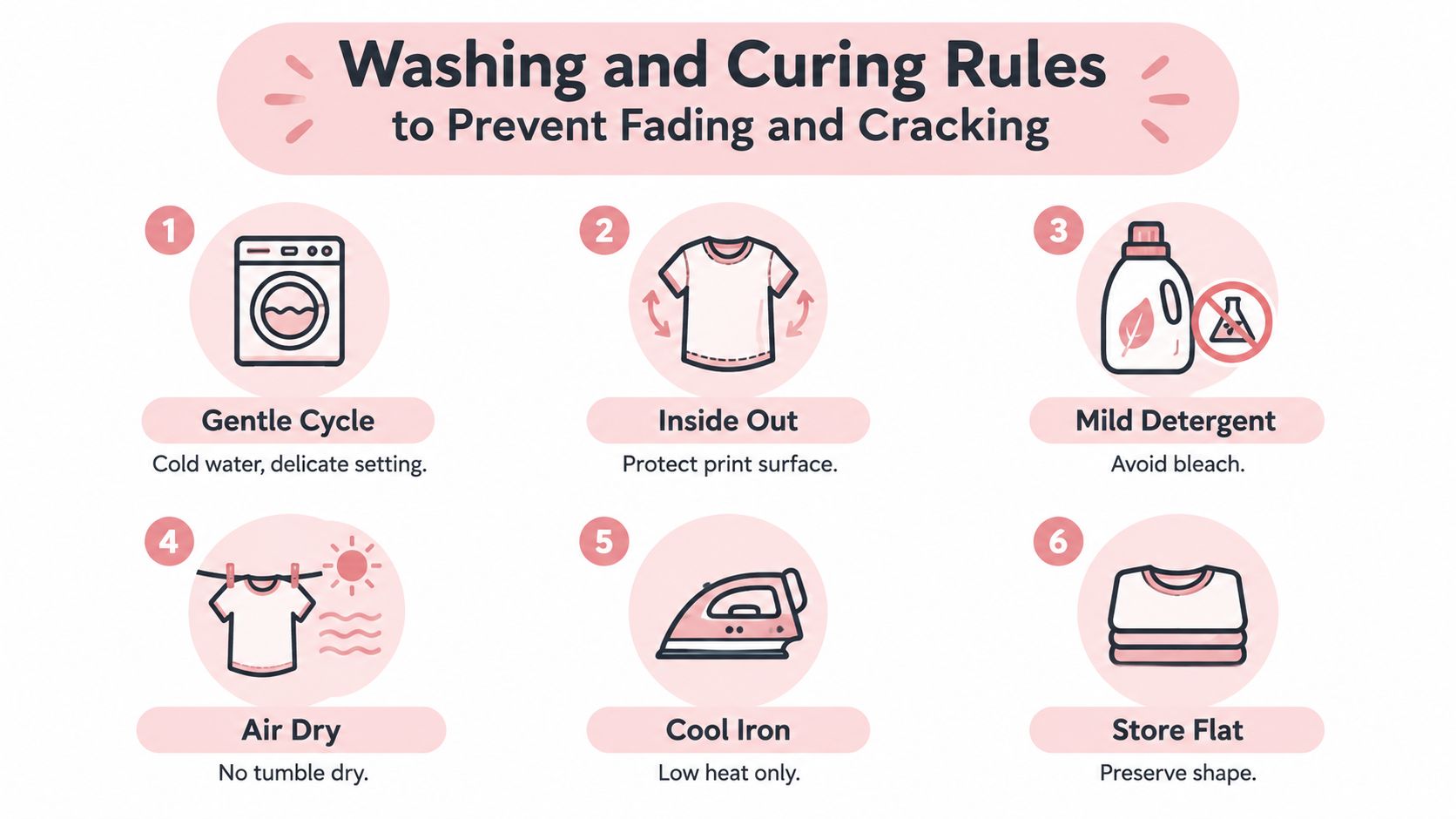
Printed underwear needs gentler handling than an unprinted basic. Heat, friction, bleach, and rough drying can weaken the print surface and the stretch fibers at the same time. Build a simple routine and follow it consistently.
Cure newly printed knits first
If the fabric has been printed after knitting, don't wash it immediately. Textile construction guidance recommends drying the printed fabric fully, then heat-setting it and allowing it to cure for about a week before laundering. The suggested heat-setting process is to iron each side with high, dry heat and no steam for 3–5 minutes, using a protective layer between the iron and fabric. This guide to printing polka dots on knits explains why curing improves adhesion and reduces early wash-off or edge distortion.
Follow the garment label if it gives different care instructions. Don't apply high heat directly to elastic, lace, or delicate trims. If you're unsure whether a pair is freshly printed, ask the seller before the first wash.
Keep the laundry routine calm
Turn the underwear inside out, use cold water and a delicate cycle, and choose mild detergent. Skip bleach and harsh stain removers unless the care label specifically approves them. Air-dry the garment instead of using a tumble dryer, and keep it away from intense direct heat.
For practical print-care principles, DTF care advice from Cobra DTF offers useful guidance on reducing abrasion and protecting decorated fabric. Apply the same restraint to underwear, where elastic recovery and close skin contact matter just as much as surface appearance.
Don't iron printed underwear unless the label permits it. If ironing is necessary, turn the garment inside out, use low heat, and place a protective cloth between the iron and the fabric. Store clean pairs flat or loosely folded rather than compressed under heavy garments. For a broader underwear laundry routine, use this guide on how to wash underwear.
Building a Versatile and Comfortable Printed Drawer
A practical printed underwear drawer starts with reliable basics, not a trend-driven haul. Keep breathable, low-profile solids for sheer fabrics and demanding outfits, then add polka dot pairs in three visual levels. Micro-dots work for daily wear, classic dots add personality, and bold dots suit opaque clothing that can carry the pattern.
- Start with comfort: Choose fiber, stretch, gusset, and waistband for a full day of easy wear.
- Match the construction: Use flat, gentle edges under fitted clothes and stay-put coverage for travel or movement.
- Control the print: Choose low contrast beneath thin fabric and stronger contrast under opaque layers.
- Protect the finish: Follow the label, wash printed knits gently, and air-dry them to limit fading and cracking.
- Buy for rotation: Choose multipacks only after the cut fits your body and routine.
Polka dots should complement solid basics while meeting the same standards for airflow, discreet edges, secure coverage, and simple care. The upgrade that matters is a cheerful base layer that stays out of sight once you're dressed.
Nuage Wears offers women's underwear focused on comfort, with smooth styles, breathable mesh, stay-put coverage, soft modal basics, and value bundles. Visit Nuage Wears for printed-friendly options suited to workwear, travel, active days, and daily dressing.